Houseplant Identifier
Take a picture of your indoor plant to find out what it is and how to care for it, or match it by sight against the picture key of 30 common houseplants below. Free, with no sign-up.
Scan Your Plant
Upload a photo and our AI will identify the plant, assess its health, and provide personalized care instructions.
What are you identifying?
Choose from your photos
JPEG, PNG, WebP or iPhone HEIC up to 10MB. Photos are compressed for fast mobile upload and stripped of metadata on your device before sending.
What to Photograph to Identify a Houseplant
One clear photo in daylight is usually enough. If the result is tentative, a second shot of one of these helps.
- 1
The whole plant
Step back so the photo shows the pot and the plant's overall shape: trailing, upright, bushy or tree-like.
- 2
One leaf, close up
Fill the frame with one healthy leaf in daylight. Shape, edge, texture and pattern carry most of the clues.
- 3
Where the leaf meets the stem
Show the leaf stalk and the stem. It separates many lookalikes, such as pothos and philodendron.
- 4
Flowers or spathes
If it is in bloom, photograph the flower head on. Peace lilies, anthuriums, orchids and hoyas are easiest to name from their flowers.
Common Houseplants by Picture
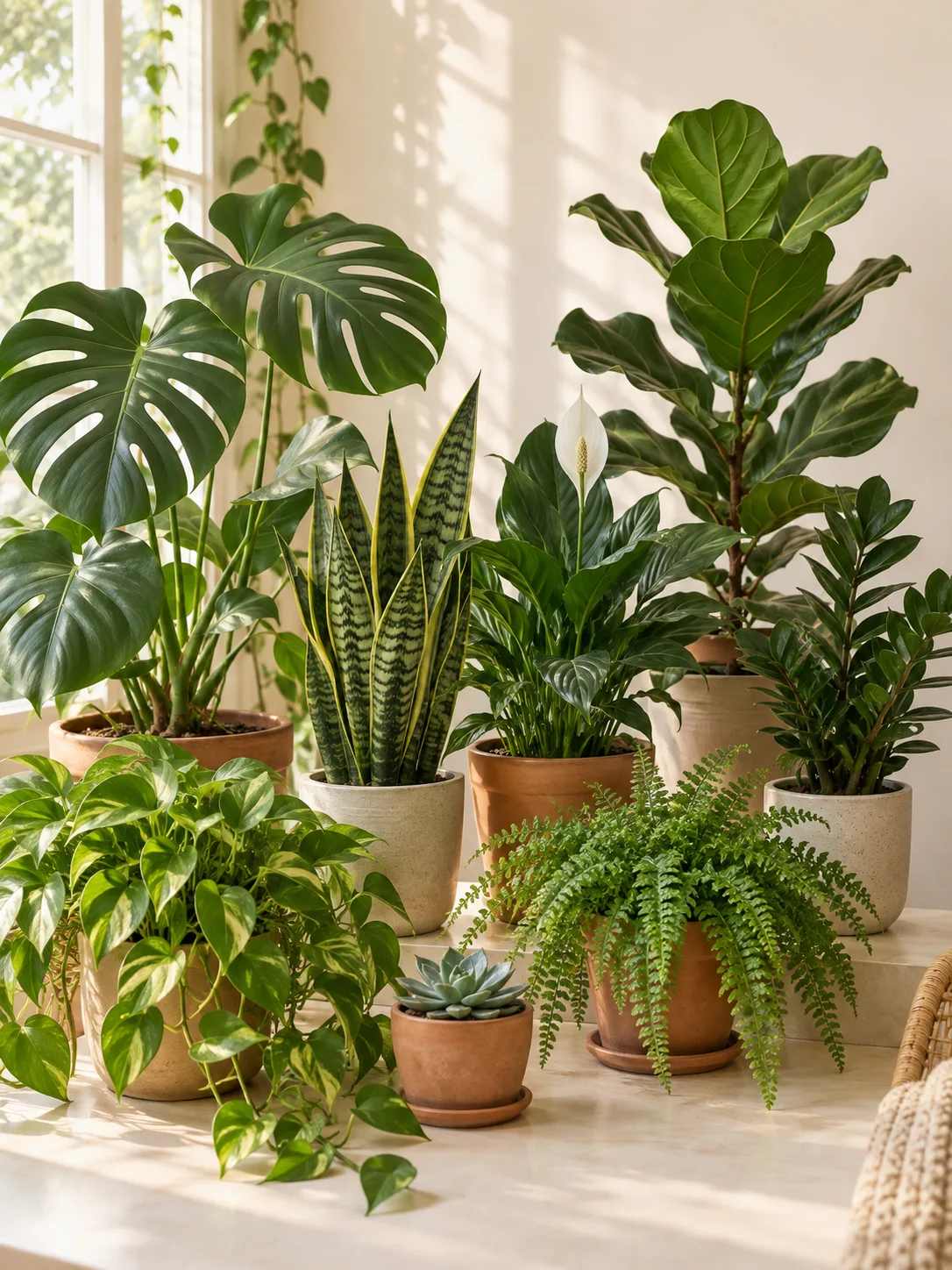
Start with the plant's overall shape, then check the leaf clue. Each picture links to a full care guide.
Trailing or climbing vines
Long stems that hang from a shelf or basket, or climb a pole.
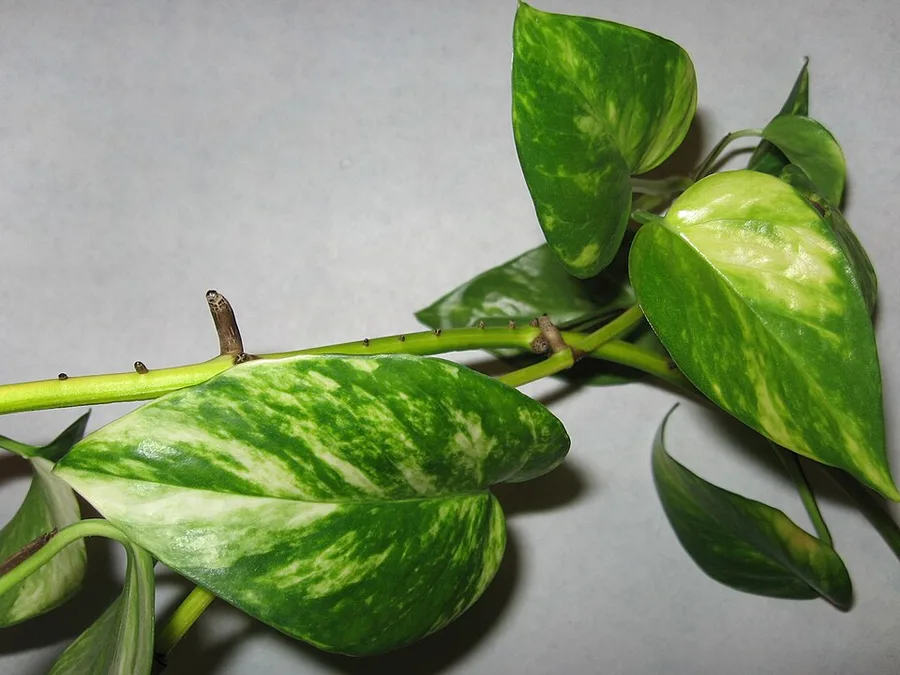
Pothos
Epipremnum aureum
Glossy, heart-shaped leaves on trailing stems, often splashed with gold, cream or neon green.
Care guide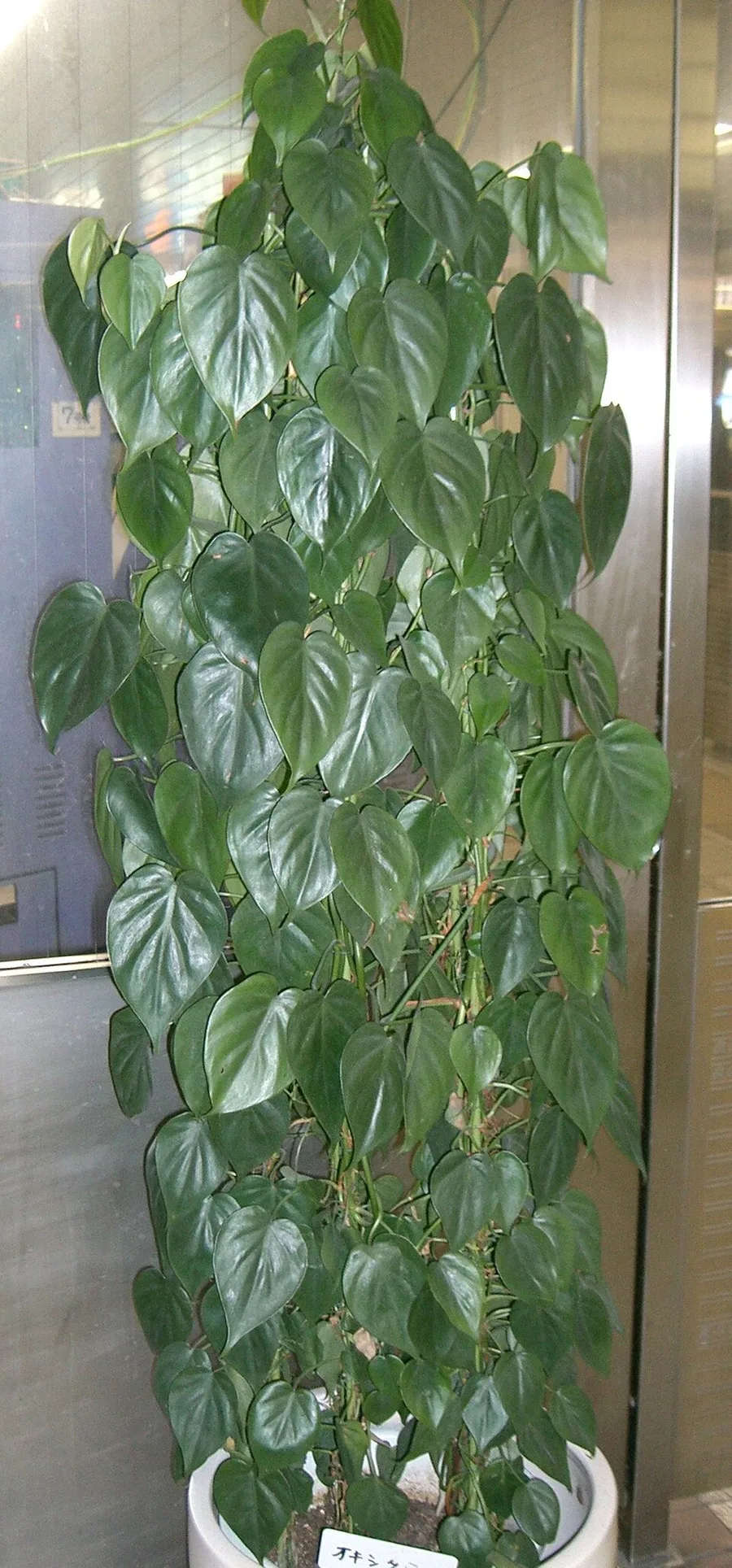
Heartleaf Philodendron
Philodendron hederaceum
Thinner, matte, heart-shaped leaves on slender trailing stems, with sheaths on new growth.
Care guide
English Ivy
Hedera helix
Lobed leaves, often variegated, on trailing stems that cling and climb.
Care guide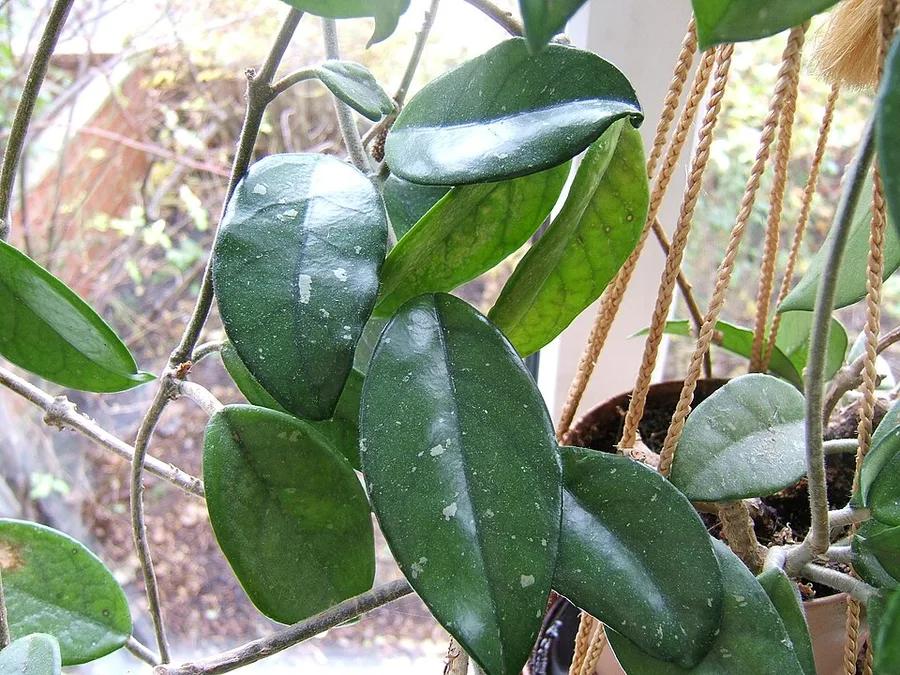
Hoya
Hoya carnosa
Thick, glossy, waxy leaves on trailing stems; mature plants bear round clusters of star-shaped flowers.
Care guide
String of Pearls
Curio rowleyanus (syn. Senecio rowleyanus)
Strands of pea-shaped green beads, each with a small translucent window.
Care guide
Upright blades, strap leaves and canes
Long, narrow leaves that rise straight up, arch outward, or top bare canes.
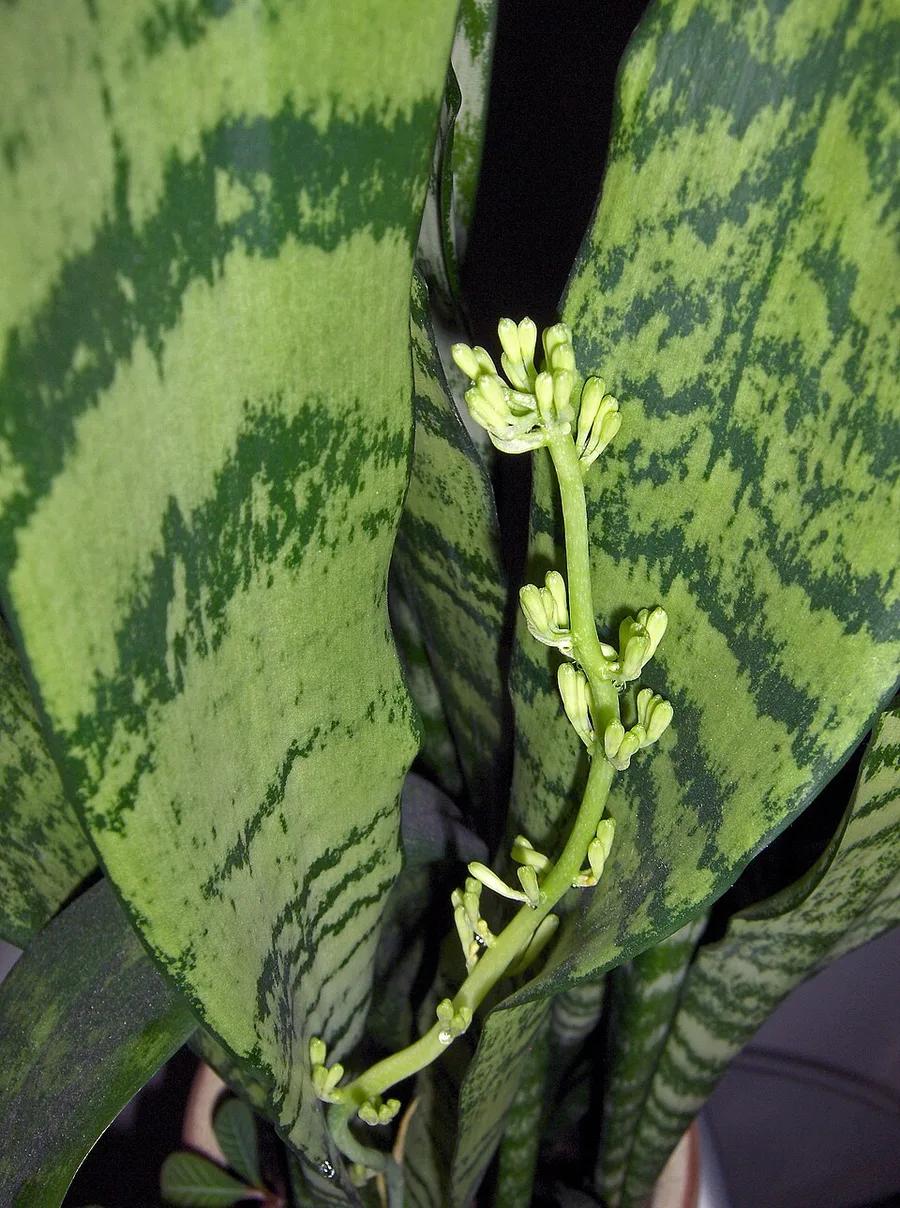
Snake Plant
Dracaena trifasciata
Stiff, upright, sword-like leaves banded or edged in green, yellow and silver.
Care guide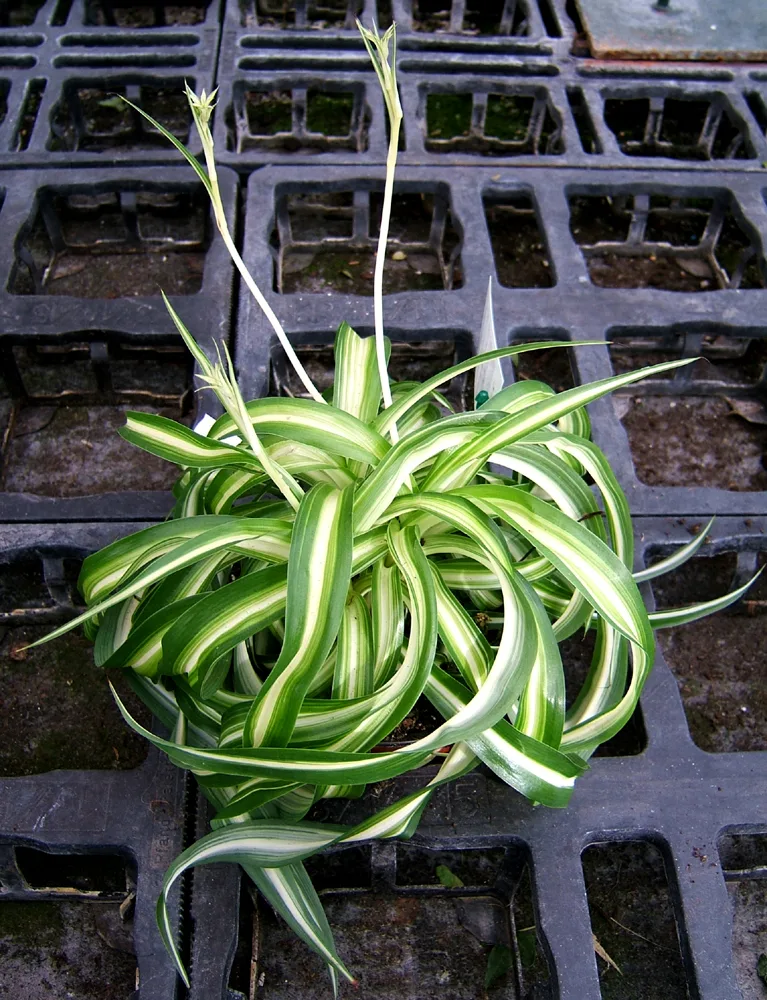
Spider Plant
Chlorophytum comosum
Arching, grassy leaves striped green and white, with baby plantlets dangling on long stems.
Care guide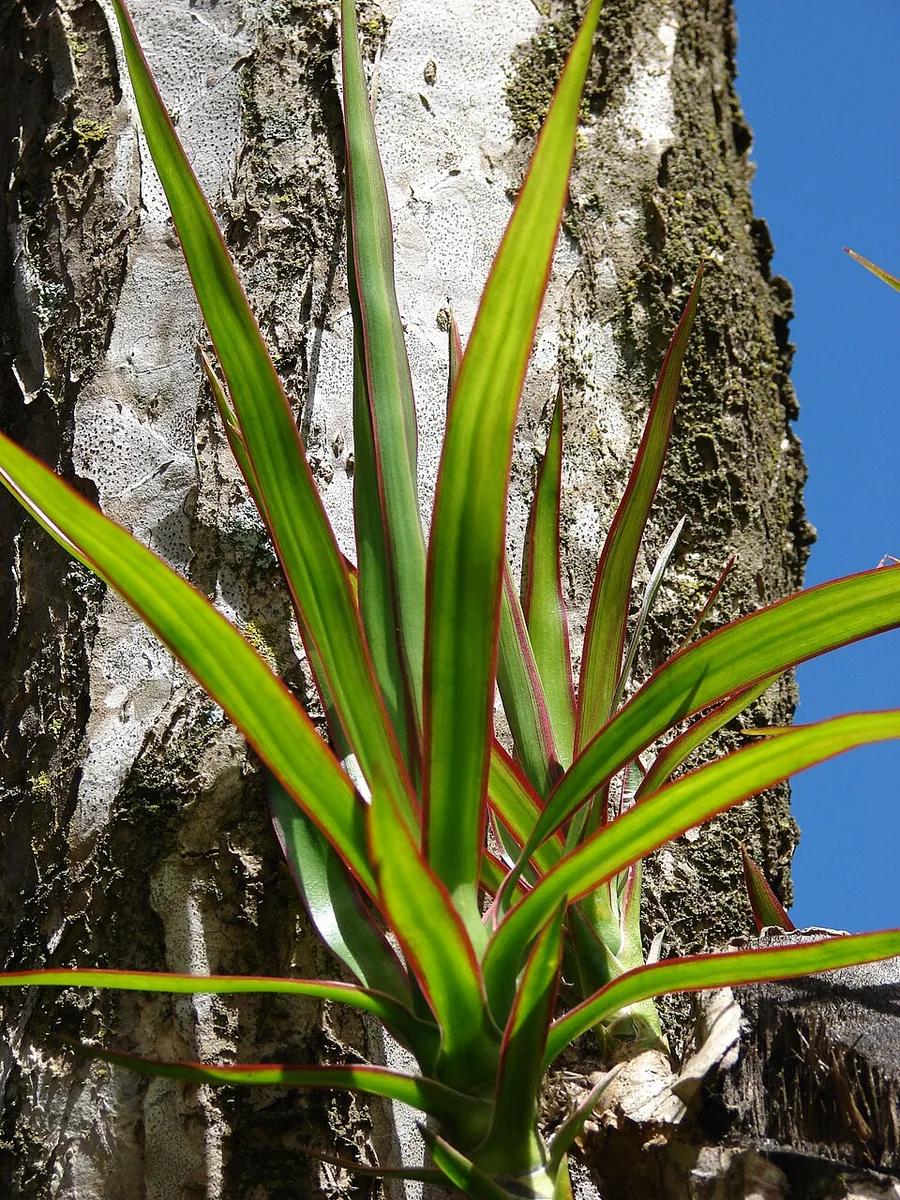
Dragon Tree
Dracaena marginata
Slim canes topped with fountains of narrow leaves edged in red.
Care guide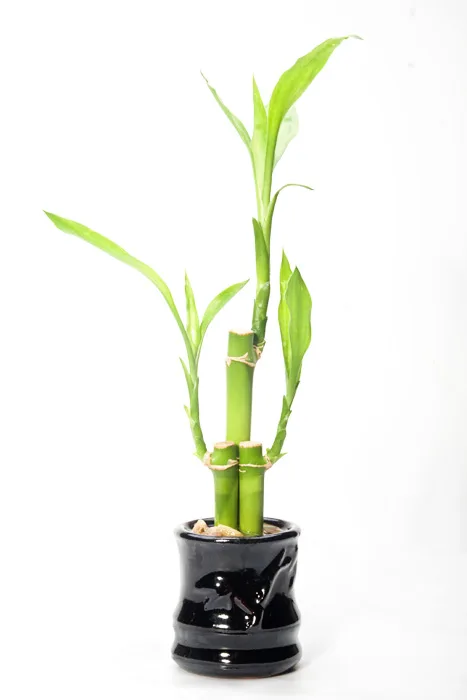
Lucky Bamboo
Dracaena sanderiana
Smooth green canelike stalks, often grown in water and pebbles. It is a dracaena, not a bamboo.
Care guide
Big leaves on a trunk or stems
Floor plants and small indoor trees with large, broad leaves.
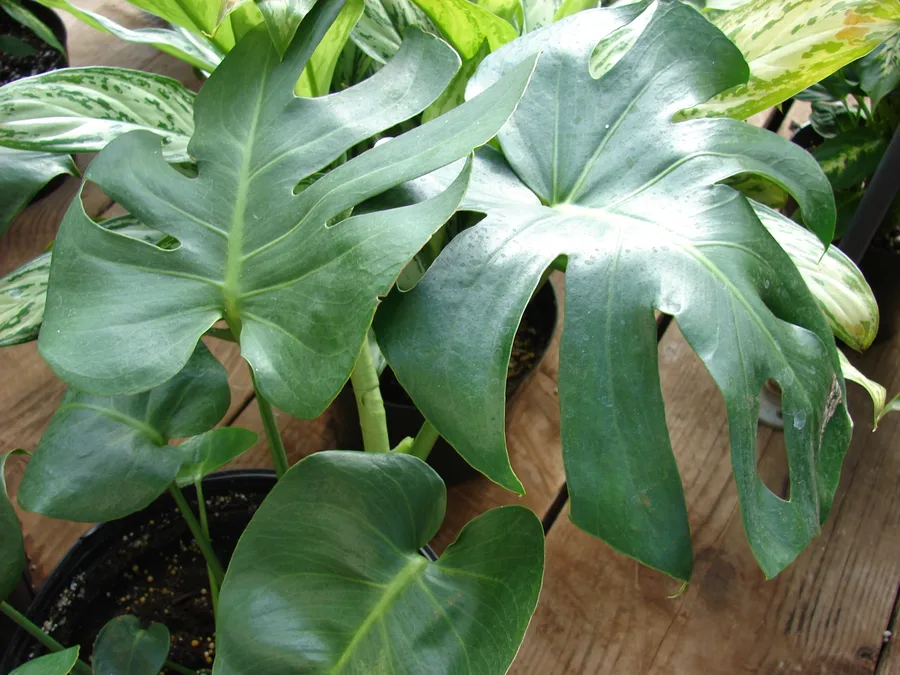
Monstera Deliciosa
Monstera deliciosa
Large leaves with deep splits and holes that develop as the plant matures.
Care guide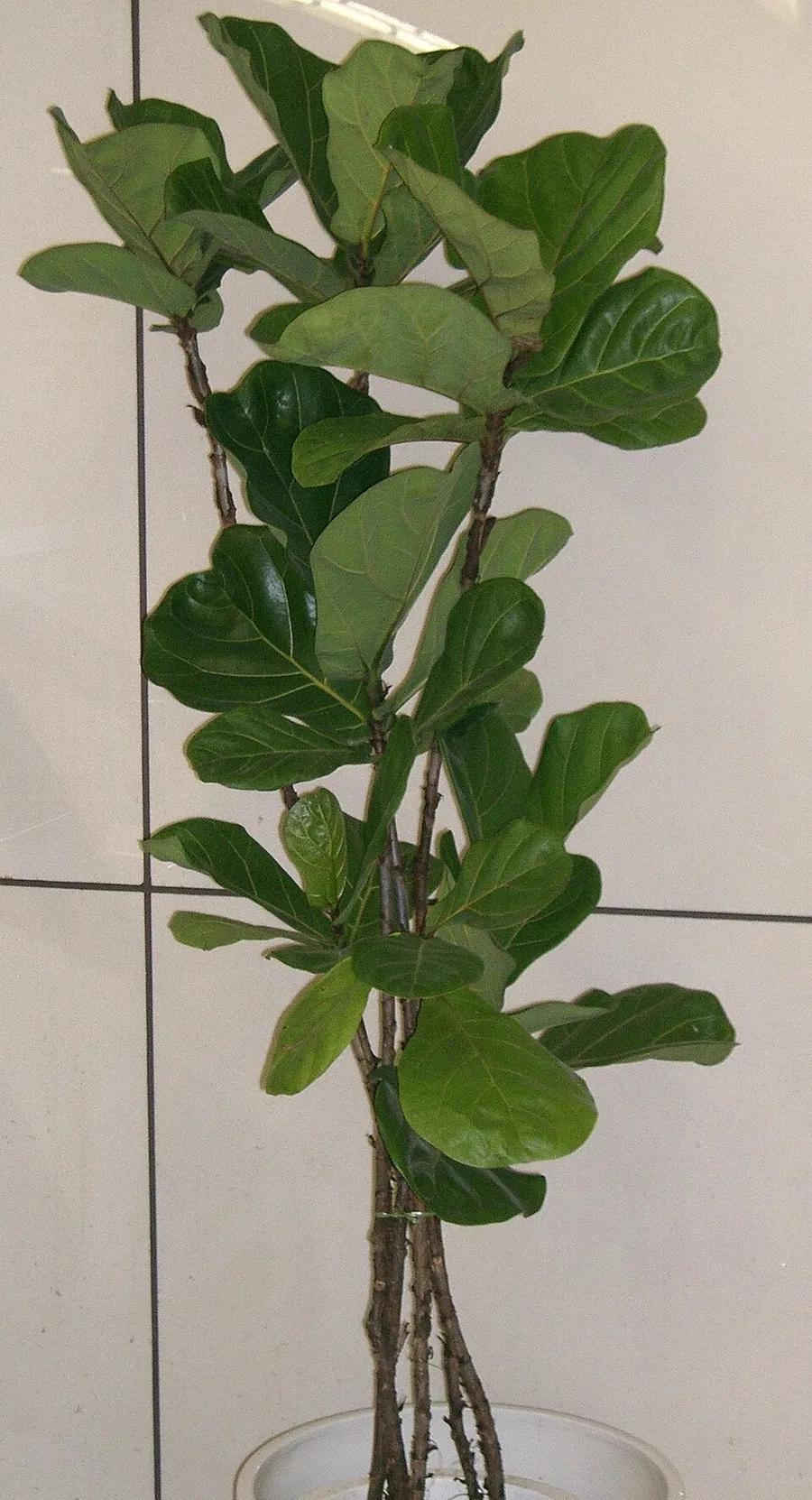
Fiddle Leaf Fig
Ficus lyrata
Broad, violin-shaped leaves up to about 18 inches long on an upright trunk.
Care guide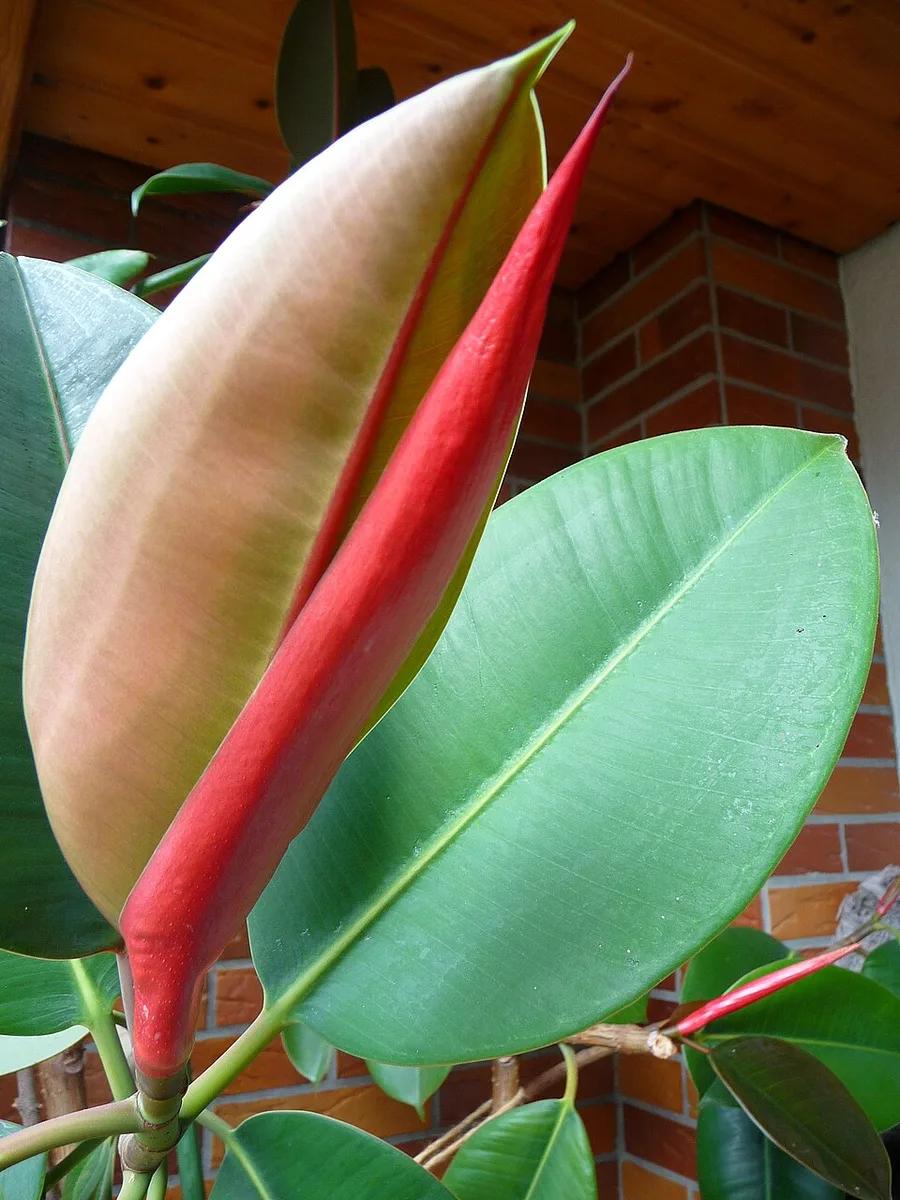
Rubber Plant
Ficus elastica
Thick, glossy, oval leaves in deep green, burgundy-black or cream-splashed.
Care guide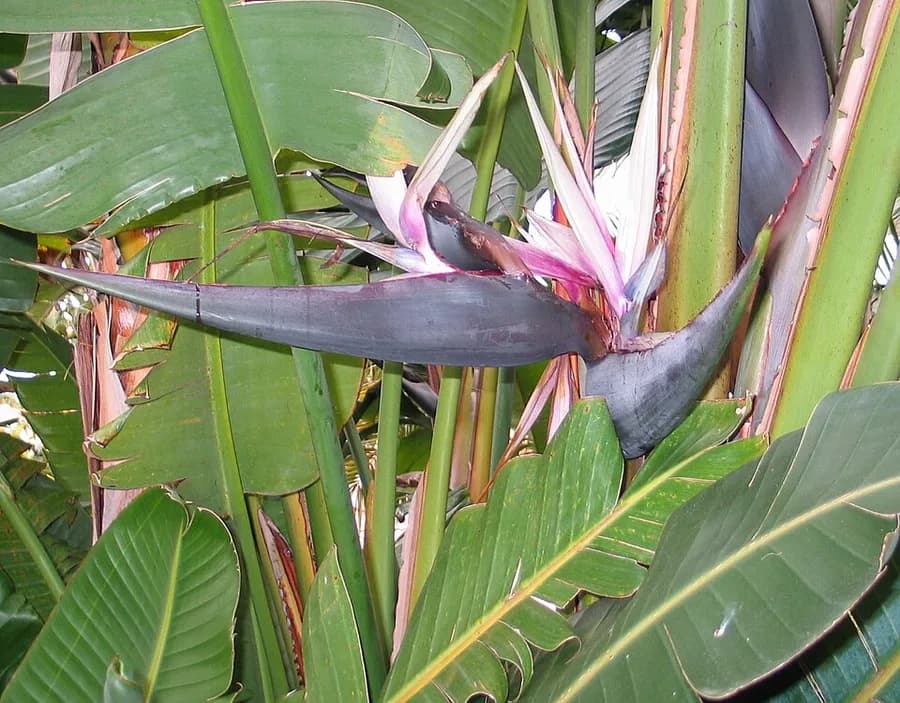
Bird of Paradise
Strelitzia nicolai
Paddle-shaped leaves the size of banana leaves on tall stalks.
Care guide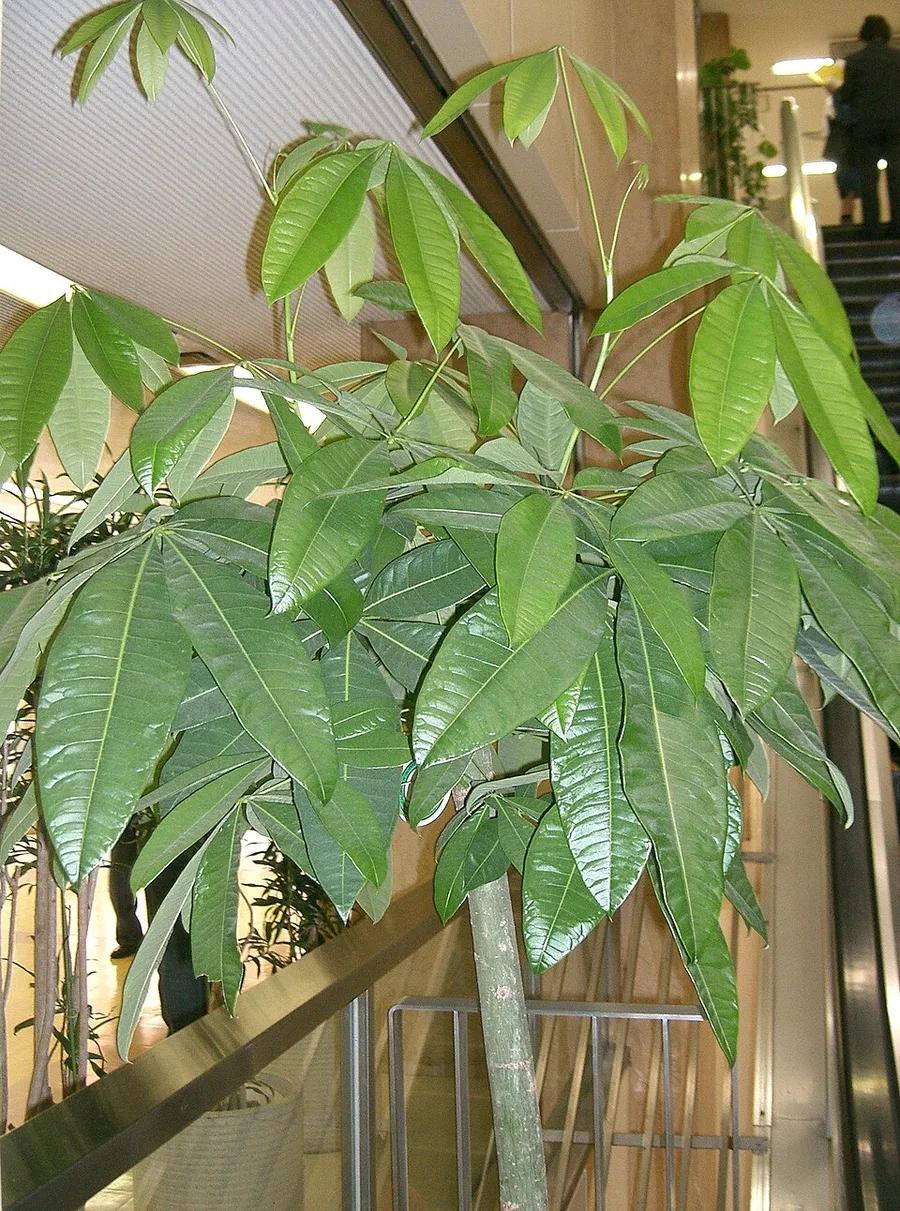
Money Tree
Pachira aquatica
Glossy, hand-shaped leaves, usually on young trunks braided together.
Care guide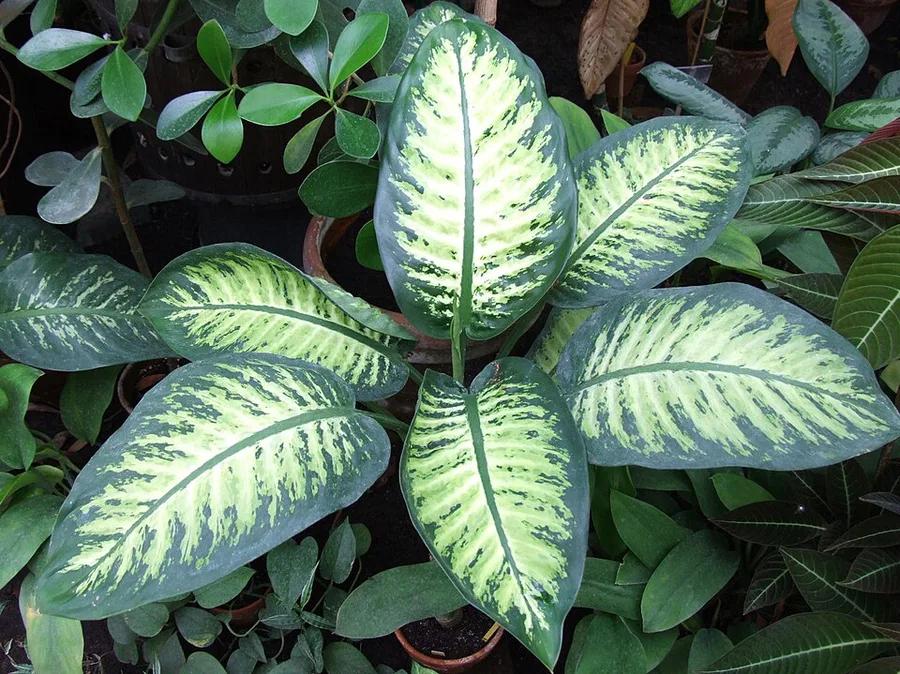
Dieffenbachia
Dieffenbachia seguine
Big, lush leaves painted cream and green, on a thick upright stem.
Care guide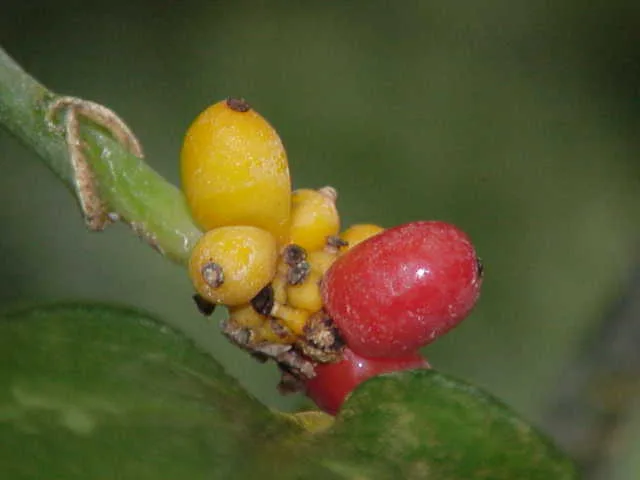
Chinese Evergreen
Aglaonema commutatum
Broad, patterned leaves in silver, cream, pink or red on a compact clump.
Care guide
Painted, patterned or colorful leaves
Leaves where the pattern or color is the first thing you notice.
Calathea
Goeppertia spp. (formerly Calathea)
Pinstripes, feather or rattlesnake patterns, often with purple undersides; leaves rise and fall with the daily light.
Care guide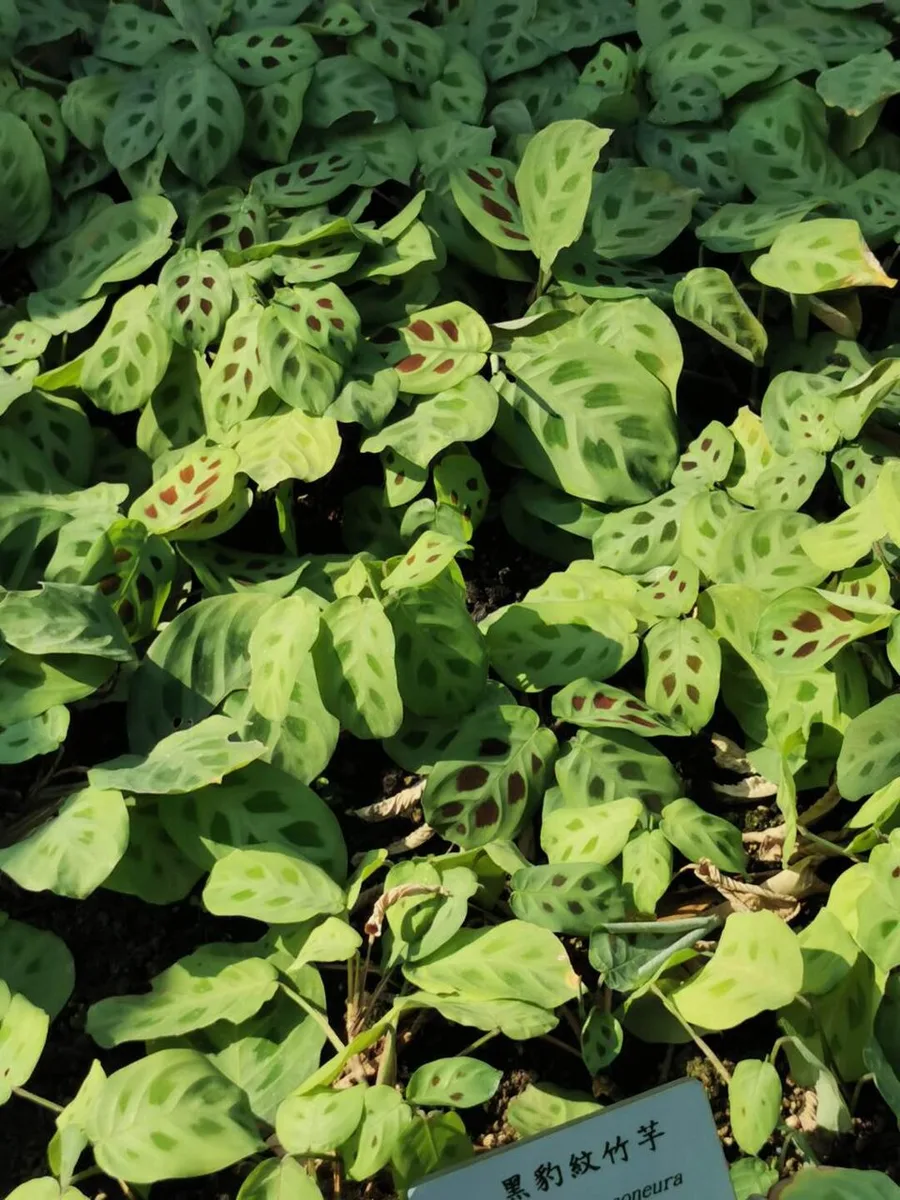
Prayer Plant
Maranta leuconeura
Oval leaves that fold upward at night; the red-veined type has a herringbone pattern.
Care guide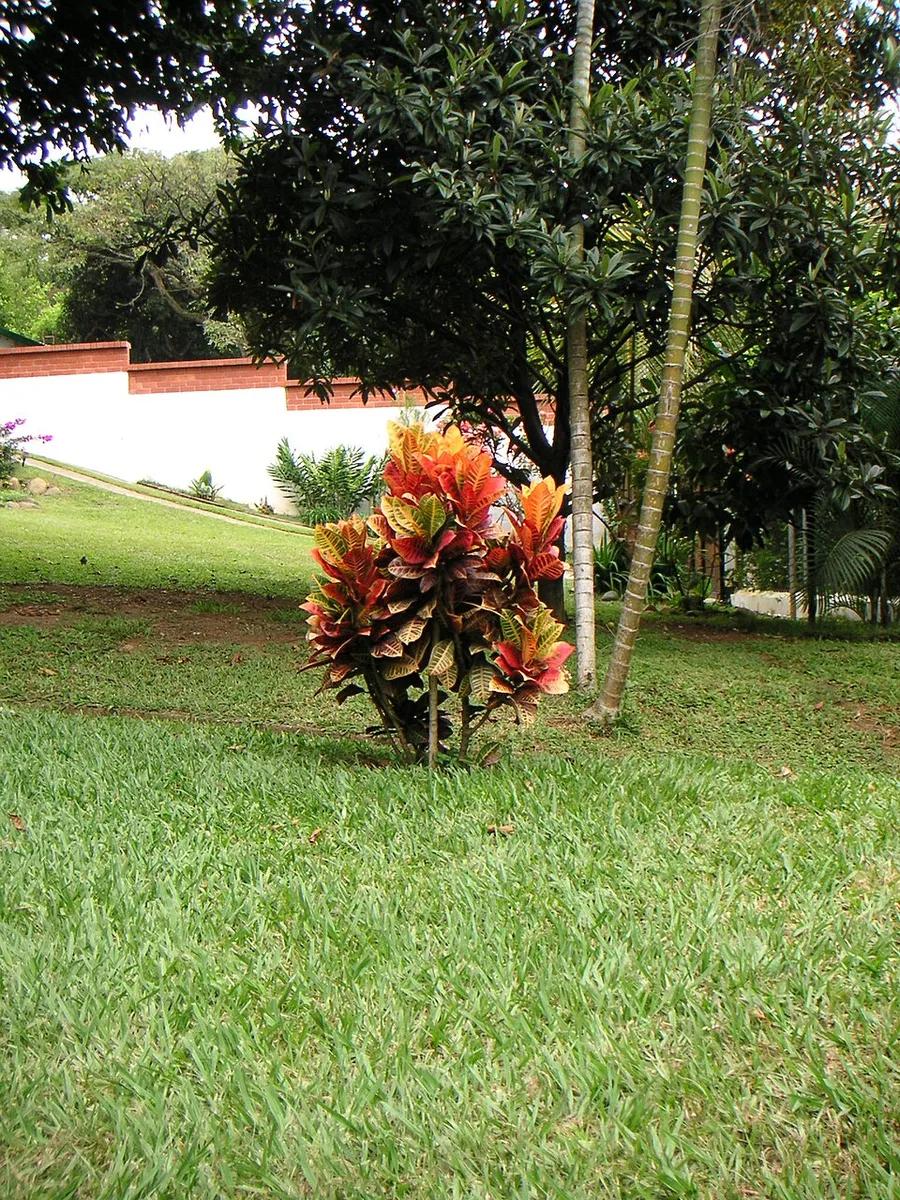
Croton
Codiaeum variegatum
Leathery leaves splashed with yellow, orange, red and near-black, often all on one plant.
Care guide
Thick, fleshy or round leaves
Leaves that store water, or round leaves on slender stalks.
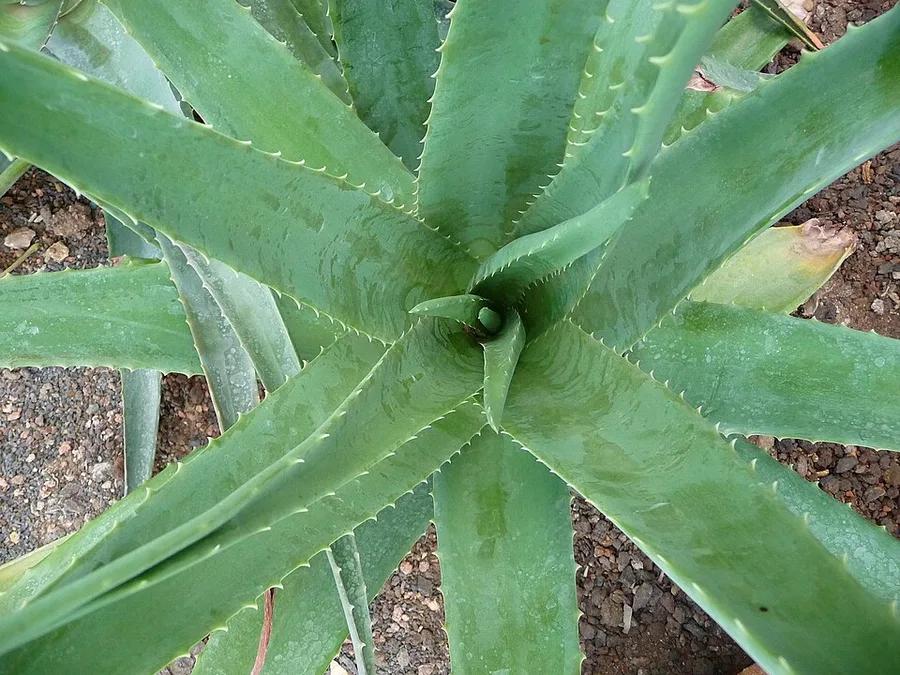
Aloe Vera
Aloe barbadensis miller
A rosette of thick, gel-filled leaves with serrated edges.
Care guide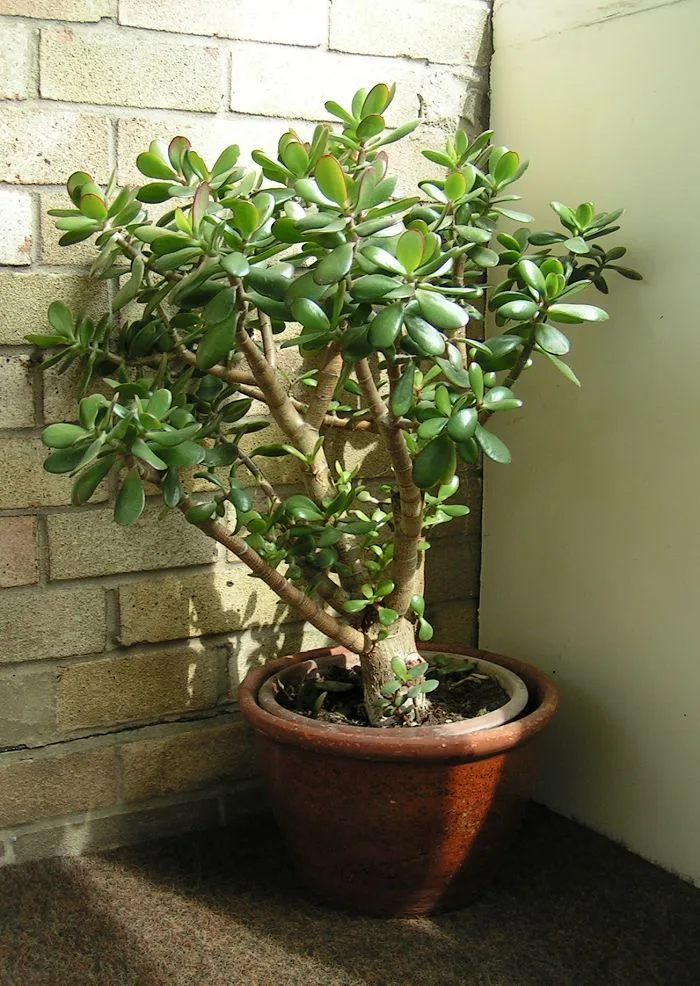
Jade Plant
Crassula ovata
Thick, coin-shaped leaves on a stout woody trunk, like a small tree.
Care guide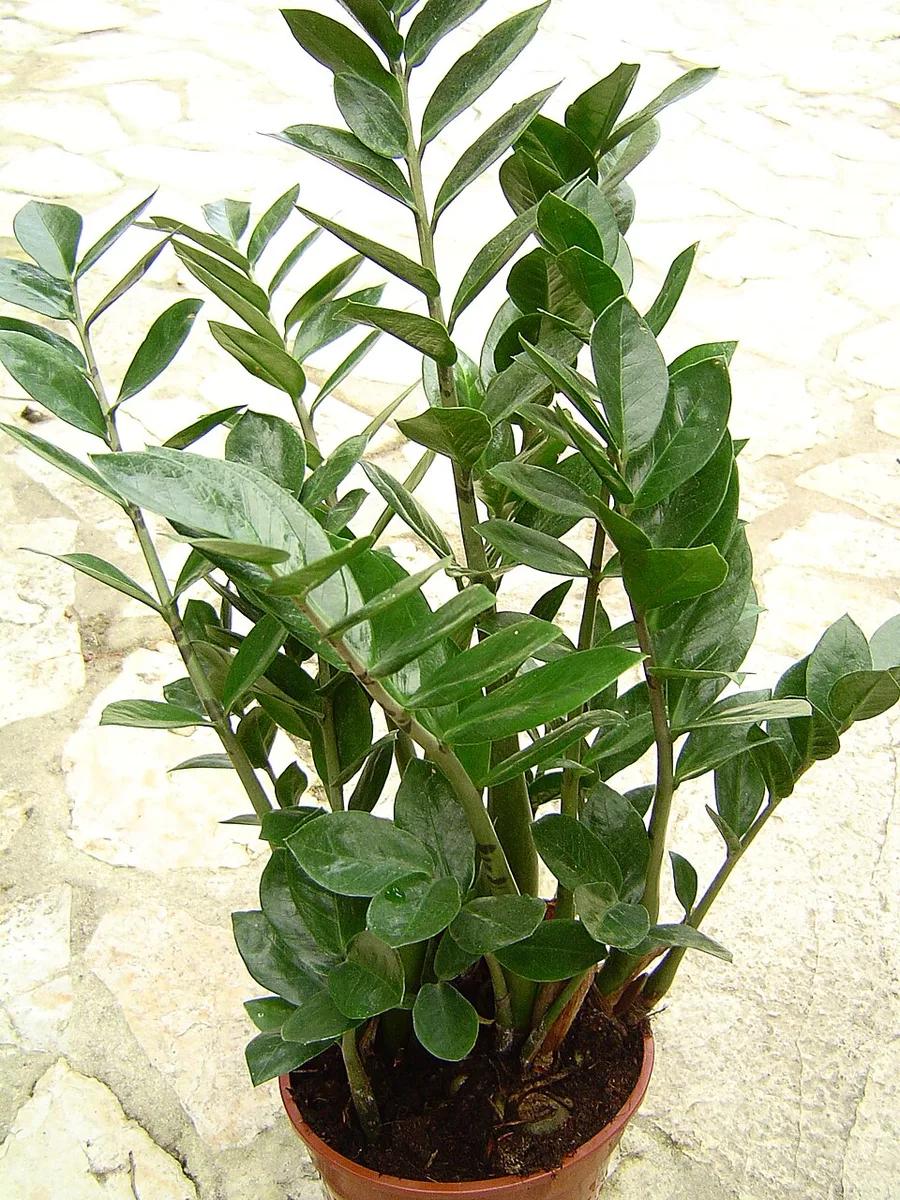
ZZ Plant
Zamioculcas zamiifolia
Glossy, dark green leaflets in neat rows along arching stems that rise from the soil.
Care guide
Chinese Money Plant
Pilea peperomioides
Round, coin-shaped leaves on slender stems radiating from a central stalk.
Care guide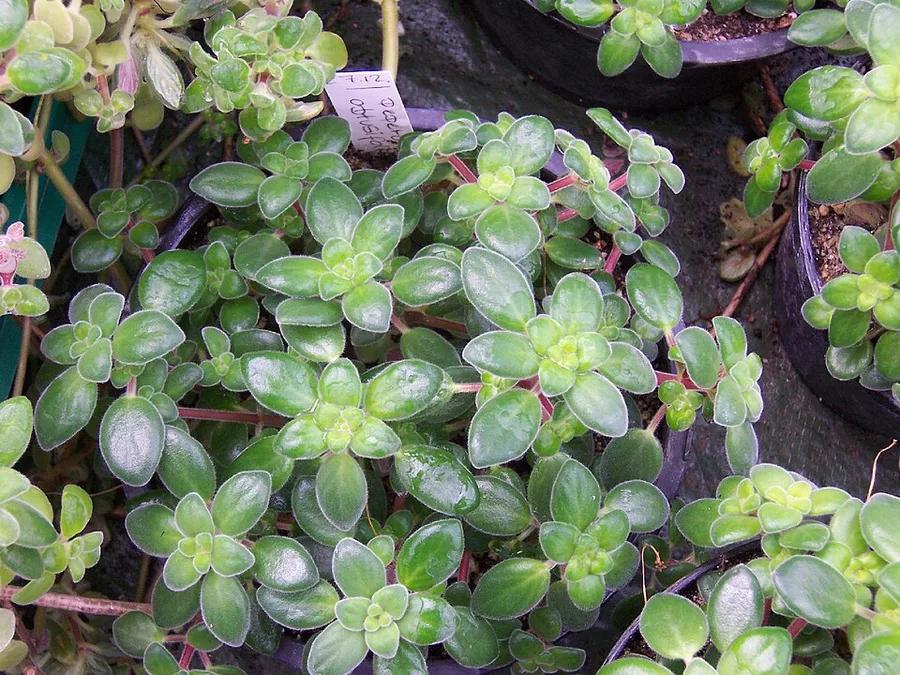
Peperomia
Peperomia obtusifolia
Small, compact plants with thick leaves: glossy, rippled or striped like a watermelon.
Care guide
Feathery fronds
Ferns and palms with long fronds divided into many narrow leaflets.
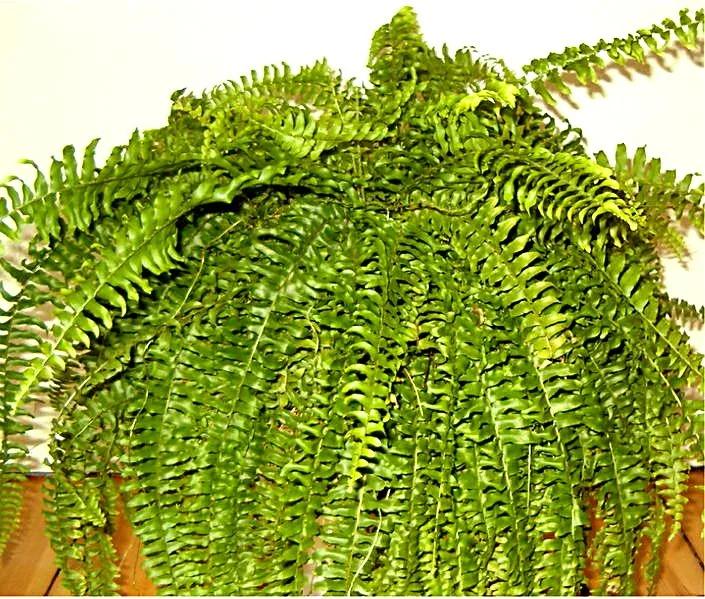
Boston Fern
Nephrolepis exaltata 'Bostoniensis'
Cascading fountains of feathery green fronds, often grown in a hanging pot.
Care guide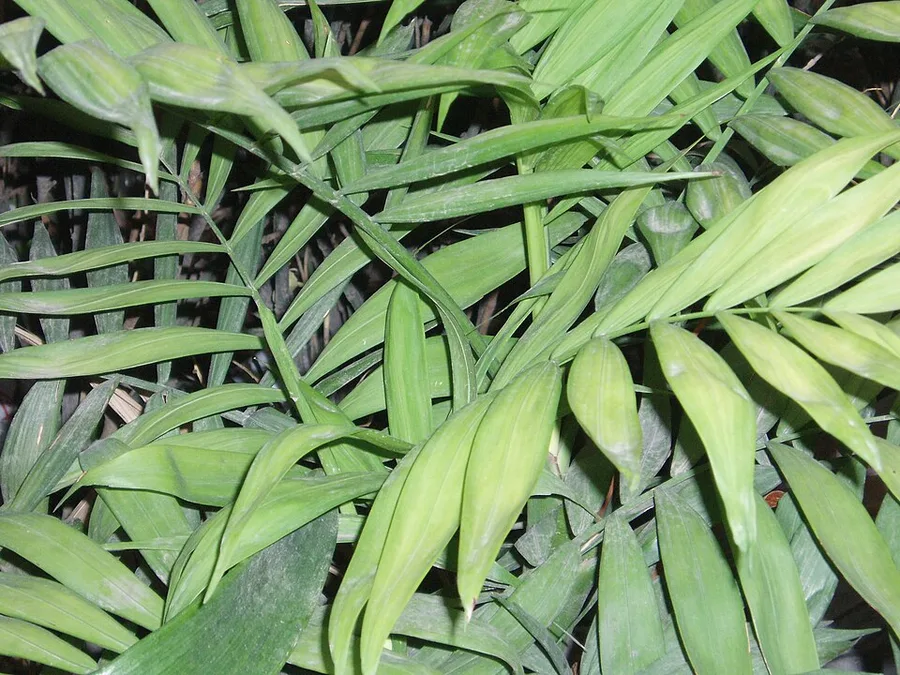
Parlor Palm
Chamaedorea elegans
Soft, feathery fronds on a slow-growing clump, usually 3 to 4 feet tall indoors.
Care guideMajesty Palm
Ravenea rivularis
Tall, arching, feathery fronds; larger and fuller than a parlor palm.
Care guide
Grown for their flowers
Houseplants most often recognized by their blooms.
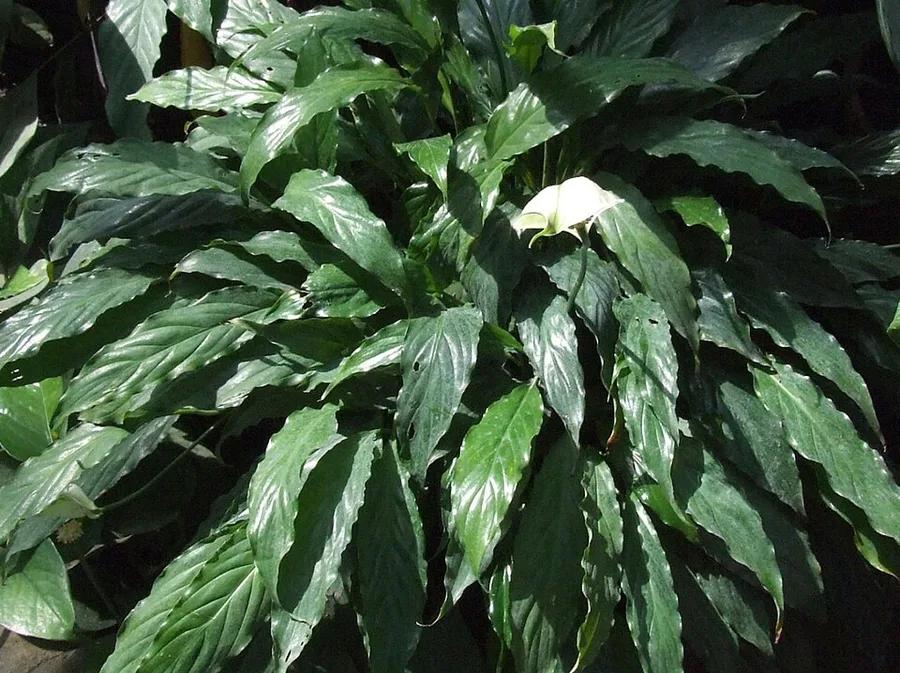
Peace Lily
Spathiphyllum wallisii
White spathes held above glossy, dark green leaves.
Care guide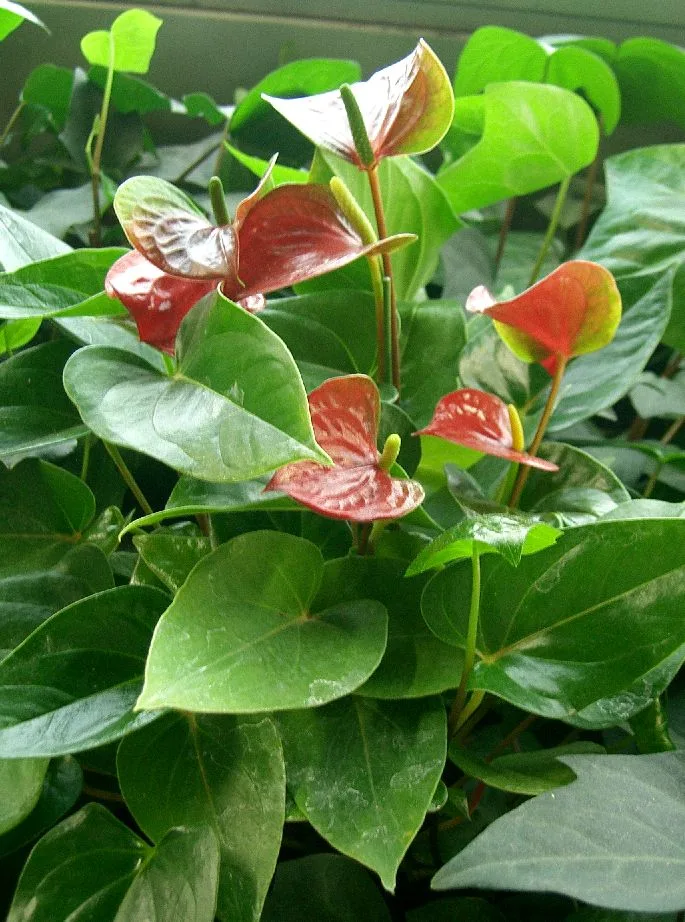
Anthurium
Anthurium andraeanum
Glossy red, pink or white spathes around a central flower spike.
Care guide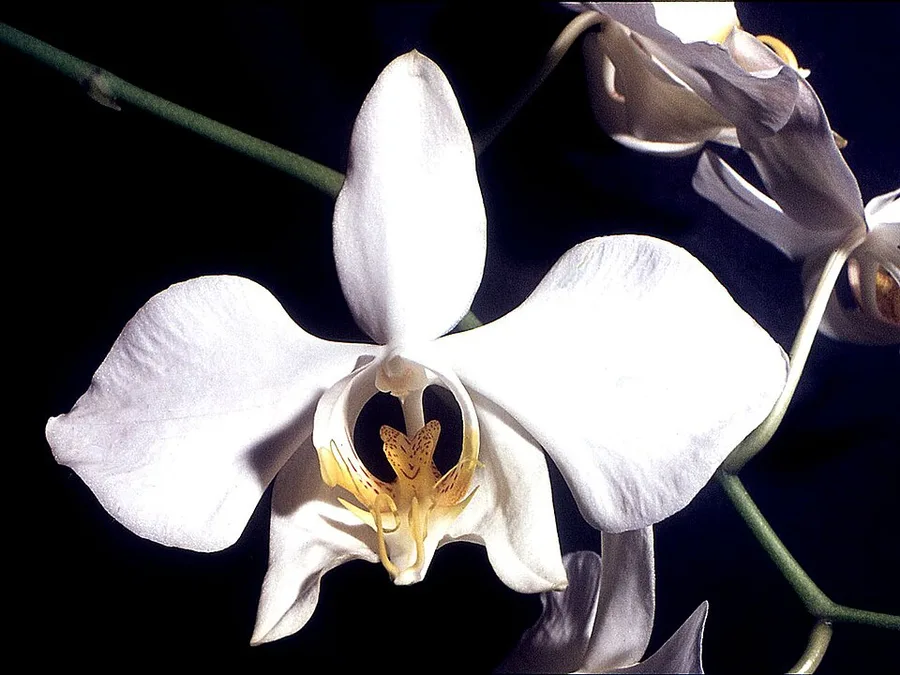
Moth Orchid
Phalaenopsis spp.
Arching sprays of flat, long-lasting blooms above a few broad leaves; the moth orchid.
Care guide
Houseplants People Often Mix Up
Similar leaves or similar names. Check the deciding feature before you settle on a care routine.
Pothos vs heartleaf philodendron
Both trail with heart-shaped leaves. Pothos leaves are thicker, waxier and often variegated. Heartleaf philodendron has thinner, matte leaves and slender stems with distinct sheaths on new growth.
Money tree vs Chinese money plant
Different plants with similar names. The money tree (Pachira aquatica) is a small tree with hand-shaped leaves and braided trunks. The Chinese money plant (Pilea peperomioides) is a small plant with round, coin-shaped leaves.
Lucky bamboo vs real bamboo
Lucky bamboo is Dracaena sanderiana, in the asparagus family, not a grass. Its canes are smooth and fleshy, and it is often sold growing in water.
Jade plant vs Chinese money plant
Both have round leaves. Jade leaves are thick and fleshy on a stout woody trunk. Chinese money plant leaves are flat, each on its own slender stalk radiating from a central stem.
Peace lily vs anthurium
Both are aroids with a spathe around a flower spike. Peace lily spathes are white and soft; anthurium spathes are glossy, waxy and usually red or pink.
Calathea vs prayer plant
Close relatives in the same family, Marantaceae, and both move their leaves with the light. Prayer plant leaves fold up flat at night; the red-veined type has a herringbone pattern.
Worried about pets? See houseplants and pet safety.
Houseplant Identifier FAQ
How do I identify a houseplant from a picture?
Upload a clear daylight photo to the identifier above. You get the most likely name, a confidence score, lookalike plants with the feature that tells each apart, and care notes. No account is needed. If you would rather match it yourself, compare it with the pictures in the houseplant key on this page.
Is the houseplant identifier free?
Yes. It runs in your browser with no sign-up and no subscription. There is a fair-use cap on the number of photo analyses per visitor.
What if my plant is not one of the 30 in the key?
The photo identifier is not limited to these 30 plants. It covers houseplants, succulents, cacti and outdoor plants. The key lists the plants people ask about most, each with a full care guide.
Why does my result show a low confidence score?
Young plants, cuttings and close relatives such as pothos and philodendron can look very alike. Matches below 50% confidence are marked as tentative. Take a second photo of one leaf where it meets the stem, or of the flower, and compare the lookalikes listed in the result.
Can it tell me if a houseplant is safe for my cat or dog?
The identifier names the plant; it does not judge whether a plant is safe for pets. Each plant guide has a pet safety note, and our toxic plants page lists what to do and which pet poison control lines to call.
Is my photo stored or shared?
After you review the local preview and choose Analyze Photo, a metadata-free copy is sent to our servers and an AI model provider to produce your result. We do not build a gallery, sell the image, or use it for advertising. See the privacy policy for details.