ZZ Plant
Zamioculcas zamiifolia
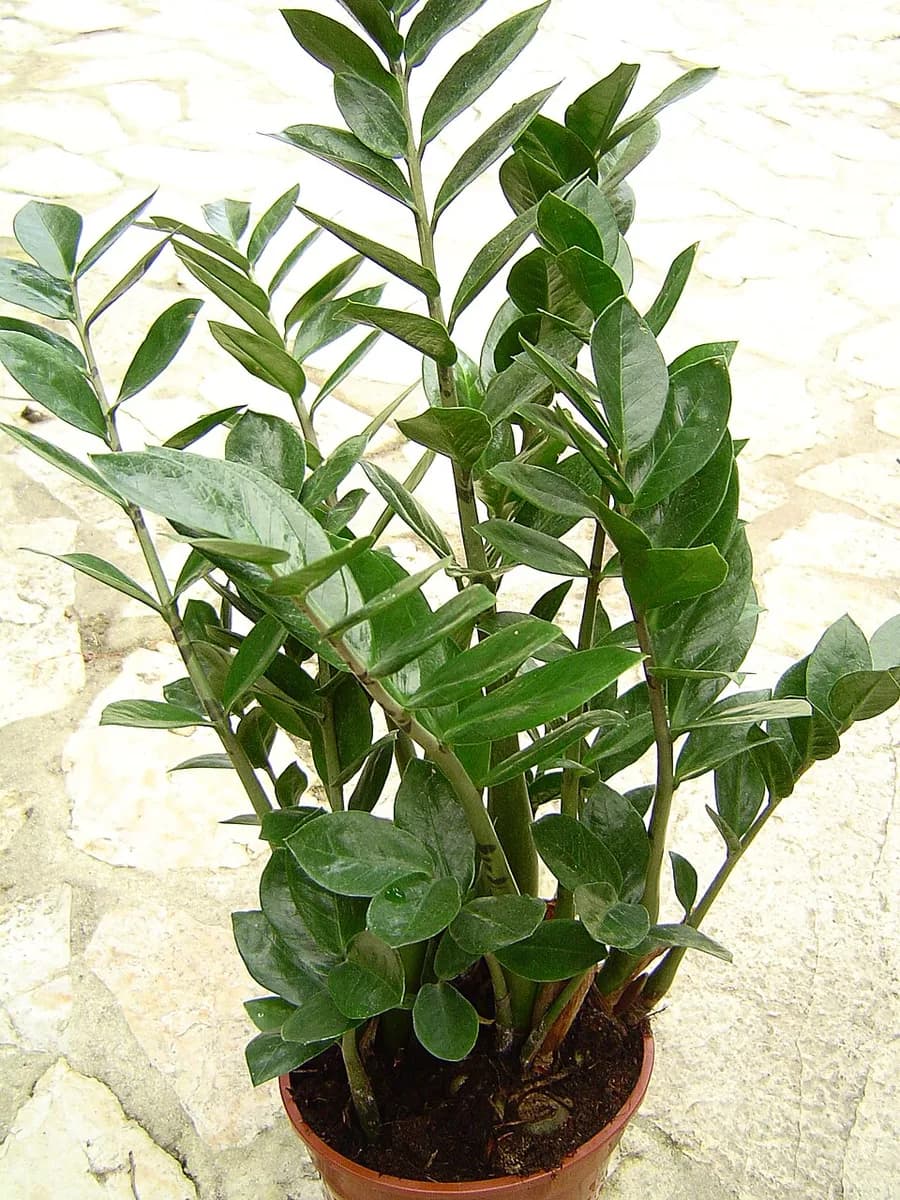
Image credit: User:WeFt · CC BY-SA 3.0 · full image credits
Light
Low to bright indirect light
Water
Water every 2-4 weeks
Humidity
Tolerates dry air with no complaints
Temp
60-85 F (15-29 C)
Toxicity
Toxic to cats and dogs
Overview
The ZZ plant is the definition of low-maintenance: glossy, dark green leaflets on graceful arching stems, powered by chunky underground rhizomes that store water for weeks. Native to the dry grasslands of East Africa, it shrugs off low light, missed waterings, and dry indoor air. For offices, dim apartments, and frequent travelers, it is one of the hardest houseplants to kill.
Detailed Care Guide
Place your ZZ plant almost anywhere except direct sun -- it grows fastest in bright indirect light but survives happily in low light. Water only when the soil has dried out completely; in low light that may mean once a month. The most common mistake is watering on a schedule rather than checking the soil, which leads to rhizome rot. Wipe the naturally shiny leaves occasionally with a damp cloth (skip leaf-shine products). Repot every 2-3 years in spring, or when the rhizomes visibly press against the pot walls. New stems emerge from the soil as spears and unfurl over several weeks -- steady, if unhurried, progress is normal for this slow grower.
Low to bright indirect light. Tolerates dim corners and windowless offices better than almost any other houseplant. Avoid prolonged direct sun, which can scorch the glossy leaflets.
Water every 2-4 weeks, allowing the soil to dry out completely between waterings. The thick underground rhizomes store water, so the plant handles neglect far better than overwatering.
Tolerates dry air with no complaints. Average household humidity (30-50%) is perfectly fine. No misting or humidifier needed.
Well-draining potting mix with added perlite, or a cactus mix. The rhizomes rot quickly in soggy soil, so drainage is the priority.
60-85 F (15-29 C). Avoid temperatures below 45 F. Keep away from cold drafts and direct blasts from air conditioners.
Feed once or twice during the growing season with a balanced liquid fertilizer at half strength. ZZ plants grow slowly and need very little feeding.
Common Problems
Identify and fix the most frequent issues with ZZ Plant.
Yellow leaves
Symptoms
Leaflets turning yellow and dropping, often starting low on the stem. Soil stays damp for more than a week.
Cause
Overwatering leading to rhizome and root rot.
Solution
Let the soil dry completely. If yellowing continues, unpot and inspect the rhizomes -- firm is healthy, mushy is rot. Trim any soft sections, dust with cinnamon or fungicide, and repot in dry, fast-draining mix.
Wrinkled stems
Symptoms
Stems look shriveled or wrinkled; leaflets may droop slightly.
Cause
Prolonged underwatering has depleted the water stored in the rhizomes.
Solution
Water thoroughly until it drains from the bottom. The stems typically plump back up within a week. Resume checking the soil every couple of weeks.
Leaning or stretching stems
Symptoms
Stems arch heavily toward the window with long gaps between leaflets.
Cause
Insufficient light causing the plant to reach for the nearest source.
Solution
Move to a brighter spot with indirect light and rotate the pot a quarter turn each time you water for even growth.
Brown leaf tips
Symptoms
Dry, brown tips on otherwise healthy leaflets.
Cause
Very dry air, underwatering, or fertilizer buildup.
Solution
Trim the brown tips with clean scissors, water more consistently, and flush the soil with plain water if you fertilize regularly.
Propagation
Division is the fastest method: unpot the plant, separate the rhizomes into clumps with at least one stem each, and pot them up individually. Stem cuttings also work but require patience -- place a full stem or even a single leaflet in water or moist soil, and expect a new rhizome to form over 2-4 months before real growth begins. Keep cuttings warm and in bright indirect light to speed things up.
Frequently Asked Questions
How often should I water a ZZ plant?
Every 2-4 weeks, and only when the soil has dried out completely. In low light or winter, once a month is often enough. When in doubt, wait another week -- ZZ plants recover easily from drought but not from rot.
Can a ZZ plant survive in a room with no windows?
Yes, a ZZ plant can live for years under office fluorescent or LED lighting alone. Growth will be slow and stems may stretch slightly, but the plant remains healthy. Water even less frequently in these conditions.
Is the ZZ plant poisonous to touch?
Casual contact is harmless. The sap contains calcium oxalate crystals that can irritate sensitive skin, so wash your hands after pruning or repotting. The real concern is ingestion by pets or small children.
Why is my ZZ plant not growing?
ZZ plants are naturally slow growers and often pause entirely in winter. If there is no new growth during spring and summer, move it to brighter indirect light and feed once with diluted fertilizer. New spears typically emerge a few times a year at most.
Should I repot my ZZ plant?
Only when the rhizomes crowd the pot -- you may see the pot bulging or roots circling the drainage holes. That usually means every 2-3 years. Choose a pot just one size larger; too much extra soil holds moisture and invites rot.