Dragon Tree
Dracaena marginata
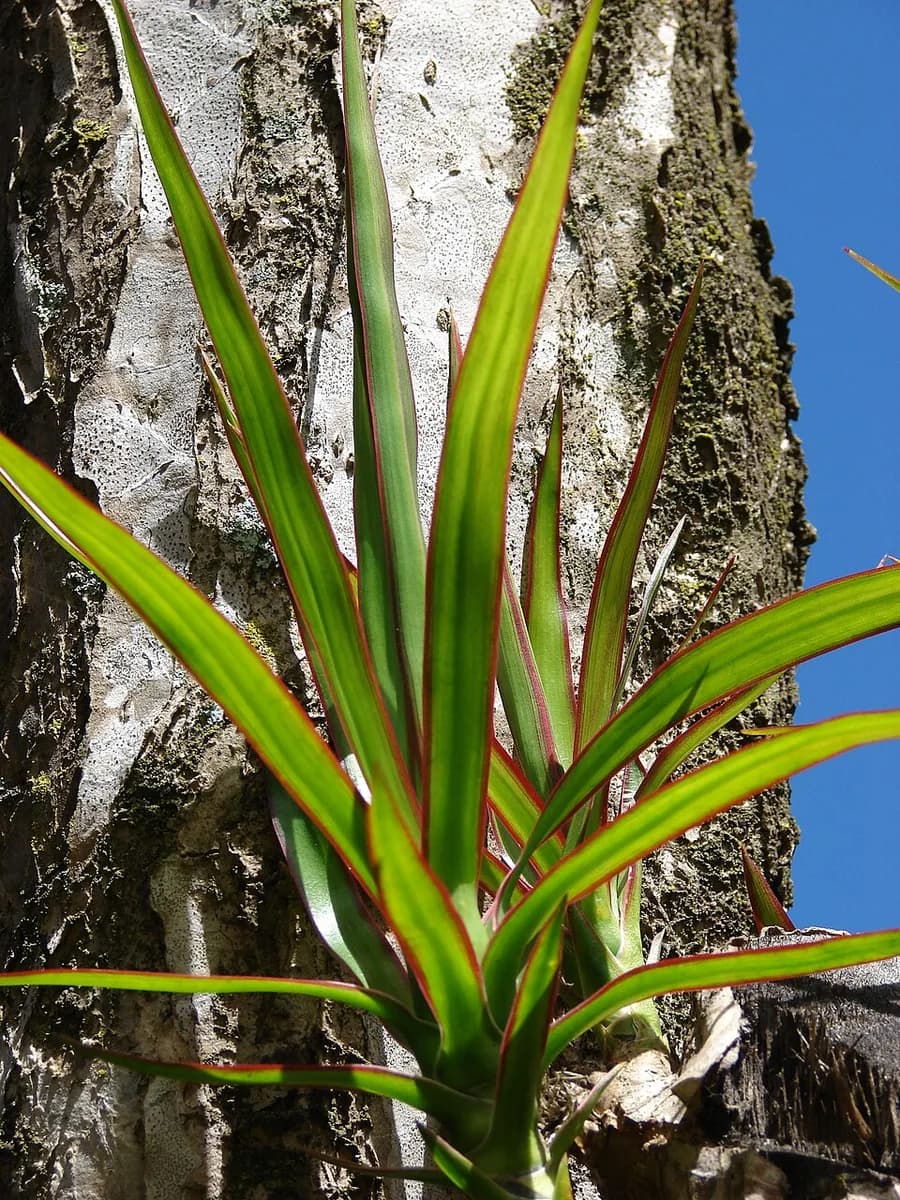
Image credit: Forest & Kim Starr · CC BY 3.0 · full image credits
Light
Medium to bright indirect light
Water
Water when the top half of the soil is dry
Humidity
Average household humidity is fine
Temp
65-80 F (18-27 C)
Toxicity
Toxic to cats and dogs
Overview
The dragon tree is the houseplant that looks like a miniature palm and behaves like a cactus: slim, sculptural canes topped with fountains of narrow, red-edged leaves, thriving on irregular watering and ordinary light. Native to Madagascar, it grows slowly to 6 feet or more indoors, shedding lower leaves to reveal more of its elegant trunk as it climbs. For beginners who want an architectural floor plant, it is one of the most forgiving options.
Detailed Care Guide
Place your dragon tree in medium to bright indirect light and let the top half of the soil dry before watering -- a moisture meter or a finger test both work, and erring dry is always safer. Fluoride-sensitive like its spider plant relatives, it develops fewer brown tips when watered with filtered or rain water. Rotate the pot occasionally for an even crown. Old lower leaves yellowing and peeling off the cane is normal aging: pull them away once loose. If a cane grows too tall or bare, cut it at any height -- new heads sprout below the cut within weeks, and the removed top roots as a cutting. Repot every 2-3 years; dracaenas are content slightly rootbound. Dust the leaves occasionally and check for spider mites in dry winter air.
Medium to bright indirect light. Tolerates low light with slower, thinner growth. Direct sun can bleach and scorch the narrow leaves.
Water when the top half of the soil is dry, roughly every 1-2 weeks in summer and every 3 weeks in winter. Dracaenas are drought-tolerant and hate wet feet.
Average household humidity is fine. Brown tips become more common in very dry air.
Well-draining potting mix with perlite. A loose mix prevents the water retention that causes root rot.
65-80 F (18-27 C). Keep above 55 F and away from cold drafts.
Feed monthly in spring and summer with a balanced fertilizer at half strength. Dracaenas are slow growers and light feeders.
Common Problems
Identify and fix the most frequent issues with Dragon Tree.
Brown leaf tips
Symptoms
Tips of the narrow leaves dry out and brown, sometimes with a yellow band.
Cause
Fluoride in tap water, dry air, or inconsistent watering. Dracaenas are notably fluoride-sensitive.
Solution
Switch to filtered, distilled, or rain water, keep watering consistent, and trim the tips at an angle to mimic the leaf shape.
Yellowing, dropping lower leaves
Symptoms
The lowest leaves yellow, wilt, and peel away from the cane.
Cause
Natural aging if gradual -- this is how the cane forms. Rapid widespread yellowing means overwatering.
Solution
For a few old leaves, no action needed. For rapid loss, let the soil dry out properly between waterings and check the roots.
Soft, wrinkled canes
Symptoms
The cane feels soft or looks wrinkled; leaves collapse.
Cause
Advanced root or stem rot from overwatering.
Solution
Cut the cane above the soft tissue -- firm cane with healthy color can be re-rooted in water or moist mix. Discard rotted portions and the wet soil.
Faded or bleached leaves
Symptoms
Leaves lose color and look washed out.
Cause
Too much direct sun.
Solution
Move out of direct sunlight to bright indirect light. New growth will emerge with normal coloring.
Propagation
Dracaenas propagate readily from cane cuttings. Cut the top with a clean pruner and root it in water or moist perlite -- roots appear in 3-6 weeks. Sections of bare cane a few inches long also work: lay note of which end was up, insert the bottom end into moist mix, and shoots emerge from dormant nodes. The parent cane sprouts new heads below its cut, so one leggy plant becomes several fuller ones.
Frequently Asked Questions
Why does my dracaena have brown tips?
Usually fluoride in tap water or dry air. Dracaenas are among the most fluoride-sensitive houseplants -- switch to filtered or rain water, keep moisture consistent, and trim existing tips. New leaves should come in clean.
Is Dracaena marginata toxic to cats?
Yes, and cats seem drawn to the grass-like leaves. The saponins cause vomiting, drooling, and dilated pupils in cats. If you share a home with a determined chewer, this is a plant to skip or keep truly inaccessible.
How tall does a dragon tree get indoors?
Indoors, expect a slow climb to 6-8 feet over many years. You control the height entirely: cut any cane at your preferred level, and it re-sprouts just below the cut with one to three new heads.
Can a dragon tree live in low light?
Yes, it survives low light better than most tree-form plants, though growth slows dramatically and leaves grow thinner. Water much less in dim spots -- perhaps monthly -- since the plant uses so little.
My dracaena is too tall and bare -- can I cut it back?
Absolutely, and it responds beautifully. Cut the cane at whatever height you like during spring or summer. New growth sprouts below the cut within a few weeks, and you can root the removed top as a second plant.