Money Tree
Pachira aquatica
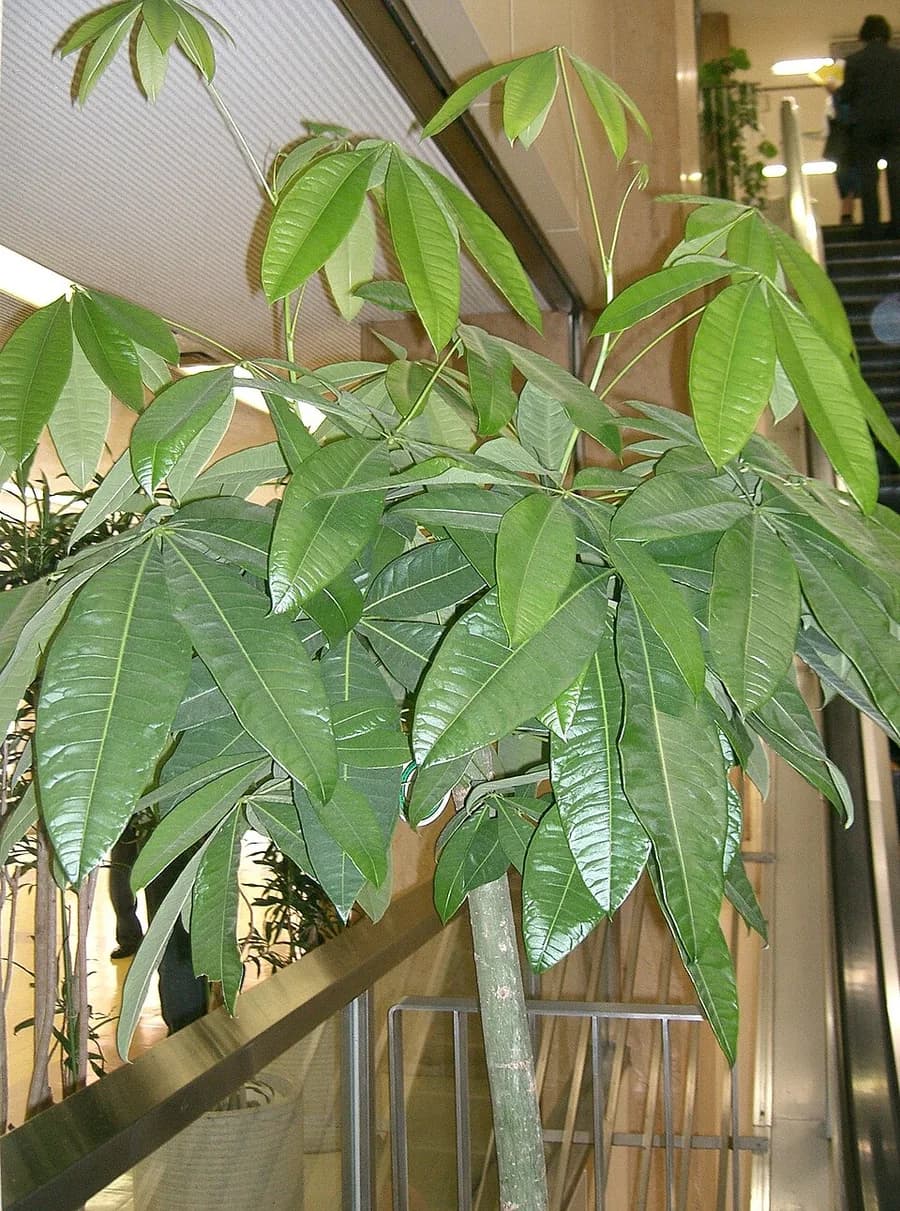
Image credit: KENPEI · GFDL + CC BY-SA 2.1 Japan · full image credits
Light
Bright indirect light
Water
Water deeply when the top 2 inches of soil are dry
Humidity
Prefers 50%+ humidity but adapts well to average homes
Temp
65-80 F (18-27 C)
Toxicity
Non-toxic to cats and dogs
Overview
The money tree is a small indoor tree with glossy, hand-shaped leaves, usually sold with its young trunks braided together -- a nursery tradition tied to its reputation for bringing good fortune. Native to Central and South American wetlands, Pachira aquatica adapts remarkably well to living rooms and offices, forgives inconsistent care, and is safe for households with pets.
Detailed Care Guide
Give your money tree bright indirect light and rotate it a quarter turn whenever you water so the canopy grows evenly instead of leaning. Water deeply when the top couple inches of soil dry out, letting excess drain fully -- the classic mistake is frequent light watering, which keeps the surface wet while the roots cycle between soggy and stressed. Money trees react to change by shedding leaves: a move, a draft, or a repot often costs a few, and they regrow once conditions stabilize, so pick a good spot and leave it there. Feed lightly in the growing season, wipe the leaves occasionally, and prune stray shoots in spring to keep the lollipop shape. The braided trunks continue fusing as they thicken; you can loosely continue the braid as new growth extends, or let it grow naturally.
Bright indirect light. Tolerates medium light with slower growth. Avoid harsh direct sun, which scorches the palmate leaves. Rotate regularly for an even canopy.
Water deeply when the top 2 inches of soil are dry, roughly every 1-2 weeks. Money trees prefer infrequent deep soakings over frequent sips, and their trunks store some water.
Prefers 50%+ humidity but adapts well to average homes. Occasional misting or a pebble tray helps in dry winters.
Well-draining potting mix with perlite or sand. Despite growing in wetlands in the wild, potted money trees rot quickly in heavy, soggy soil.
65-80 F (18-27 C). Keep above 55 F and away from drafts and heat vents -- sudden changes trigger leaf drop.
Feed monthly during spring and summer with a balanced liquid fertilizer at half strength. Pause in fall and winter.
Common Problems
Identify and fix the most frequent issues with Money Tree.
Yellowing, dropping leaves
Symptoms
Leaves yellow and fall, sometimes several at once.
Cause
Overwatering is most common; sudden environmental change (moving, drafts, repotting) is a close second.
Solution
Check the soil -- if damp, let it dry out properly and verify drainage. If care is consistent, look for a recent change in location or temperature and stabilize conditions. New leaves regrow within weeks.
Soft trunk
Symptoms
One or more of the braided trunks feels soft or wrinkled at the base.
Cause
Trunk rot from chronic overwatering.
Solution
Act quickly: unpot, remove wet soil, and inspect. A single rotted trunk can sometimes be cut away from the braid to save the rest. Repot survivors in fresh, fast-draining mix and water sparingly.
Brown, crispy leaf edges
Symptoms
Edges and tips of leaflets dry out and brown.
Cause
Low humidity, underwatering, or salt buildup.
Solution
Water more deeply and consistently, raise humidity slightly, and flush the soil with plain water every couple of months.
Leaning or lopsided growth
Symptoms
The canopy grows heavily toward the window.
Cause
Phototropism without regular rotation.
Solution
Rotate the pot a quarter turn at every watering. Prune to rebalance a badly lopsided canopy in spring.
Propagation
Take a 4-6 inch stem cutting with a couple of leaf nodes in spring or summer. Root it in water (change weekly) or moist perlite; roots appear in 3-6 weeks. Pot up once roots are an inch or two long. Cuttings grow as single-trunk trees -- the braided look requires several young, flexible seedlings braided together over time.
Frequently Asked Questions
Is a money tree safe for cats?
Yes, the money tree (Pachira aquatica) is non-toxic to cats and dogs, making it one of the best statement trees for pet households. A curious nibble may cause mild stomach upset at worst.
How often should I water a money tree?
Every 1-2 weeks, when the top 2 inches of soil are dry -- deeply, until water drains from the pot. Water less in winter. Deep-and-infrequent beats little-and-often for this plant.
Why is my money tree dropping leaves?
Leaf drop is the money tree's all-purpose stress response: overwatering, a new location, drafts, or seasonal change. Check the soil first, then stabilize the environment. As long as the trunks stay firm, the plant almost always releafs.
Should I keep braiding my money tree's trunk?
It is optional. You can loosely braid new flexible growth to continue the pattern, tying the top gently until it sets, or simply let the tree grow naturally. Never force stiff, mature stems -- they will crack.
How big does a money tree get indoors?
Typically 3-6 feet indoors, controlled largely by pot size and pruning. In the wild it can reach 60 feet, but a potted money tree stays a manageable indoor tree for many years.