Anthurium
Anthurium andraeanum
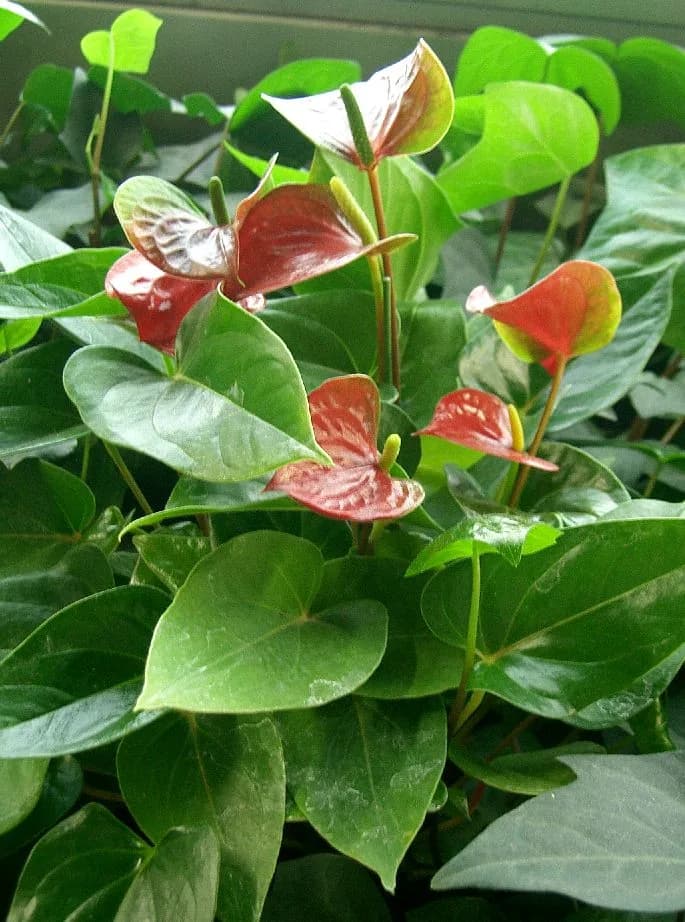
Image credit: KENPEI · CC BY-SA 3.0 · full image credits
Light
Bright indirect light
Water
Water when the top inch of soil is dry
Humidity
Prefers 60%+ humidity but tolerates average homes, especially the hardier florist varieties
Temp
65-85 F (18-29 C)
Toxicity
Toxic to cats and dogs
Overview
Anthurium -- the flamingo flower -- offers what almost no other easy houseplant can: months of continuous color. The glossy red, pink, or white 'flowers' are actually modified leaves (spathes) surrounding the true flower spike, and each one lasts up to two or three months. Native to Colombian and Ecuadorian rainforests, anthuriums grow as epiphytes, which explains their demand for chunky, airy soil. Given bright indirect light, a mature plant cycles through blooms nearly year-round.
Detailed Care Guide
Treat anthurium like the tree-dweller it is. Pot it in a chunky orchid-bark blend that lets the roots breathe, water when the top inch dries, and never let it sit in a saucer of water. Bright indirect light is the flower switch: a well-lit anthurium produces a new bloom every few months, each lasting up to three, while a dim one produces only leaves. Feed lightly with a bloom-oriented fertilizer, and snip spent flowers at the base to redirect energy. Wipe the heart-shaped leaves to keep them glossy. Aerial roots poking from the stem are normal -- tuck them toward the soil or leave them. Repot every 2-3 years when roots crowd the pot, refreshing the chunky mix each time.
Bright indirect light. The more bright, indirect light it receives, the more it flowers. Direct sun scorches leaves; deep shade halts blooming.
Water when the top inch of soil is dry, roughly weekly. Anthuriums like moisture but their thick epiphyte roots demand air -- soggy soil is fatal.
Prefers 60%+ humidity but tolerates average homes, especially the hardier florist varieties. Higher humidity means glossier leaves and more blooms.
Extremely airy mix -- orchid bark blended with potting soil and perlite, roughly in equal parts. Regular potting soil alone suffocates the roots.
65-85 F (18-29 C). Keep above 60 F and away from cold drafts and heat vents.
Feed every 6-8 weeks with a phosphorus-rich fertilizer (like an orchid bloom formula) at quarter strength to encourage flowering.
Common Problems
Identify and fix the most frequent issues with Anthurium.
Not flowering
Symptoms
Healthy foliage but no new blooms for many months.
Cause
Insufficient light is the cause in the vast majority of cases; occasionally underfeeding.
Solution
Move to brighter indirect light -- near an east window or filtered south exposure -- and feed with a diluted phosphorus-rich fertilizer. Blooming typically resumes within a couple of months.
Brown flower or leaf edges
Symptoms
Spathes or leaves brown at the edges and tips.
Cause
Low humidity, salt buildup, or direct sun.
Solution
Raise humidity, flush the pot with plain water every few months, and shield from direct rays. Trim the browned edges cleanly.
Yellowing leaves
Symptoms
Leaves turn yellow, often several at once.
Cause
Overwatering or compacted, airless soil.
Solution
Repot into a chunky orchid-bark mix if the current soil is dense, and let the top inch dry between waterings.
Green, faded flowers
Symptoms
New spathes emerge greenish or existing ones lose their color.
Cause
Aging blooms naturally green; new green blooms suggest low light.
Solution
Cut aging flowers at the base. If new flowers open green and small, increase light.
Propagation
Division is easiest: mature anthuriums form offsets around the base, which can be separated with their roots at repotting time and potted individually. Stem cuttings with a node and an aerial root also work -- pot them in moist orchid mix and keep humid until established. Water any new division sparingly at first while the roots settle into the airy mix.
Frequently Asked Questions
How do I get my anthurium to bloom again?
Light, then food. Move it to bright indirect light, feed every 6-8 weeks with a diluted phosphorus-rich fertilizer, and keep it slightly rootbound in airy mix. Most anthuriums resume flowering within two months of a light upgrade.
How long do anthurium flowers last?
Each spathe typically holds its color for 6-12 weeks -- among the longest-lasting blooms of any houseplant. A healthy plant in good light produces flowers in an overlapping cycle, so it is rarely without color.
Are anthuriums toxic to cats and dogs?
Yes. Like most aroids, they contain calcium oxalate crystals that cause immediate mouth pain, drooling, and vomiting if chewed. The reaction usually limits how much a pet eats, but keep the plant out of reach regardless.
Why are my anthurium's flowers turning green?
Old flowers fade to green naturally at the end of their long life -- cut them at the base. If brand-new flowers emerge green and undersized, the plant needs more light.
Can I grow anthurium in regular potting soil?
Not for long. Anthuriums are epiphytes with thick roots that need air; dense potting soil suffocates and rots them. Blend orchid bark and perlite into potting soil roughly in equal parts, or buy an aroid mix.