Snake Plant
Dracaena trifasciata
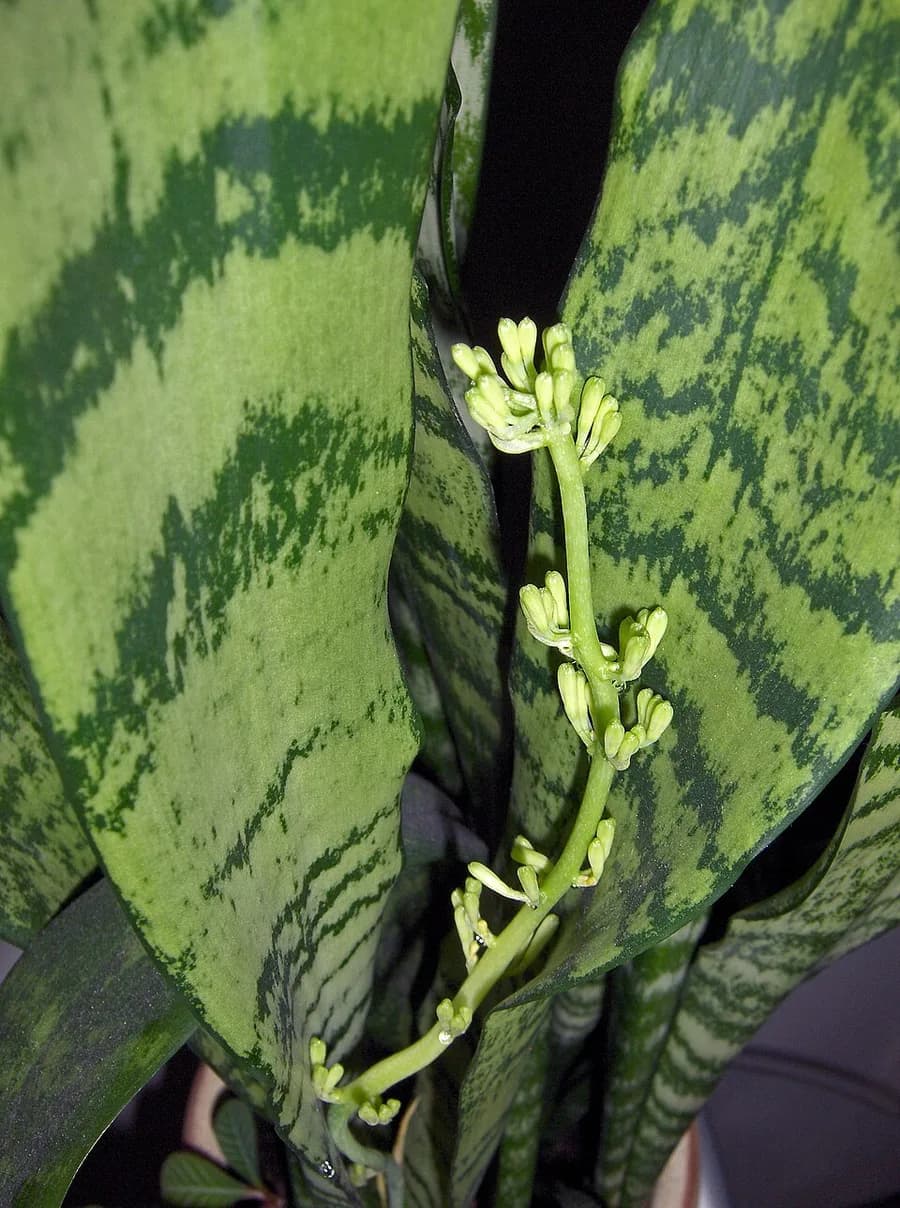
Image credit: Tommy Kronkvist · CC BY-SA 3.0 · full image credits
Light
Tolerates low light to bright indirect light
Water
Water every 2-6 weeks depending on light and season. Allow soil to dry completely between waterings. In winter
Humidity
Tolerates very low humidity
Temp
60-85 F (15-29 C)
Toxicity
Mildly toxic to cats and dogs
Overview
The snake plant, formerly classified as Sansevieria, is among the hardiest houseplants available. Its stiff, upright leaves feature striking patterns of green, yellow, and silver that vary by variety. Extremely tolerant of neglect, low light, and irregular watering, it is ideal for beginners and busy households. Snake plants also perform CAM photosynthesis, releasing oxygen at night, which makes them popular bedroom plants.
Detailed Care Guide
Snake plants adapt to almost any light condition, from dim hallways to bright windowsills. Allow the soil to dry completely between waterings -- insert a finger 2 inches deep to check. In winter, watering once a month is often sufficient. Use a fast-draining cactus or succulent mix, as soggy soil is the most common killer. Choose a heavy pot to prevent tipping from the tall, top-heavy leaves. Snake plants prefer being rootbound and only need repotting every few years when roots visibly outgrow the container. Wipe leaves with a damp cloth to remove dust. Offsets (pups) will emerge from the base over time and can be separated during repotting to start new plants.
Tolerates low light to bright indirect light. Can handle a few hours of direct sun. One of the few houseplants that will survive in near-dark conditions, though growth will be slow.
Water every 2-6 weeks depending on light and season. Allow soil to dry completely between waterings. In winter, water only once a month. Overwatering is the primary killer of snake plants.
Tolerates very low humidity. Average household humidity is perfectly fine. Does not need misting or a humidifier.
Very well-draining cactus or succulent mix. Add extra perlite or coarse sand to standard potting soil. The mix must not hold excess moisture.
60-85 F (15-29 C). Tolerates short exposure to 50 F but prolonged cold will damage leaves. Keep away from cold windows in winter.
Feed sparingly -- once or twice during the growing season with a balanced houseplant fertilizer at half strength. Over-fertilizing causes more harm than under-fertilizing with this plant.
Common Problems
Identify and fix the most frequent issues with Snake Plant.
Mushy, yellowing leaves
Symptoms
Leaves become soft, mushy at the base, and turn yellow or translucent.
Cause
Overwatering and root rot.
Solution
Stop watering immediately. Remove the plant from its pot and inspect roots. Trim any mushy brown roots. Let the root ball air dry for a day, then repot in completely dry, fast-draining soil. Water sparingly going forward.
Wrinkled or curling leaves
Symptoms
Leaves appear wrinkled, slightly curled, or puckered.
Cause
Underwatering or extremely dry air over a prolonged period.
Solution
Water the plant thoroughly, allowing water to drain from the bottom. Resume a regular watering schedule. The leaves should plump back up within a few days.
Brown tips
Symptoms
Leaf tips turning brown and crispy.
Cause
Inconsistent watering, low humidity, or fluoride in tap water.
Solution
Water with filtered or distilled water. Maintain a consistent watering routine. Trim brown tips at an angle with clean scissors for a natural look.
Falling over or leaning
Symptoms
Tall leaves lean to one side or fall out of the pot.
Cause
Root rot weakening the base, or an oversized pot with loose soil.
Solution
Check for root rot. Repot in a snug, heavy container. Compact the soil gently around the base. For very tall varieties, use a pot with a wide, heavy base.
Propagation
The easiest method is division: separate offsets (pups) from the mother plant during repotting, ensuring each has its own roots. Leaf cuttings also work -- cut a healthy leaf into 4-inch sections, let them callus overnight, then plant the bottom end (maintaining the original orientation) in moist soil or place in water. Roots and new shoots appear in 4-8 weeks. Note that variegated varieties may lose their coloring when propagated from leaf cuttings; division preserves the original variegation.
Frequently Asked Questions
How often should I water my snake plant?
In spring and summer, water every 2-3 weeks when the soil is fully dry. In fall and winter, reduce to once a month or even less. Always err on the side of underwatering -- snake plants store water in their thick leaves and handle drought far better than soggy soil.
Can a snake plant survive without sunlight?
Snake plants can survive in very low light, including rooms with only artificial fluorescent lighting. However, they will grow very slowly and may lose some of their variegation. For best growth, provide some indirect natural light.
Do snake plants really purify the air?
Snake plants were part of the NASA Clean Air Study and were found to filter certain toxins including formaldehyde and benzene. They also uniquely perform CAM photosynthesis, converting CO2 to oxygen at night, which may marginally improve bedroom air quality.
Why is my snake plant not growing?
Snake plants are naturally slow growers, especially in low light. Ensure it is getting some indirect light, water only when dry, and feed once in spring and once in summer. Growth also slows in winter, which is normal. Patience is key.
Should I repot my snake plant?
Only repot when the plant is visibly crowded -- roots growing out of drainage holes or the pot beginning to bulge. Snake plants prefer being rootbound and can stay in the same pot for 2-3 years or longer. When you do repot, go up only one pot size.