Dieffenbachia
Dieffenbachia seguine
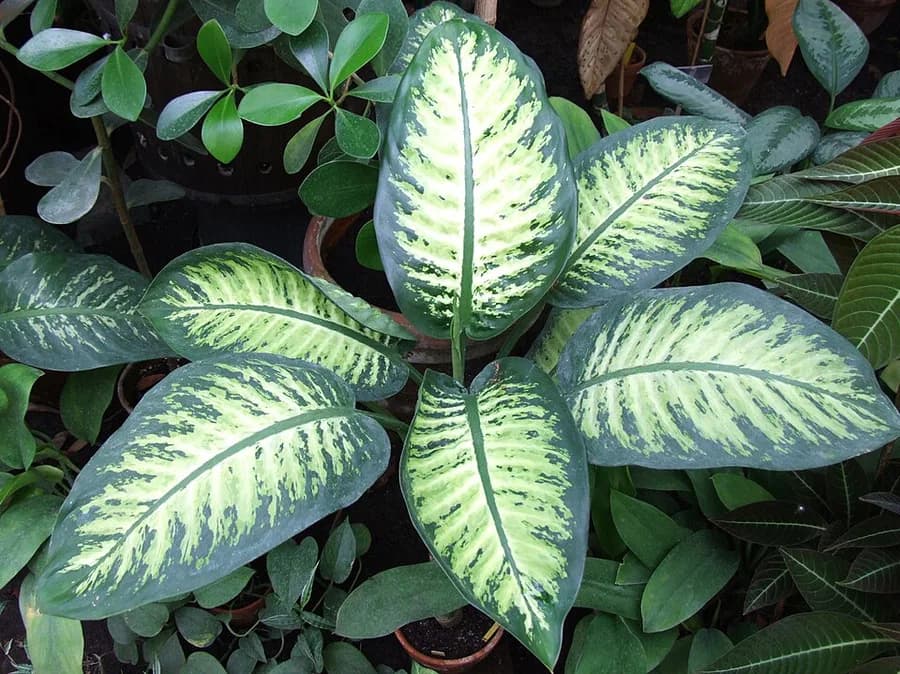
Image credit: Jerzy Opioła · CC BY-SA 3.0 · full image credits
Light
Medium to bright indirect light
Water
Water when the top 1-2 inches of soil are dry
Humidity
Prefers 50%+ but adapts to average household humidity
Temp
65-80 F (18-27 C)
Toxicity
Toxic to cats, dogs, and humans
Overview
Dieffenbachia earns its place with big, lush, cream-and-green painted leaves that bring instant tropical volume to a room, growing several feet tall in a single season when happy. Native to the Caribbean and South America, it is fast, forgiving, and inexpensive. Its one serious caveat is toxicity: the sap's oxalate crystals cause an intensely painful mouth if chewed, so it belongs out of reach of pets and toddlers.
Detailed Care Guide
Dieffenbachia is an easy, fast grower given two things: decent indirect light and restraint with water. Let the top inch or two of soil dry, then water thoroughly -- and cut back hard in winter, when overwatering does the most damage. Provide medium to bright indirect light for the boldest leaf patterning, rotating the pot for even growth. Feed monthly in the growing season and expect visible progress within weeks. Older lower leaves yellow and drop naturally as the cane extends; when the plant becomes top-heavy or bare-legged, cut the cane back to 6 inches -- it re-sprouts readily -- and root the top as a new plant. Always wear gloves when cutting, as the sap irritates skin and eyes.
Medium to bright indirect light. Tolerates lower light with slower, smaller growth. Direct sun bleaches and burns the patterned leaves.
Water when the top 1-2 inches of soil are dry, roughly weekly in the growing season. Reduce significantly in winter. Consistently soggy soil leads quickly to stem rot.
Prefers 50%+ but adapts to average household humidity. Brown edges appear in very dry air.
Standard well-draining potting mix with added perlite.
65-80 F (18-27 C). Sensitive to cold -- keep above 60 F and away from drafty windows and doors.
Feed monthly in spring and summer with a balanced liquid fertilizer at half strength. Dieffenbachia grows fast when fed and lit well.
Common Problems
Identify and fix the most frequent issues with Dieffenbachia.
Yellowing lower leaves
Symptoms
Bottom leaves yellow and droop while the top looks healthy.
Cause
Natural aging as the cane grows, or overwatering if many yellow at once.
Solution
Remove spent leaves at the stem. If yellowing is widespread, let the soil dry further between waterings and check drainage.
Soft, rotting stem base
Symptoms
The cane feels mushy near the soil line and may topple.
Cause
Stem rot from chronic overwatering, especially in winter or low light.
Solution
Cut the cane well above the rot -- firm tissue only -- and root the healthy top in water or moist mix. Discard the rotted base and soil, and water the new plant sparingly.
Brown leaf edges
Symptoms
Edges and tips of leaves dry out and brown.
Cause
Dry air, inconsistent watering, or fertilizer buildup.
Solution
Keep watering even, raise humidity slightly, flush the soil occasionally, and trim damaged edges.
Small, faded new leaves
Symptoms
New growth is undersized with weak patterning.
Cause
Insufficient light or nutrients.
Solution
Move to brighter indirect light and feed monthly in the growing season. Pattern and size recover in the next flush of leaves.
Propagation
Dieffenbachia propagates readily from cane cuttings. Cut a healthy stem into sections with at least one node each, let them dry for a few hours, then lay them horizontally on moist mix or stand the top cutting upright in water. Shoots and roots emerge from the nodes within a month. The cut-back parent re-sprouts from the stump. Wear gloves throughout -- the sap is irritating.
Frequently Asked Questions
Why is dieffenbachia called dumb cane?
Chewing any part releases needle-like calcium oxalate crystals and enzymes that cause intense burning and swelling of the mouth and tongue -- historically said to leave a person temporarily 'dumb' (unable to speak). It is why the plant must be kept from pets and small children.
Is dieffenbachia dangerous to touch?
Handling intact leaves is fine. The risk is the sap: wear gloves when pruning or propagating, avoid touching your eyes, and wash your hands afterward. Ingestion is where the serious danger lies.
How fast does dieffenbachia grow?
Fast -- in good light with monthly feeding, expect a new leaf every few weeks in the growing season and 2-4 feet of height within a couple of years. Growth slows markedly in low light and winter.
Why is my dieffenbachia leggy with a bare stem?
This is the natural growth habit: the cane extends while old lower leaves drop. Cut the cane back to about 6 inches in spring -- it will re-sprout bushier -- and root the removed top as a second plant.
Can dieffenbachia grow in low light?
It tolerates low light better than most large-leaved tropicals, but growth slows, leaves shrink, and the cream variegation fades. Medium indirect light is the practical minimum for a good-looking plant.