Heartleaf Philodendron
Philodendron hederaceum
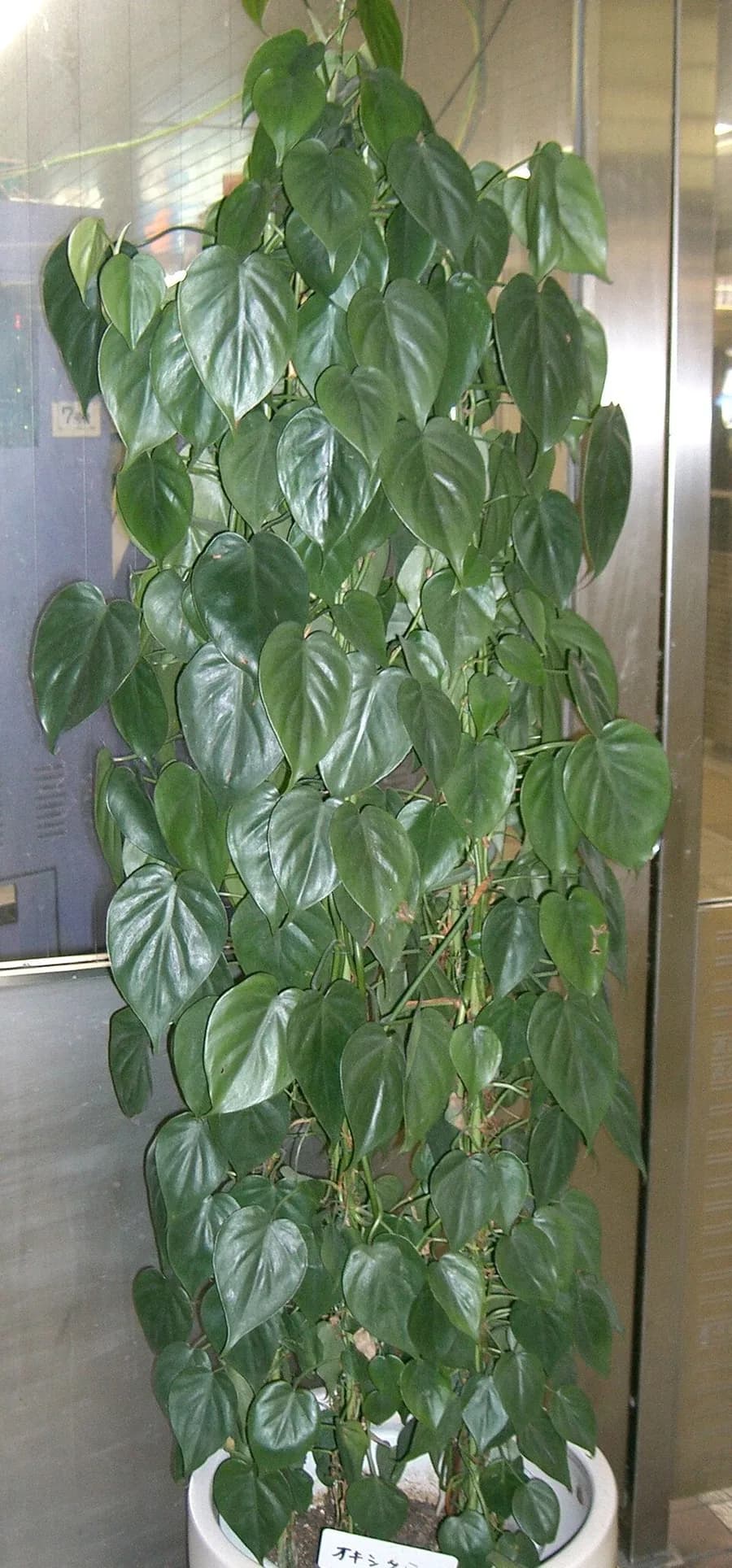
Image credit: KENPEI · GFDL + CC BY-SA 2.1 Japan · full image credits
Light
Medium to bright indirect light
Water
Water when the top inch of soil is dry
Humidity
Happy at average household humidity
Temp
65-80 F (18-27 C)
Toxicity
Toxic to cats and dogs
Overview
The heartleaf philodendron is the trailing plant that made 'hard to kill' a category. Its glossy, heart-shaped leaves cascade from shelves and hanging baskets, tolerating low light, dry air, and forgetful watering. Native to Central American and Caribbean rainforests, it grows quickly indoors and propagates so easily that a single plant can furnish a whole apartment within a year or two.
Detailed Care Guide
Heartleaf philodendron adapts to nearly any spot without direct sun, but medium to bright indirect light keeps the vines full and the leaves closely spaced. Water when the top inch of soil dries; the leaves droop slightly when thirsty and recover within hours. Pinch or trim vines just after a node a few times a year -- this is the single best trick for a bushy plant, since each cut point branches. Root the trimmings in water and plant them back into the pot for extra fullness. Wipe dust from the leaves occasionally, feed lightly in the growing season, and repot every couple of years. If you want dramatic size, give the plant a moss pole or trellis -- climbing philodendrons produce noticeably bigger leaves than trailing ones.
Medium to bright indirect light. Tolerates low light better than most trailing plants, though growth slows and stems stretch. Keep out of direct sun.
Water when the top inch of soil is dry, about every 1-2 weeks. Slight drooping signals thirst, and the plant bounces back quickly after watering.
Happy at average household humidity. Higher humidity (60%+) produces larger leaves and faster growth but is optional.
Light, well-draining potting mix. Standard potting soil amended with perlite or an aroid mix both work well.
65-80 F (18-27 C). Keep above 55 F and away from cold drafts.
Feed monthly during spring and summer with a balanced liquid fertilizer at half strength. Pale new leaves are a common sign of underfeeding.
Common Problems
Identify and fix the most frequent issues with Heartleaf Philodendron.
Yellow leaves
Symptoms
Several leaves turn fully yellow, usually the older ones first.
Cause
Overwatering, or normal aging if only an occasional leaf.
Solution
Let the soil dry further between waterings and confirm the pot drains. One or two yellow leaves now and then is normal turnover.
Long bare stems with small leaves
Symptoms
Vines stretch with long gaps between small, widely spaced leaves.
Cause
Insufficient light.
Solution
Move to brighter indirect light and trim the leggy vines back to a node -- new, fuller growth will follow, and the cuttings can be propagated.
Brown, crispy tips
Symptoms
Leaf tips dry out and turn brown.
Cause
Dry air, underwatering, or fertilizer salt buildup.
Solution
Water more consistently, flush the pot with plain water occasionally, and consider a spot with slightly higher humidity.
Drooping despite moist soil
Symptoms
Vines wilt while the soil is still wet.
Cause
Root rot from chronic overwatering.
Solution
Unpot, trim mushy roots, and repot in fresh airy mix. Healthy sections of vine can be cut and rooted in water as insurance.
Propagation
Among the easiest of all houseplants: cut a vine below a node, remove the lowest leaf, and place the node in water. Roots appear in 1-2 weeks. Pot up once roots are an inch or two long, or leave it growing in water indefinitely. Several cuttings potted together make an instantly full plant. Cuttings root fastest in warm, bright conditions in spring and summer.
Frequently Asked Questions
Is a philodendron the same as a pothos?
No, though they are often confused. Heartleaf philodendron has thinner, heart-shaped matte leaves and slender stems with distinct sheaths on new growth; pothos leaves are thicker, waxier, and often variegated. Care is nearly identical, which is why the mix-up rarely matters in practice.
How do I make my philodendron fuller?
Prune regularly. Trim vines just after a node -- each trimmed vine branches, and you can root the cuttings in water and plant them back into the same pot. Brighter indirect light also keeps leaves closer together on the stem.
Can philodendron grow in low light?
Yes, heartleaf philodendron tolerates low light better than most trailing plants. Expect slower growth, smaller leaves, and longer gaps between them. Move it brighter or add a grow light if it starts to look sparse.
Are philodendrons toxic to cats?
Yes. Like most aroids, philodendrons contain calcium oxalate crystals that cause mouth pain, drooling, and vomiting if chewed. Hanging baskets or high shelves keep trailing philodendrons safely out of a cat's reach.
Why are my philodendron's new leaves smaller?
Shrinking new leaves usually mean too little light or depleted nutrients. Move the plant to brighter indirect light and feed monthly in the growing season. If it has been in the same soil for years, repot with fresh mix.