Jade Plant
Crassula ovata
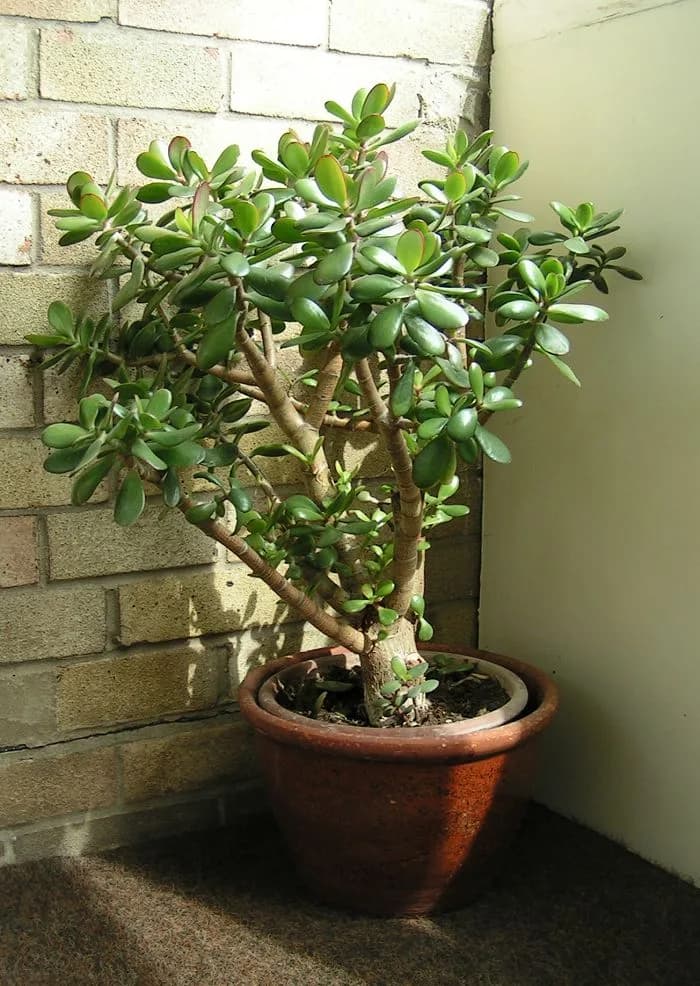
Image credit: Sannse · CC BY-SA 3.0 · full image credits
Light
Bright light with at least 4 hours of direct sun daily
Water
Water when the soil is completely dry -- every 2-3 weeks in summer
Humidity
Prefers dry air
Temp
55-80 F (13-27 C)
Toxicity
Toxic to cats and dogs
Overview
The jade plant is a small succulent tree with thick, coin-shaped leaves and a stout woody trunk -- a favorite for sunny windowsills and a symbol of good luck in many cultures. Native to South Africa, it grows slowly but lives for decades, with well-tended specimens passed down through generations. Give it sun and restraint with the watering can, and it asks for almost nothing else.
Detailed Care Guide
Sun is the key ingredient: jade plants need at least four hours of direct light to stay compact and sturdy, so give them your brightest windowsill. Water deeply only when the soil has fully dried, and reduce further in winter when the plant rests. Plant in gritty succulent mix in a heavy pot -- mature jades get top-heavy. Prune in spring to shape the plant and thicken the trunk; every cut encourages branching, and the trimmings root effortlessly. Watch for mealybugs in the leaf joints, treating any white fuzz promptly with a cotton swab dipped in rubbing alcohol. With cool, dry winter nights and bright days, a mature jade may even reward you with clusters of small starry white flowers.
Bright light with at least 4 hours of direct sun daily. A south-facing windowsill is ideal. Good light keeps growth compact and can tinge leaf edges red.
Water when the soil is completely dry -- every 2-3 weeks in summer, monthly or less in winter. Wrinkled leaves mean thirsty; soft, translucent leaves mean overwatered.
Prefers dry air. Normal to low household humidity is perfect. Avoid humid locations like enclosed bathrooms.
Gritty, fast-draining succulent or cactus mix. Heavy potting soil holds too much water and invites rot. Terracotta pots help.
55-80 F (13-27 C). Tolerates cool nights, which encourage red leaf edges, but keep above 45 F and away from freezing windows.
Feed 2-3 times during spring and summer with a succulent fertilizer at half strength. Jade plants tolerate lean conditions well.
Common Problems
Identify and fix the most frequent issues with Jade Plant.
Dropping leaves
Symptoms
Plump leaves fall off with the slightest touch, or shrivel and drop.
Cause
Overwatering (leaves soft and translucent before dropping) or severe underwatering (leaves wrinkled first). Sudden environmental change can also trigger drop.
Solution
Check the soil: if damp and the leaves are soft, let it dry out completely and inspect roots for rot. If bone dry with wrinkled leaves, water deeply. Stabilize light and temperature.
Stretched, floppy growth
Symptoms
Long gaps between leaves and thin stems that flop over.
Cause
Insufficient light -- the most common jade problem indoors.
Solution
Move to a south-facing window or add a grow light. Prune the stretched growth in spring; the plant will regrow compactly in better light, and the cuttings can be rooted.
Soft, mushy trunk or stems
Symptoms
The trunk or branch bases feel soft and may darken.
Cause
Rot from chronic overwatering or poorly draining soil.
Solution
Act fast: cut healthy branches above the rot and root them as cuttings. If the rot is limited to roots, unpot, trim all mushy tissue, let the plant callus for a few days, and repot in dry succulent mix.
White fuzzy patches
Symptoms
Cottony white clumps in leaf joints and on stems.
Cause
Mealybugs.
Solution
Dab each cluster with a cotton swab dipped in rubbing alcohol, repeating weekly until clear. For heavy infestations, treat the whole plant with insecticidal soap.
Propagation
Jade roots readily from both stem and leaf cuttings. For stems, cut a 2-4 inch piece, let it callus in a dry spot for 3-7 days, then set it in barely moist succulent mix -- roots form in 2-4 weeks. For leaves, twist off a healthy leaf cleanly, callus it, and lay it on top of dry mix; a tiny plantlet sprouts from the base within a couple of months. Water sparingly until new growth confirms rooting.
Frequently Asked Questions
How often should I water a jade plant?
Only when the soil is completely dry -- typically every 2-3 weeks in the growing season and as little as once a month in winter. Wrinkled, thinning leaves are the plant's thirst signal. Overwatering kills far more jades than drought.
Why is my jade plant dropping leaves?
Soft, translucent leaves that drop point to overwatering; wrinkled leaves that drop point to drought; sudden shedding after a move points to stress. Check the soil moisture first and correct accordingly -- jades usually recover quickly.
How do I make my jade plant's trunk thicker?
Bright light, regular pruning, and patience. Prune branch tips in spring to concentrate growth into the trunk, give the plant direct sun, and let it dry properly between waterings. Slight breeze or gentle shaking also encourages a sturdier trunk over time.
Are jade plants poisonous to cats?
Yes. Jade plants are toxic to cats and dogs, causing vomiting, lethargy, and incoordination if eaten. Keep them well out of reach -- fortunately their need for a bright windowsill usually puts them up high anyway.
Can a jade plant live outside?
In frost-free climates (USDA zones 10-11), jade grows happily outdoors year-round. Elsewhere, it makes an excellent summer patio plant -- acclimate it to full sun gradually and bring it in well before the first frost.