Croton
Codiaeum variegatum
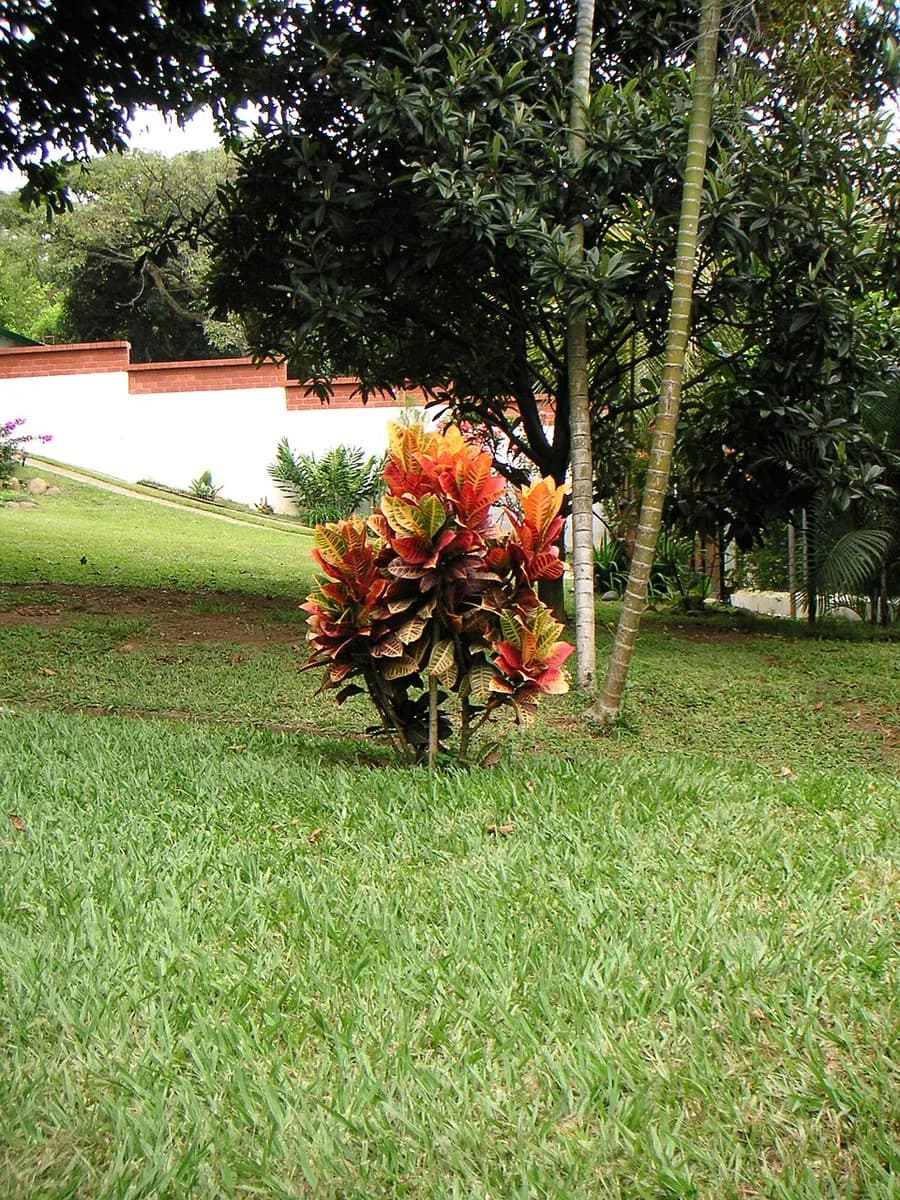
Image credit: Louise Wolff · CC BY-SA 3.0 · full image credits
Light
Bright light with several hours of direct sun -- the intensity of the famous leaf colors depends directly on it
Water
Water when the top inch of soil is dry
Humidity
Prefers 40-60%+
Temp
65-85 F (18-29 C)
Toxicity
Toxic to cats and dogs, and the milky sap irritates skin
Overview
No houseplant does color like a croton: leathery leaves splashed with yellow, orange, red, and near-black, often on the same plant. Native to Indonesia and Malaysia, it wears tropical sunshine as pigment -- which is the catch, because those colors demand real light and stable conditions. Crotons are also infamous for dropping leaves in protest when moved. Win them over with sun, even moisture, and a permanent spot, and they are among the most spectacular foliage plants indoors.
Detailed Care Guide
Croton care is a bargain with three clauses. First, light: several hours of direct sun (an unobstructed south or west window) keeps the fireworks coming; without it, new growth reverts to green. Second, consistency: pick a spot and leave the plant there -- crotons famously shed leaves after a move, a draft, or a cold snap, and while they usually releaf, the sulk is dramatic. Third, moisture: keep the soil lightly, evenly moist and the air reasonably humid. Wipe the colorful leaves to keep them glossy and check undersides for spider mites. Prune in spring to keep the plant bushy, wearing gloves for the irritating white sap. A croton that arrives home and promptly drops half its leaves is behaving normally -- hold conditions steady and it recovers within several weeks.
Bright light with several hours of direct sun -- the intensity of the famous leaf colors depends directly on it. In weak light, new leaves come in plain green.
Water when the top inch of soil is dry, keeping moisture fairly even. Crotons dislike both drying out completely and standing in water, and telegraph either extreme by drooping or dropping leaves.
Prefers 40-60%+. Dry air encourages leaf drop and spider mites.
Rich, well-draining potting mix with perlite.
65-85 F (18-29 C). Genuinely cold-intolerant: below 55 F or a cold draft costs leaves quickly.
Feed monthly in spring and summer with a balanced liquid fertilizer at half strength.
Common Problems
Identify and fix the most frequent issues with Croton.
Dramatic leaf drop
Symptoms
Leaves fall in numbers after a change -- purchase, relocation, repotting, or a cold night.
Cause
Environmental shock; crotons are the most change-averse common houseplant.
Solution
Stabilize everything: warm spot, bright light, even watering, no drafts. Do not keep moving it in search of a fix. New growth typically resumes within a month.
Fading to green
Symptoms
New leaves emerge mostly green with weak coloring.
Cause
Insufficient light -- color pigments develop only in strong light.
Solution
Move to a spot with several hours of direct sun (acclimating gradually). Subsequent leaves regain their color; existing green leaves stay green.
Spider mites
Symptoms
Speckled, dusty-looking leaves and fine webbing.
Cause
Dry indoor air.
Solution
Shower the plant, treat with insecticidal soap or neem every 5-7 days for three weeks, and raise humidity.
Drooping leaves
Symptoms
Leaves hang limply but remain attached.
Cause
Thirst most often; occasionally overwatering.
Solution
Check the soil: dry an inch down means water thoroughly. Wet soil plus drooping means back off and verify drainage.
Propagation
Take a 4-6 inch tip cutting with several leaves in spring or summer. Rinse or blot the milky sap, dip in rooting hormone, and root in moist mix under a plastic tent or in water -- roots take 4-8 weeks. Keep the cutting warm (70 F+) and bright. Air layering works for thick, woody stems. Gloves are advisable throughout; the sap irritates skin.
Frequently Asked Questions
Why is my croton dropping leaves?
Crotons drop leaves in response to change: a new home, a move across the room, cold drafts, or swings in watering. Hold conditions absolutely steady -- bright light, warmth, even moisture -- and the plant almost always releafs within weeks.
Why is my croton losing its color?
Light, nearly always. The reds, oranges, and yellows are sun-driven pigments; in dim light new leaves default to green. Give the plant several hours of direct sun and future growth will color up again.
Are crotons poisonous to dogs?
Yes -- chewing causes drooling, vomiting, and diarrhea in dogs and cats, and the milky sap can irritate skin and mouths. Keep crotons out of reach and wear gloves when pruning.
How often should I water a croton?
When the top inch of soil dries -- typically weekly in the growing season. The goal is even, moderate moisture: not bone dry, never waterlogged. Drooping is your early-warning signal in either direction.
Can crotons live indoors year-round?
Yes, provided they get very bright light. A sunny window keeps a croton colorful indefinitely; many owners also summer them outdoors in partial sun, bringing them in well before nights drop below 55 F -- expect a few dropped leaves at each transition.