Spider Plant
Chlorophytum comosum
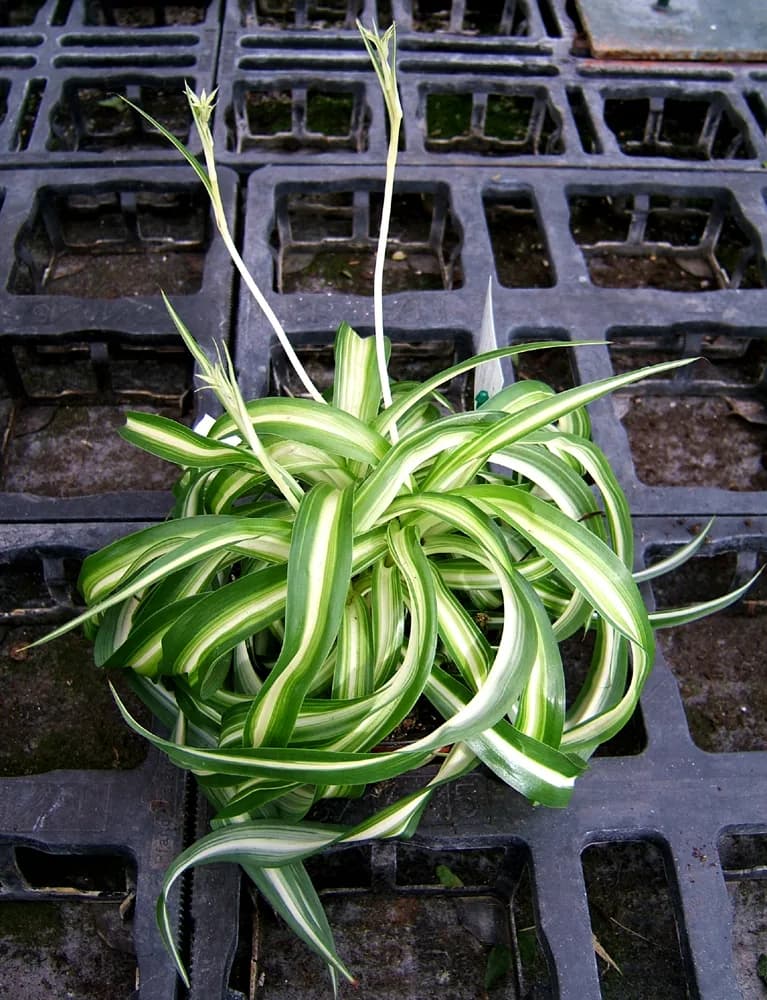
Image credit: Wildfeuer · CC BY-SA 3.0 · full image credits
Light
Bright indirect light is ideal, but spider plants adapt to medium and low light
Water
Water when the top inch of soil is dry
Humidity
Average household humidity is fine
Temp
55-80 F (13-27 C)
Toxicity
Non-toxic to cats and dogs
Overview
The spider plant is a houseplant classic: arching green-and-white striped leaves, fast growth, and cascading baby plantlets (spiderettes) that dangle from long stems like spiders on silk. Native to southern Africa, it is nearly indestructible, pet-safe, and one of the easiest plants to share -- every mature plant produces dozens of ready-to-root babies.
Detailed Care Guide
Give your spider plant bright indirect light for the best striping and plantlet production -- a spot near an east window or a few feet from a south window is ideal. Water when the top inch of soil dries out, and use filtered or rain water if your tap water is heavily fluoridated, since fluoride is a common cause of brown tips. Feed lightly; overfertilized plants grow lush leaves but few babies. The plant flowers and produces spiderettes most readily when slightly rootbound, so do not rush to repot. Snip off browned tips at an angle to keep the plant tidy, and detach plantlets whenever you want new plants -- they root in water within days.
Bright indirect light is ideal, but spider plants adapt to medium and low light. Direct sun bleaches and scorches the striped leaves.
Water when the top inch of soil is dry, roughly weekly in summer and every 2 weeks in winter. The thick tuberous roots store some water, so brief neglect is forgiven.
Average household humidity is fine. Brown leaf tips become more common in very dry air, so a little extra humidity helps but is not required.
Standard well-draining potting mix. A general-purpose mix with a handful of perlite is ideal.
55-80 F (13-27 C). Tolerates cooler rooms better than most tropicals but should be kept above 50 F.
Feed monthly in spring and summer with a balanced liquid fertilizer at half strength. Overfeeding causes brown tips and fewer plantlets.
Common Problems
Identify and fix the most frequent issues with Spider Plant.
Brown leaf tips
Symptoms
Tips of the leaves turn brown and papery, spreading slowly down the leaf.
Cause
Fluoride or chlorine in tap water, dry air, or salt buildup from fertilizer. This is the most common spider plant complaint and is largely cosmetic.
Solution
Switch to filtered, distilled, or rain water. Flush the soil with plain water every few months. Trim existing brown tips at an angle with clean scissors.
No babies (spiderettes)
Symptoms
A healthy, mature plant that never produces plantlets.
Cause
Too little light, too much fertilizer, or a pot that is too large. Spider plants produce plantlets when slightly rootbound and exposed to natural day-length changes.
Solution
Move to bright indirect light, cut back feeding, and let the plant fill its pot. Plants near a window that experience natural short autumn days flower and produce babies most reliably.
Pale, washed-out leaves
Symptoms
Leaves lose their vibrant green and look faded or bleached.
Cause
Too much direct sun.
Solution
Move the plant out of direct sunlight into bright indirect light. New growth will come in with normal coloring.
Mushy base and yellowing leaves
Symptoms
Leaves yellow and the center of the plant feels soft.
Cause
Overwatering causing crown and root rot.
Solution
Let the soil dry, then unpot and trim any mushy roots. Repot in fresh, well-draining mix and water only when the top inch is dry.
Propagation
The easiest propagation in the houseplant world: snip a plantlet from its stem and set it in a glass of water -- roots appear within a week -- or pin it onto a pot of moist soil while still attached to the mother, cutting the tether once it roots. Mature plants can also be divided at the roots during repotting. Plantlets that already show small root nubs can be planted directly into soil and kept lightly moist for two weeks.
Frequently Asked Questions
Are spider plants safe for cats?
Yes, spider plants are non-toxic to cats and dogs according to the ASPCA. Cats often nibble the grassy leaves, which may cause mild, harmless stomach upset. If your cat is persistent, hang the plant out of reach to protect the foliage.
Why are the tips of my spider plant turning brown?
Brown tips are usually caused by fluoride and chlorine in tap water, dry air, or fertilizer salt buildup. Switch to filtered or rain water, flush the soil occasionally, and trim the tips. Browning tips do not harm the overall health of the plant.
How do I get my spider plant to produce babies?
Provide bright indirect light, keep the plant slightly rootbound, and go easy on fertilizer. Spiderettes form after the plant flowers, which is triggered in part by the shorter days of late summer and autumn.
Do spider plants clean the air?
Spider plants were among the top performers in the NASA Clean Air Study, removing pollutants like formaldehyde and xylene in lab conditions. A single plant will not transform your air quality, but a collection contributes to a healthier indoor environment.
Should I cut the babies off my spider plant?
It is up to you. Leaving them creates a full, cascading display but draws energy from the mother plant. Removing them redirects energy into foliage growth and gives you free plants to pot up or share.