Rubber Plant
Ficus elastica
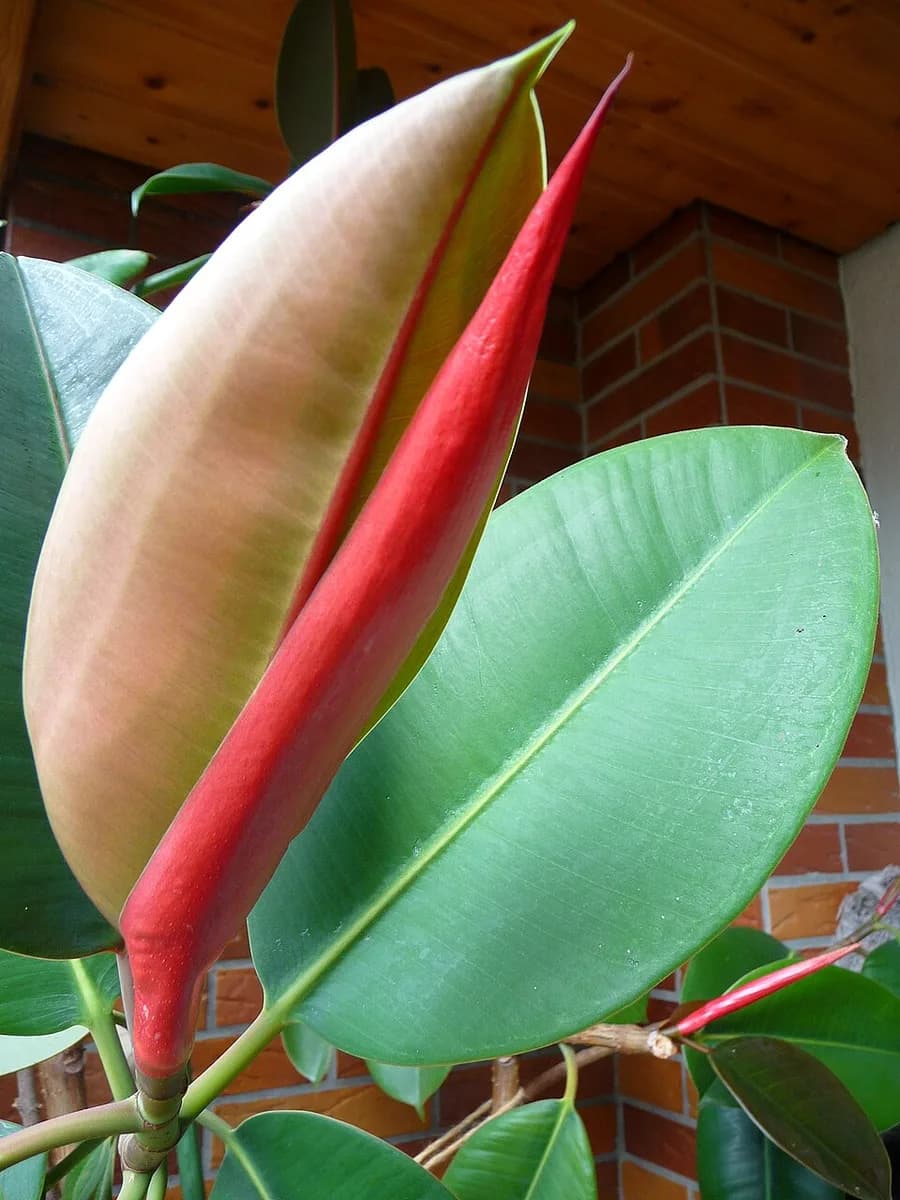
Image credit: 4028mdk09 · CC BY-SA 3.0 · full image credits
Light
Bright indirect light with some gentle morning sun
Water
Water when the top 1-2 inches of soil are dry
Humidity
Adapts to average household humidity (40-50%)
Temp
60-80 F (15-27 C)
Toxicity
Mildly toxic to cats and dogs
Overview
The rubber plant delivers the tree-like presence of a fiddle leaf fig with a fraction of the drama. Its thick, glossy leaves -- deep green, burgundy-black, or cream-splashed depending on variety -- shrug off average humidity and the occasional missed watering. Native to South and Southeast Asia, Ficus elastica can grow from a desktop plant into a ceiling-height indoor tree within a few years.
Detailed Care Guide
Place your rubber plant near a bright window with indirect light, turning the pot occasionally so it grows straight. Water when the top couple inches of soil are dry, and reduce in winter. The huge leaves are dust magnets -- wipe them monthly with a damp cloth so the plant can photosynthesize efficiently and to check for pests. Prune the top in spring to control height and force branching; the cut will bleed white latex sap, so wear gloves and keep it off floors and furniture. Young plants like to be repotted every year or two in spring. If your plant drops a few lower leaves after moving homes or rooms, be patient -- ficus resent relocation but settle down within a few weeks.
Bright indirect light with some gentle morning sun. Variegated varieties like Tineke and Ruby need brighter light to hold their coloring. Tolerates medium light with slower growth.
Water when the top 1-2 inches of soil are dry, roughly weekly in summer and every 2 weeks in winter. Water thoroughly and empty the saucer.
Adapts to average household humidity (40-50%). Appreciates occasional leaf wiping more than misting -- the big leaves collect dust.
Well-draining potting mix -- one part perlite to two or three parts quality potting soil works well.
60-80 F (15-27 C). Avoid cold drafts and sudden temperature swings, which trigger leaf drop.
Feed monthly during spring and summer with a balanced liquid fertilizer at half strength. Pause feeding in fall and winter.
Common Problems
Identify and fix the most frequent issues with Rubber Plant.
Dropping leaves
Symptoms
Healthy-looking leaves detach and fall, often after a change in location or season.
Cause
Environmental change -- relocation, cold drafts, sudden light reduction, or overwatering. Ficus species drop leaves readily under stress.
Solution
Stabilize conditions: consistent light, temperature, and watering. Confirm the soil is not staying soggy. Expect recovery and new growth within a month once the plant acclimates.
Yellowing lower leaves
Symptoms
Bottom leaves turn yellow and drop while upper growth looks fine.
Cause
Overwatering is most common; occasionally natural shedding of the oldest leaves.
Solution
Let the top 2 inches of soil dry before watering again and make sure the pot drains freely. Losing one or two old leaves a season is normal.
Brown, crispy leaf edges
Symptoms
Edges and tips of leaves dry out and brown.
Cause
Underwatering, low humidity, or salt buildup from fertilizer.
Solution
Water more consistently, flush the soil with plain water every few months, and keep the plant away from heat vents.
Loss of variegation
Symptoms
Variegated varieties produce increasingly plain green leaves.
Cause
Insufficient light -- the plant favors chlorophyll production to compensate.
Solution
Move to a brighter spot with indirect light or gentle morning sun. New leaves will show stronger variegation.
Sticky residue or small bumps on stems
Symptoms
Shiny sticky droplets on leaves and small brown bumps along stems and leaf undersides.
Cause
Scale insects feeding on sap.
Solution
Scrape off visible scale, wipe leaves and stems with a cloth dipped in diluted rubbing alcohol, and treat with horticultural oil or insecticidal soap every 7-10 days until clear.
Propagation
Take a 6-inch stem cutting with at least two leaves in spring or summer. Let the milky sap stop flowing (rinse the cut end), then root in water or moist perlite -- expect roots in 4-8 weeks with warmth and bright indirect light. Air layering is more reliable for thick, mature stems: wound the stem, wrap it in moist sphagnum moss and plastic wrap, and cut below the new roots after 1-2 months. Always wear gloves; the sap irritates skin.
Frequently Asked Questions
Why is my rubber plant dropping leaves?
Leaf drop is a stress response, most often to relocation, cold drafts, or overwatering. Check that the soil is not soggy, keep the plant away from doors and vents, and give it consistent conditions. Acclimation-related drop stops within a few weeks.
How big does a rubber plant get indoors?
Indoors, rubber plants commonly reach 6-10 feet with good light, growing 1-2 feet per year. Prune the top in spring to control height and encourage a bushier, branched shape.
Is a rubber plant toxic to pets?
Mildly. The milky sap irritates the mouth and digestive tract of cats and dogs, typically causing drooling or vomiting rather than serious harm. Keep it out of reach and rinse skin that contacts the sap.
How do I make my rubber plant bushy?
Prune the main stem just above a node in spring -- the plant typically pushes out two or more new branches below the cut. Bright light keeps the new growth compact. You can root the pruned top as a new plant.
Should I mist my rubber plant?
Misting is unnecessary. Rubber plants are content at normal household humidity. A monthly leaf-wipe with a damp cloth does far more good, clearing dust so the large leaves can capture light efficiently.