String of Pearls
Curio rowleyanus (syn. Senecio rowleyanus)
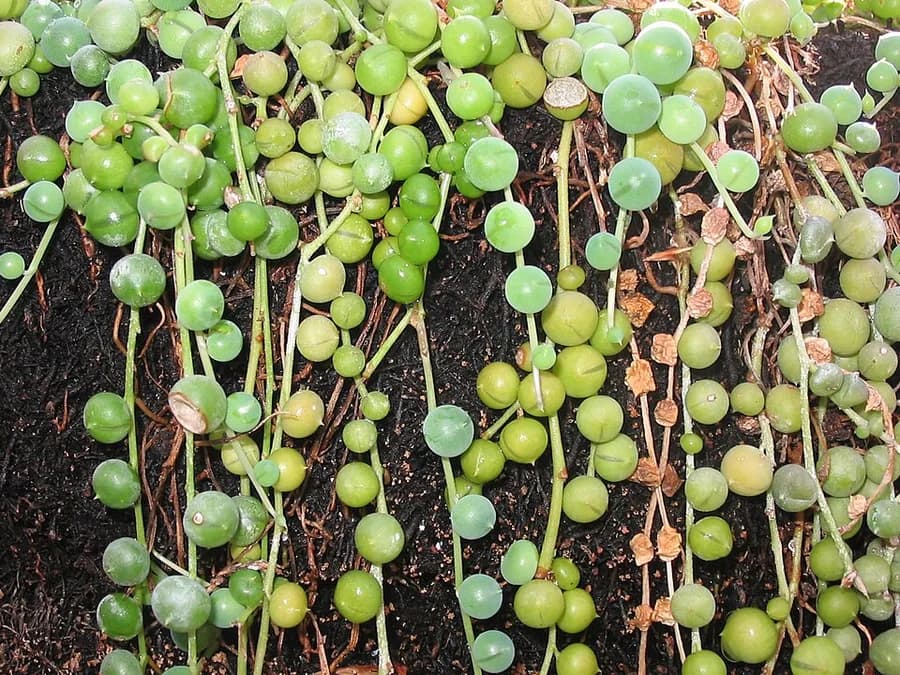
Image credit: Alberto Salguero · CC BY-SA 3.0 · full image credits
Light
Bright light with some gentle direct sun -- an east window or lightly filtered south exposure
Water
Water every 2-3 weeks in the growing season
Humidity
Prefers dry air, like most succulents
Temp
65-80 F (18-27 C) in the growing season
Toxicity
Toxic to cats and dogs, and the dangling bead-like strands are unfortunately tempting toys
Overview
String of pearls is jewelry you grow: cascading strands of pea-shaped beads that can trail two feet or more from a hanging pot. Each bead is a leaf remodeled by evolution -- a sphere minimizes surface area to hoard water, with a small translucent 'window' letting light into the interior. Native to dry southwestern Africa, it demands succulent treatment: strong light, sharp drainage, and infrequent water. Given those, strands lengthen fast; denied them, pearls shrivel or the crown rots.
Detailed Care Guide
Grow string of pearls like the desert trailer it is. Give it bright light with a few hours of gentle sun -- right in an east window is ideal -- and plant it in gritty succulent mix in a shallow pot, since the roots are surprisingly small and fine. Water only when the soil is bone dry and the pearls hint at puckering, then water thoroughly; the beads are your moisture gauge, plump when supplied, wrinkled when thirsty, mushy and translucent when drowned. The crown (soil surface) is the vulnerable point -- water sitting there rots the stems that feed every strand, so some growers water from the bottom. Trim leggy strands to encourage branching, and lay the trimmings on the soil surface where they re-root and thicken the pot. A cool, dry winter rest often earns you small white flowers that smell of cinnamon.
Bright light with some gentle direct sun -- an east window or lightly filtered south exposure. The single most common failure is keeping this high-light succulent in a dim corner.
Water every 2-3 weeks in the growing season, only when the soil is fully dry and the pearls just begin to lose their gloss or pucker. Monthly or less in winter.
Prefers dry air, like most succulents. Avoid humid bathrooms.
Gritty, fast-draining succulent mix in a shallow pot -- the fine roots occupy only the top couple inches of soil.
65-80 F (18-27 C) in the growing season. Cooler, drier winters (55-60 F) encourage the cinnamon-scented white flowers.
Feed once or twice in spring and summer with succulent fertilizer at half strength.
Common Problems
Identify and fix the most frequent issues with String of Pearls.
Shriveled pearls
Symptoms
Beads wrinkle and flatten along entire strands.
Cause
Thirst -- or, deceptively, roots killed by earlier overwatering and no longer absorbing anything.
Solution
If the soil has been dry for weeks, water thoroughly; pearls plump within days. If the soil is damp and pearls still shrivel, the roots have rotted -- salvage healthy strands as cuttings and restart.
Mushy, translucent pearls
Symptoms
Beads turn soft, glassy, and burst easily; strands detach at the crown.
Cause
Overwatering and crown rot.
Solution
Stop watering, remove affected strands, and let the pot dry completely. If rot has spread across the crown, take healthy cuttings and re-root them in barely moist succulent mix.
Sparse, balding top
Symptoms
Strands keep trailing but the top of the pot thins out.
Cause
The crown receives less light than the hanging strands, and old stems naturally defoliate.
Solution
Coil a few long strands back on top of the soil and pin them -- they root at each node and refill the crown. Ensure light reaches the top of the pot, not just the sides.
Slow or no growth
Symptoms
Strands stay short; few new pearls form.
Cause
Insufficient light, the limiting factor indoors.
Solution
Move to a brighter window or add a grow light. In strong light, strands can grow inches per month in season.
Propagation
Effortless: cut 3-4 inch strand sections and lay them on top of barely moist succulent mix, pressing gently so nodes touch soil -- roots form at each node within weeks. Water lightly until established. This is also the maintenance trick: coiling trimmings back into the pot keeps the crown lush. Water propagation works but soil layering is more reliable.
Frequently Asked Questions
Why are my string of pearls shriveling?
Wrinkled pearls mean the beads' water reserves are low. If the soil has been dry a long while, simply water -- they replump in days. But if the soil is moist, the roots have likely rotted and can no longer drink: take healthy cuttings and restart them in fresh dry mix.
How often should I water string of pearls?
Every 2-3 weeks in spring and summer, only when the soil is completely dry -- and monthly or less in winter. Let the pearls guide you: water at the first hint of puckering, never while they are firm and glossy.
Is string of pearls toxic to cats?
Yes -- and the dangling beads are dangerously enticing to cats. Ingestion causes vomiting, drooling, and lethargy. Hang the plant somewhere genuinely unreachable, or choose a pet-safe trailer like hoya instead.
Why is my string of pearls balding on top?
The crown gets shaded by its own strands while old stems naturally shed leaves. Coil a few long strands back over the soil and pin them down -- they re-root at the nodes and refill the top -- and make sure light hits the pot's surface.
How much light does string of pearls need?
More than most people give it: bright light with a few hours of gentle direct sun. It is a succulent, not a shade trailer -- a dim corner produces sparse strands and eventual decline. An east-facing window is the sweet spot.