Hoya
Hoya carnosa
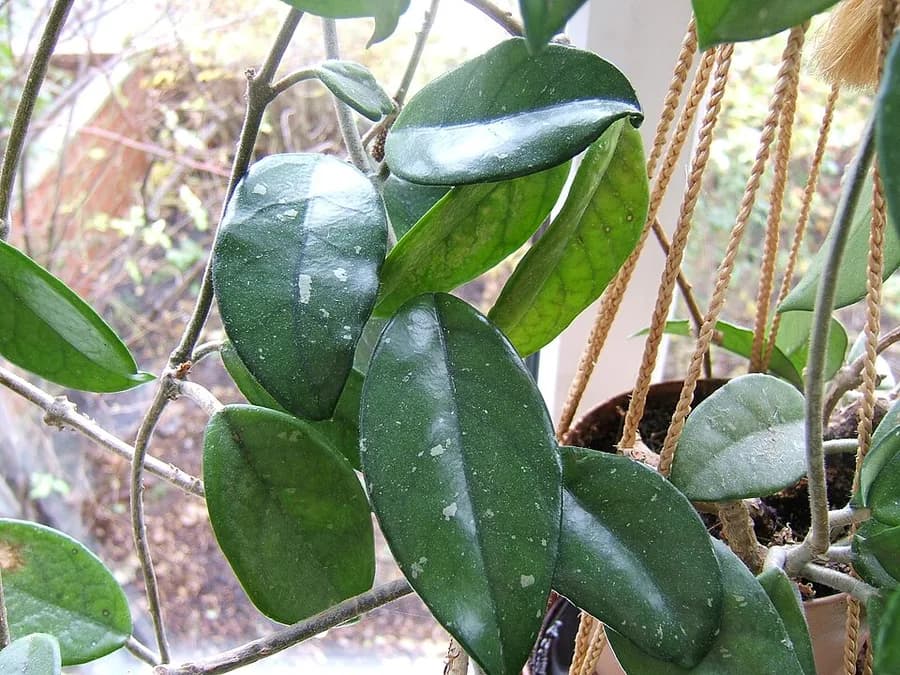
Image credit: MPF · CC BY-SA 3.0 · full image credits
Light
Bright indirect light with a little gentle direct sun
Water
Water when the soil is nearly dry and the leaves lose a bit of their firmness -- typically every 1-2 weeks in summer
Humidity
Adapts to average humidity; 50%+ encourages faster growth and better blooming
Temp
60-85 F (15-29 C)
Toxicity
Non-toxic to cats and dogs
Overview
Hoya -- the wax plant -- is a trailing semi-succulent with thick, glossy leaves and one of the most spectacular payoffs in the houseplant world: umbels of star-shaped, porcelain-like flowers that smell of chocolate and vanilla at night. Native from East Asia to Australia, hoyas are long-lived, pet-safe, and tolerant of erratic watering. Plants passed down for decades, blooming every summer from the same spurs, are common family heirlooms.
Detailed Care Guide
Grow hoya like a cross between a pothos and an orchid. Give it bright indirect light with a touch of morning sun, plant it in a chunky, airy mix, and water only when the soil approaches dryness -- slightly wrinkled or flexible leaves are the cue. To earn flowers: light is the main requirement, a snug pot helps, and a brighter, cooler, drier winter rest sets buds. Two rules matter once blooming starts -- never cut off the leafless flower spurs (hoyas rebloom from the same spurs for years) and avoid moving the plant while in bud, which can cause bud drop. Train the vines on a trellis or hoop, or let them trail. Repot rarely; hoyas flower best when rootbound.
Bright indirect light with a little gentle direct sun. An east window is perfect. Good light is the difference between a foliage plant and one that flowers.
Water when the soil is nearly dry and the leaves lose a bit of their firmness -- typically every 1-2 weeks in summer, less in winter. The waxy leaves store water like a semi-succulent.
Adapts to average humidity; 50%+ encourages faster growth and better blooming.
Airy, chunky mix -- potting soil cut generously with orchid bark and perlite. Hoyas are epiphytes and rot in dense soil.
60-85 F (15-29 C). Keep above 50 F. Slightly cool, bright winters help set flower buds.
Feed monthly in spring and summer with a balanced or bloom-boosting fertilizer at half strength.
Common Problems
Identify and fix the most frequent issues with Hoya.
Never flowering
Symptoms
Years of healthy vines without a single bloom.
Cause
Not enough light, too much root room, or immaturity -- hoyas often need 2-3 years and bright light to first bloom.
Solution
Move to bright indirect light with some morning sun, keep the plant rootbound, feed lightly with a bloom fertilizer, and give it a cooler, drier winter. Patience does the rest.
Wrinkled, soft leaves
Symptoms
The normally firm, waxy leaves thin and pucker.
Cause
Underwatering, or root rot preventing water uptake.
Solution
If the soil is dry, water thoroughly -- leaves plump within days. If the soil is damp, check the roots and repot into airy mix after trimming any rot.
Buds forming then dropping
Symptoms
Flower buds develop but fall off before opening.
Cause
The plant was moved or rotated while budding, or watering swung between extremes.
Solution
Once buds appear, leave the plant exactly where it is and keep moisture even. Buds usually return the following cycle.
Mealybugs
Symptoms
White cottony clusters at leaf joints and along vines.
Cause
Mealybugs, the most common hoya pest, drawn to the sugary sap.
Solution
Dab clusters with rubbing alcohol on a cotton swab and treat with insecticidal soap weekly until clear. Check the nooks where leaves meet stems.
Long bare vines
Symptoms
Vines extend for feet with no leaves.
Cause
Normal hoya behavior -- vines often run first and fill in with leaves later -- though very low light exaggerates it.
Solution
Be patient and improve light; many bare vines leaf out in time. You can also loop long vines back around the pot or trellis, which encourages leafing and flowering.
Propagation
Take a cutting with 2-3 nodes, remove the lowest pair of leaves, and root in water, moist sphagnum, or perlite -- roots appear in 2-4 weeks. Pot up once roots are an inch long, keeping the young plant in bright indirect light. Layering also works: pin a node of a still-attached vine onto moist mix and sever it after it roots. Spring and summer cuttings establish fastest.
Frequently Asked Questions
How do I get my hoya to bloom?
Bright light (including some gentle morning sun), a rootbound pot, light feeding, and a cooler, drier winter rest. Hoyas also need maturity -- often 2-3 years old. Once it blooms, never remove the spent flower spurs; next year's flowers come from the same spots.
Are hoyas safe for cats?
Yes, hoyas are non-toxic to cats and dogs, making them one of the best trailing plants for pet households. A large mouthful of the milky sap could cause mild stomach upset, but they are considered pet-safe.
Why are my hoya's leaves wrinkling?
Wrinkling means the leaves' water reserves are low -- either the soil has been dry too long, or root rot is blocking uptake. Check the soil: dry means water deeply; wet means inspect the roots and repot into a chunkier mix.
Should I cut the long bare vines off my hoya?
Resist the urge. Hoyas routinely send out bare 'feeler' vines that develop leaves months later, and future flower spurs form along them. Loop them around a trellis instead -- cutting them sacrifices growth and blooms.
How often do hoyas flower?
A mature hoya in good light typically blooms each spring and summer, often in repeated flushes from the same spurs. Individual flower clusters last about a week, releasing their strongest fragrance at night.