Pothos
Epipremnum aureum
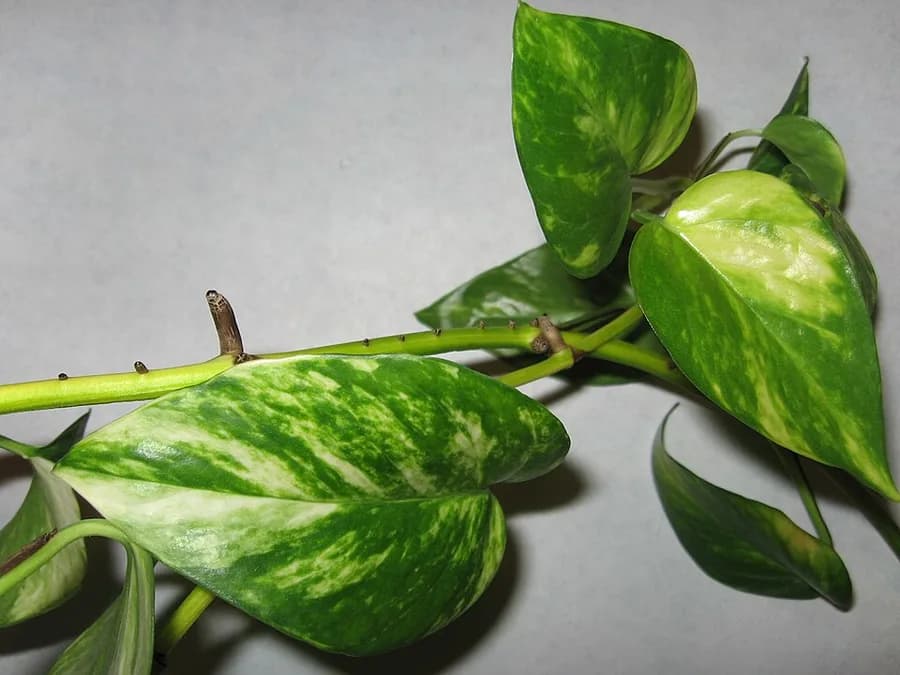
Image credit: Sergei · Public domain (PD-self) · full image credits
Light
Tolerates low to bright indirect light
Water
Water when the top inch of soil is dry
Humidity
Adapts to normal household humidity (30-50%)
Temp
60-85 F (15-29 C)
Toxicity
Toxic to cats and dogs
Overview
Pothos is one of the most forgiving houseplants, making it ideal for beginners. Its glossy, heart-shaped leaves trail elegantly from hanging pots or climb when given support. Native to the Solomon Islands, pothos comes in many varieties -- Golden, Marble Queen, Neon, and Jade -- each with distinct variegation patterns ranging from deep green to bright chartreuse.
Detailed Care Guide
Pothos thrives on minimal attention. Place it in bright indirect light, though it tolerates low light well. Allow the soil to dry out between waterings -- drooping leaves are a reliable signal that it needs water, and the plant recovers quickly after a thorough soak. Trim long vines to encourage bushier growth and propagate the cuttings easily in water. Wipe leaves monthly with a damp cloth to remove dust. Repot every 1-2 years when roots become crowded, though pothos tolerates being slightly rootbound. If a variegated variety starts producing all-green leaves, move it to a brighter location to restore the variegation.
Tolerates low to bright indirect light. Variegated varieties need more light to maintain their coloring. Avoid direct sunlight which can burn the leaves.
Water when the top inch of soil is dry, typically every 1-2 weeks. Pothos is drought-tolerant and recovers well from slight underwatering. Drooping leaves are a reliable sign it needs water.
Adapts to normal household humidity (30-50%). Higher humidity encourages larger leaves and faster growth but is not required.
Standard well-draining potting mix. A blend of potting soil with perlite works well. Not picky about soil composition as long as it drains adequately.
60-85 F (15-29 C). Avoid cold drafts and sudden temperature changes. Does not tolerate temperatures below 50 F.
Feed every 4-6 weeks during the growing season (spring through early fall) with a balanced liquid fertilizer at half strength. No feeding needed in winter.
Common Problems
Identify and fix the most frequent issues with Pothos.
Yellow leaves
Symptoms
Leaves turning uniformly yellow, starting with older leaves.
Cause
Overwatering is the most common cause. Can also result from root rot or nutrient deficiency.
Solution
Allow soil to dry between waterings. Check for root rot. Ensure proper drainage. If the plant has been in the same soil for over a year, consider repotting with fresh mix.
Brown spots
Symptoms
Brown or black spots on leaves, sometimes with a yellow halo.
Cause
Bacterial or fungal leaf spot from overwatering or poor air circulation.
Solution
Remove affected leaves. Improve air circulation. Water at the soil level rather than overhead. Reduce watering frequency.
Leggy vines with small leaves
Symptoms
Long stretches of bare vine between small, widely-spaced leaves.
Cause
Insufficient light.
Solution
Move to a brighter spot. Trim leggy stems back to a node to encourage branching. Propagate the trimmed pieces to create a fuller plant.
Wilting despite moist soil
Symptoms
Leaves are limp and drooping even though the soil is wet.
Cause
Root rot from overwatering.
Solution
Remove from pot, trim rotting roots, and repot in fresh, dry soil. Adjust watering schedule to let soil dry out between waterings.
Propagation
Cut a stem just below a node (the small bump where leaves emerge). Place the cutting in water, ensuring the node is submerged. Roots typically appear within 7-14 days. Once roots reach about an inch long, transfer to soil -- or keep growing in water indefinitely. For soil propagation, dip the cut end in rooting hormone and plant in moist potting mix. Warm temperatures and consistent humidity speed up rooting.
Frequently Asked Questions
Can pothos grow in water permanently?
Yes, pothos grows well in water indefinitely. Change the water every 1-2 weeks and add a drop of liquid fertilizer monthly. The leaves will stay smaller than soil-grown pothos, but the plant will remain healthy.
Why is my pothos losing its variegation?
Variegated pothos varieties revert to solid green in low light because the plant produces more chlorophyll to compensate. Move it to a brighter location with indirect light to restore and maintain the variegation pattern.
How do I make my pothos fuller?
Trim long vines back to a node, which stimulates branching. Pin the cut ends back into the same pot to root, creating a denser appearance. Ensure adequate light so new growth is compact rather than leggy.
Is pothos a good air purifier?
Pothos was included in the NASA Clean Air Study and was shown to help remove indoor pollutants like formaldehyde and benzene. While a single plant has minimal effect, multiple plants in a room can contribute to improved air quality.
How long do pothos plants live?
Pothos can live for 10 years or more with proper care. They are long-lived tropical plants that continue to grow and trail indefinitely. Regular pruning and occasional repotting help maintain vigor over time.