Fiddle Leaf Fig
Ficus lyrata
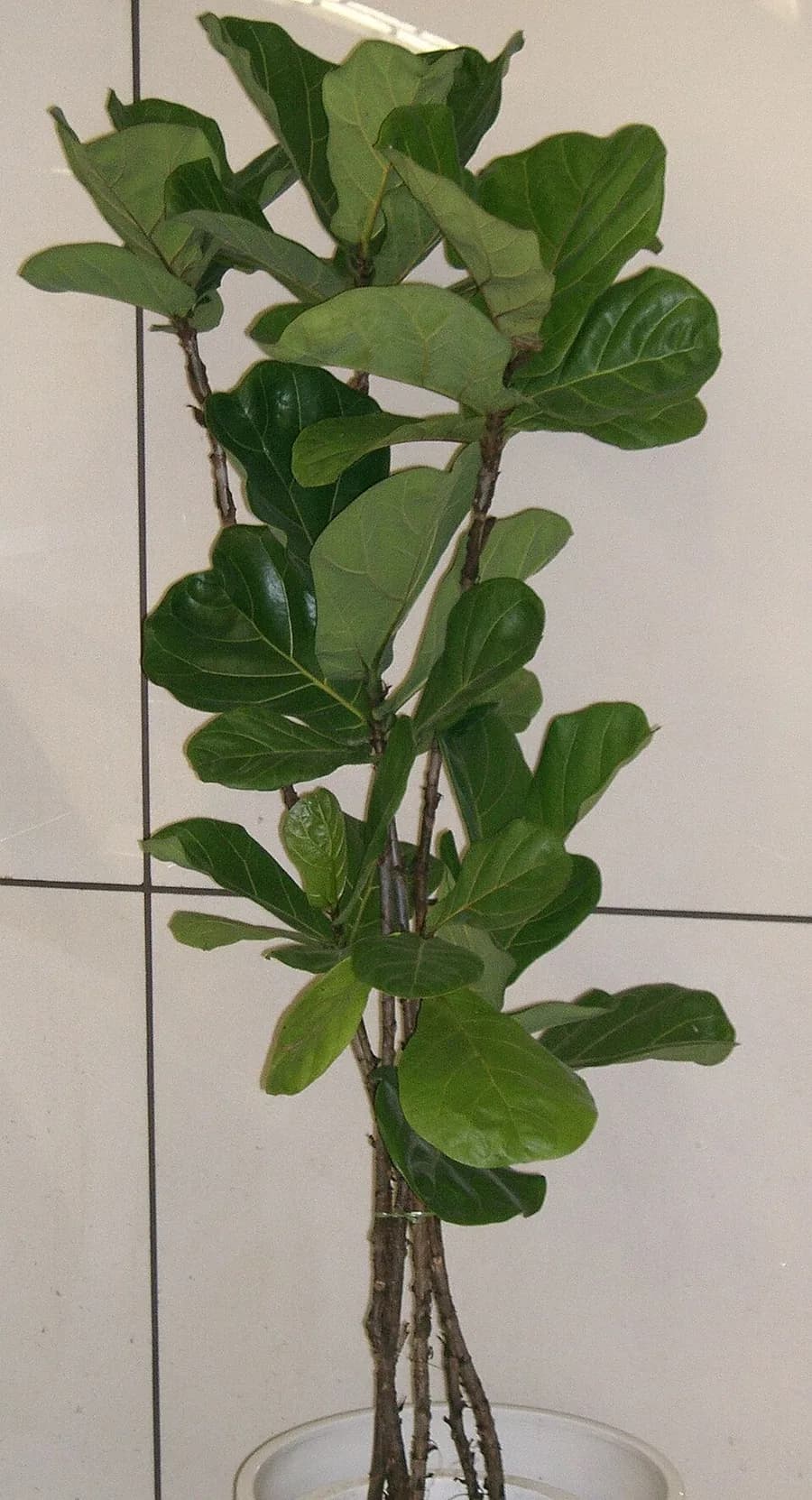
Image credit: KENPEI · GFDL + CC BY-SA 2.1 Japan · full image credits
Light
Bright indirect to bright direct light
Water
Water when the top 2 inches of soil are dry
Humidity
Prefers 30-65% humidity
Temp
60-80 F (15-27 C)
Toxicity
Toxic to cats and dogs
Overview
A single fiddle leaf fig stands out, its broad violin-like leaves shining and reaching as long as 18 inches. Hailing from West Africa's lush rainforests, this plant now lines shelves and corners in countless city apartments. Its appeal lies deep, yet it thrives only under strict conditions - light, humidity, soil mix, all carefully tuned. For those ready to observe and adjust, growth flourishes; others risk disappointment.
Detailed Care Guide
Fiddle leaf figs thrive on consistency. Place near a bright window with indirect light and avoid moving it once established -- environmental changes are the top cause of leaf drop. Water when the top 2 inches of soil are dry, using a moisture meter for accuracy. Avoid misting the leaves, as wet foliage is prone to bacterial leaf spot. Clean the large leaves monthly with a damp cloth to remove dust. Inspect regularly for pests -- spider mites, mealybugs, and scale are common. Prune the top of the main trunk in spring to encourage branching. Rotate the pot a quarter turn every few weeks for even growth. To promote branching at a specific point, try notching: make a small diagonal cut about one-third through the trunk just above a node.
Bright indirect to bright direct light. Needs at least 6 hours of bright light daily. A south or west-facing window is ideal. Rotate the pot monthly for even growth.
Water when the top 2 inches of soil are dry, typically every 7-10 days. Use room-temperature water and water until it drains from the bottom. Consistency is critical -- fiddle leaf figs dislike changes in their watering routine.
Prefers 30-65% humidity. Average household humidity is usually adequate. Misting can help but is not essential. Avoid placing near heating vents which dry the air.
Well-draining potting mix with added perlite. A 2:1 ratio of indoor potting soil to perlite works well. Good drainage is essential to prevent root rot.
60-80 F (15-27 C). Extremely sensitive to cold drafts, sudden temperature changes, and locations near exterior doors. Keep in a stable environment.
Feed monthly during the growing season (spring and summer) with a liquid fertilizer formulated for fiddle leaf figs or a general-purpose 3-1-2 NPK ratio fertilizer. Stop feeding in fall and winter.
Common Problems
Identify and fix the most frequent issues with Fiddle Leaf Fig.
Brown spots on leaves
Symptoms
Dark brown spots starting at the leaf center or edges. Spots may spread or merge.
Cause
Root rot (center spots) or bacterial infection (edge browning). Overwatering is the underlying issue in most cases.
Solution
For root rot: remove from pot, trim affected roots, repot in fresh soil, and reduce watering. For bacterial spots: remove affected leaves, improve air circulation, and avoid getting leaves wet when watering.
Dropping leaves
Symptoms
Leaves falling off, sometimes green, sometimes yellowed first.
Cause
Environmental stress -- drafts, moving the plant, temperature fluctuations, or inconsistent watering.
Solution
Stabilize the environment. Keep the plant in one location, away from drafts. Establish a consistent watering routine. Some leaf drop during acclimation to a new home is normal and should stop within 2-3 weeks.
Small or stunted new leaves
Symptoms
New leaves are noticeably smaller than existing mature leaves.
Cause
Insufficient light, underfeeding, or rootbound conditions.
Solution
Move to a brighter location. Begin regular fertilizing during the growing season. Check if the plant needs repotting -- roots circling the bottom of the pot indicate it is time.
Red spots on new leaves
Symptoms
Small reddish-brown spots on newly unfurling leaves.
Cause
Edema -- the plant absorbing water faster than it can transpire. Common in humid conditions.
Solution
This is usually harmless and cosmetic. Reduce watering slightly and improve air circulation. The spots often fade as the leaf matures.
Leaning trunk
Symptoms
The trunk leans toward the light source.
Cause
Phototropism -- the plant growing toward its light source.
Solution
Rotate the pot a quarter turn every 2-4 weeks. For severe leaning, stake the trunk with a bamboo pole and soft ties until it straightens.
Propagation
Take a stem cutting 12-15 inches long with 2-3 leaves. Let the cut end callus overnight, then place in moist soil or water. Roots typically develop in 6-10 weeks. For larger plants, air layering is more reliable: apply rooting hormone to a node, wrap with moist sphagnum moss enclosed in plastic wrap, and wait about two months for roots to form before cutting below and potting up. Single leaf cuttings may root but rarely produce new growth.
Frequently Asked Questions
Why is my fiddle leaf fig dropping leaves?
Leaf drop is usually caused by environmental change -- a new location, temperature swings, or inconsistent watering. Find a stable spot with bright indirect light, establish a watering routine, and give the plant 2-3 weeks to adjust. Some leaf drop after purchase is normal.
How do I make my fiddle leaf fig branch?
Prune the top of the main stem in spring, cutting just above a node. The plant will typically produce 2-3 branches below the cut. You can also try notching: make a small diagonal cut (about 1/3 through the trunk) just above a node to encourage a branch at that point.
Can a fiddle leaf fig go outside in summer?
Yes, fiddle leaf figs can thrive outdoors in summer in temperatures above 60 F. Acclimate gradually over 1-2 weeks, starting in full shade and slowly introducing more light. Bring back inside well before nighttime temperatures drop below 55 F.
How fast does a fiddle leaf fig grow?
In optimal conditions (bright light, consistent care), a fiddle leaf fig can grow 12-18 inches per year. Indoor specimens typically reach 6-10 feet over several years. Growth slows significantly in low light or cool conditions.
Should I shower my fiddle leaf fig?
An occasional lukewarm shower can clean the leaves and boost humidity. Do this once a month, letting the water run through the soil to flush salts. Allow the pot to drain completely before returning it to its spot. Avoid showering if your plant has bacterial leaf spot.