Boston Fern
Nephrolepis exaltata 'Bostoniensis'
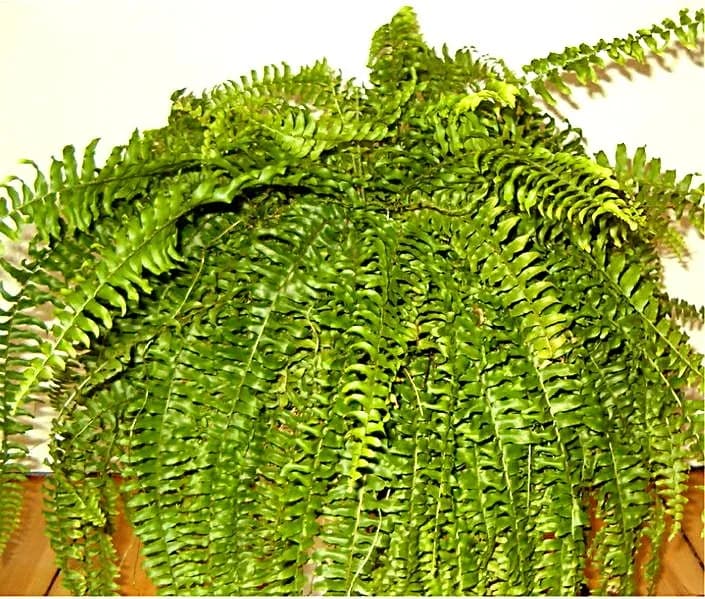
Image credit: BotBln · CC BY-SA 3.0 · full image credits
Light
Bright indirect light
Water
Keep the soil consistently moist but never waterlogged -- typically watering once or twice a week. Never let the root ball dry out completely; drought is the fastest way to a shower of crispy leaflets.
Humidity
High humidity (50%+) is essential
Temp
60-75 F (15-24 C)
Toxicity
Non-toxic to cats and dogs
Overview
The Boston fern is the classic porch and parlor fern, cascading fountains of feathery green fronds that have decorated homes since the Victorian era. A cultivar of the sword fern discovered in a Boston shipment in the 1890s, it remains one of the most popular hanging plants in the world. It is lush, pet-safe, and excellent in humid rooms -- but it will punish dry air and missed waterings with a blizzard of shed leaflets.
Detailed Care Guide
Think cool, moist, and humid. Hang or shelve your Boston fern in bright indirect light and keep the soil evenly moist -- check it every couple of days, since a dried-out root ball sheds leaflets everywhere and recovers slowly. Humidity is the other half of the bargain: 50% or higher keeps fronds supple, so favor bathrooms and kitchens or run a humidifier (misting alone is not enough). Feed lightly in the growing season. Turn the plant occasionally for even growth and trim any browned fronds at the base to keep it full and fresh. Repot in spring when roots fill the container. Boston ferns also summer beautifully outdoors on a shaded porch -- bring them back in before nights drop below 50 F, checking for hitchhiking pests first.
Bright indirect light. Morning sun is fine, but hot afternoon sun scorches the fronds. Too little light thins the plant out.
Keep the soil consistently moist but never waterlogged -- typically watering once or twice a week. Never let the root ball dry out completely; drought is the fastest way to a shower of crispy leaflets.
High humidity (50%+) is essential. Dry air turns fronds crispy within days. Bathrooms, kitchens, or a spot near a humidifier suit it best.
Rich, moisture-retentive mix with good drainage -- peat or coco-based potting soil with perlite is ideal.
60-75 F (15-24 C). Prefers it on the cool side; keep away from heat vents, radiators, and fireplaces.
Feed monthly from spring through early fall with a balanced liquid fertilizer at half strength. Ferns are light feeders and burn easily.
Common Problems
Identify and fix the most frequent issues with Boston Fern.
Shedding leaflets everywhere
Symptoms
Small dried leaflets rain down constantly; fronds look thin.
Cause
Dry air or a root ball that dried out. Some shedding is normal indoors, but heavy shedding means the environment is too dry.
Solution
Raise humidity with a humidifier, water more consistently, and keep the plant away from heat sources. Soak a badly dried root ball in a basin of water for 15-30 minutes.
Crispy brown fronds
Symptoms
Whole fronds or frond tips turn brown and brittle.
Cause
Low humidity, underwatering, or direct sun exposure.
Solution
Cut browned fronds at the base -- they will not recover -- then correct the environment: consistent moisture, indirect light, and 50%+ humidity. New fronds emerge from the center.
Yellowing fronds
Symptoms
Fronds turn yellow and limp rather than brown and crisp.
Cause
Overwatering or poor drainage suffocating the roots.
Solution
Ensure the pot drains freely and let the top half inch of soil dry before watering again. Moist is the goal, soggy is the enemy.
Pale, washed-out color
Symptoms
Fronds lose their rich green and look bleached.
Cause
Too much direct sunlight.
Solution
Move the fern out of direct sun to a bright spot with filtered light. Color deepens with new growth.
Propagation
Division is the standard method: in spring, remove the fern from its pot and cut the root ball into halves or quarters with a sharp knife, keeping healthy fronds and roots in each piece. Pot the divisions and keep them moist and humid while they reestablish. Boston ferns also send out fuzzy runners (stolons); pin a runner onto a neighboring pot of moist soil and sever it from the parent once a new plantlet takes root.
Frequently Asked Questions
Why is my Boston fern dropping leaves?
Dry air is the usual culprit, followed by an underwatered root ball. Indoors, keep humidity at 50% or higher and never let the soil dry out fully. Some background shedding is normal, but constant heavy drop is an environment problem.
Are Boston ferns safe for cats?
Yes, Boston ferns are non-toxic to cats and dogs. The dangling fronds are tempting cat toys, so hang the plant if you would rather not find chewed leaflets scattered below.
Should I mist my Boston fern?
Misting gives only minutes of relief and can encourage fungal spots if overdone. A humidifier, a pebble tray, or placement in a naturally humid room like a bathroom raises humidity far more effectively.
Can Boston ferns live outside in summer?
Yes -- a shaded, sheltered porch is their happy place, which is why they are a hanging-basket staple. Keep them out of direct afternoon sun, water frequently, and bring them indoors before nights fall below about 50 F.
How do I revive a dried-out Boston fern?
Soak the whole root ball in a basin of room-temperature water for 15-30 minutes, drain, and trim off every fully brown frond. Then park it somewhere humid with bright indirect light and consistent moisture. If the crown is alive, new fiddleheads appear within a few weeks.