Lucky Bamboo
Dracaena sanderiana
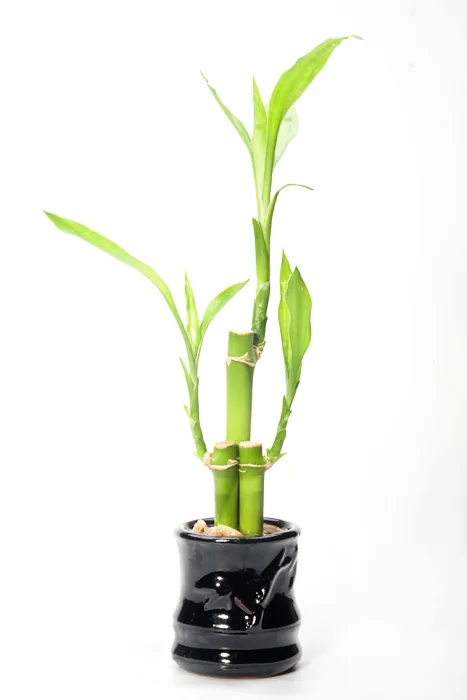
Image credit: Champlax · CC BY-SA 3.0 · full image credits
Light
Medium indirect light
Water
In water: keep roots submerged in 1-2 inches of filtered or distilled water
Humidity
Average household humidity is fine
Temp
65-85 F (18-29 C)
Toxicity
Toxic to cats and dogs (it is a dracaena, not a bamboo)
Overview
Lucky bamboo is neither lucky by botany nor bamboo at all -- it is Dracaena sanderiana, a West African understory plant whose canelike stalks made it the world's favorite feng shui gift. It grows for years in nothing but a vase of water and pebbles, tolerates dim rooms, and is nearly impossible to kill except by tap water chemicals or direct sun. The sculptural spirals and woven shapes sold in shops are trained, not natural, but new growth can be guided the same way at home.
Detailed Care Guide
Lucky bamboo's care list is short but specific. Use filtered, distilled, or rain water -- fluoride and chlorine in tap water are the most common cause of yellow leaf tips -- and if growing in water, keep the roots covered with an inch or two, changing it every week or two before it clouds. Give the plant medium indirect light, out of direct sun. Trim offshoots to maintain the shape; cutting a stalk's top stops its height and prompts side shoots (seal large cuts with candle wax to prevent rot, as growers do). To coax a spiral, lay the plant on its side in a box with light from one direction, rotating gradually as the new growth curves. A stalk that yellows from the bottom up is usually failing -- separate it from its neighbors before rot spreads, and propagate its healthy top.
Medium indirect light. Tolerates low light remarkably well. Direct sun scorches the leaves quickly -- this is an understory plant, not a true bamboo.
In water: keep roots submerged in 1-2 inches of filtered or distilled water, changed every 1-2 weeks. In soil: keep lightly moist. Tap water fluoride and chlorine are its chief enemies.
Average household humidity is fine.
Grows in plain water with pebbles, or in well-draining potting mix. Soil-grown plants are generally longer-lived.
65-85 F (18-29 C). Keep above 55 F and away from cold drafts and AC vents.
Barely any: a drop of very dilute liquid fertilizer every month or two for water-grown plants, or a couple of half-strength feeds per year in soil.
Common Problems
Identify and fix the most frequent issues with Lucky Bamboo.
Yellow leaf tips
Symptoms
Leaf tips and edges yellow, then brown.
Cause
Fluoride and chlorine in tap water -- the classic lucky bamboo complaint. Excess fertilizer causes the same look.
Solution
Switch permanently to filtered, distilled, or rain water and flush or change the water. Cut fertilizer to nearly nothing. Trim damaged tips.
Yellowing stalk
Symptoms
A stalk turns yellow from the base upward and softens.
Cause
Stalk rot -- from dirty water, injury, or age. A fully yellow stalk will not recover.
Solution
Remove the failing stalk immediately so rot does not spread to its neighbors. If the top is still green, cut it above the yellowing and root it in fresh water as a new plant.
Algae in the vase
Symptoms
Green film on the vase walls and pebbles.
Cause
Light reaching nutrient-rich standing water.
Solution
Wash the vase and pebbles, refill with fresh filtered water, and switch to an opaque container or move it out of bright light.
Scorched, faded leaves
Symptoms
Pale, bleached, or crispy patches on leaves.
Cause
Direct sunlight.
Solution
Move to medium indirect light. Lucky bamboo prefers the low-light end of the spectrum; damaged leaves can be trimmed.
Propagation
Cut a healthy offshoot or stalk top just above a node, strip the lower leaves, and stand the cutting in an inch of filtered water -- roots sprout from the node within 2-4 weeks. Pot in soil or keep in water indefinitely. The parent stalk pushes new shoots below the cut. Note that cuttings grow straight; spirals must be trained with directional light over months.
Frequently Asked Questions
Is lucky bamboo real bamboo?
No -- it is Dracaena sanderiana, an African relative of the dragon tree. The resemblance to bamboo canes is coincidental. This matters for care (it hates direct sun) and safety (unlike true bamboo, it is toxic to pets).
Why is my lucky bamboo turning yellow?
Yellow leaf tips point to tap water chemicals or overfeeding -- switch to filtered or distilled water and stop fertilizing. A stalk yellowing from the base is rotting: remove it from the arrangement at once and rescue its green top as a cutting.
How long can lucky bamboo live in just water?
Years -- often a decade or more -- with clean filtered water changed every week or two and the occasional drop of dilute fertilizer. Soil-grown plants tend to grow larger and live longer still.
Is lucky bamboo safe for cats?
No. As a dracaena it contains saponins that cause vomiting, drooling, and dilated pupils in cats, and cats are drawn to the grassy shoots. Keep it well out of reach or choose true pet-safe greenery instead.
How do they make lucky bamboo spiral?
Growers lay the plants sideways so light comes from one direction, letting the new growth curve toward it, then rotate them incrementally -- a full spiral takes many months. You can do the same at home with a box open on one side and regular quarter turns.