Calathea
Goeppertia spp. (formerly Calathea)
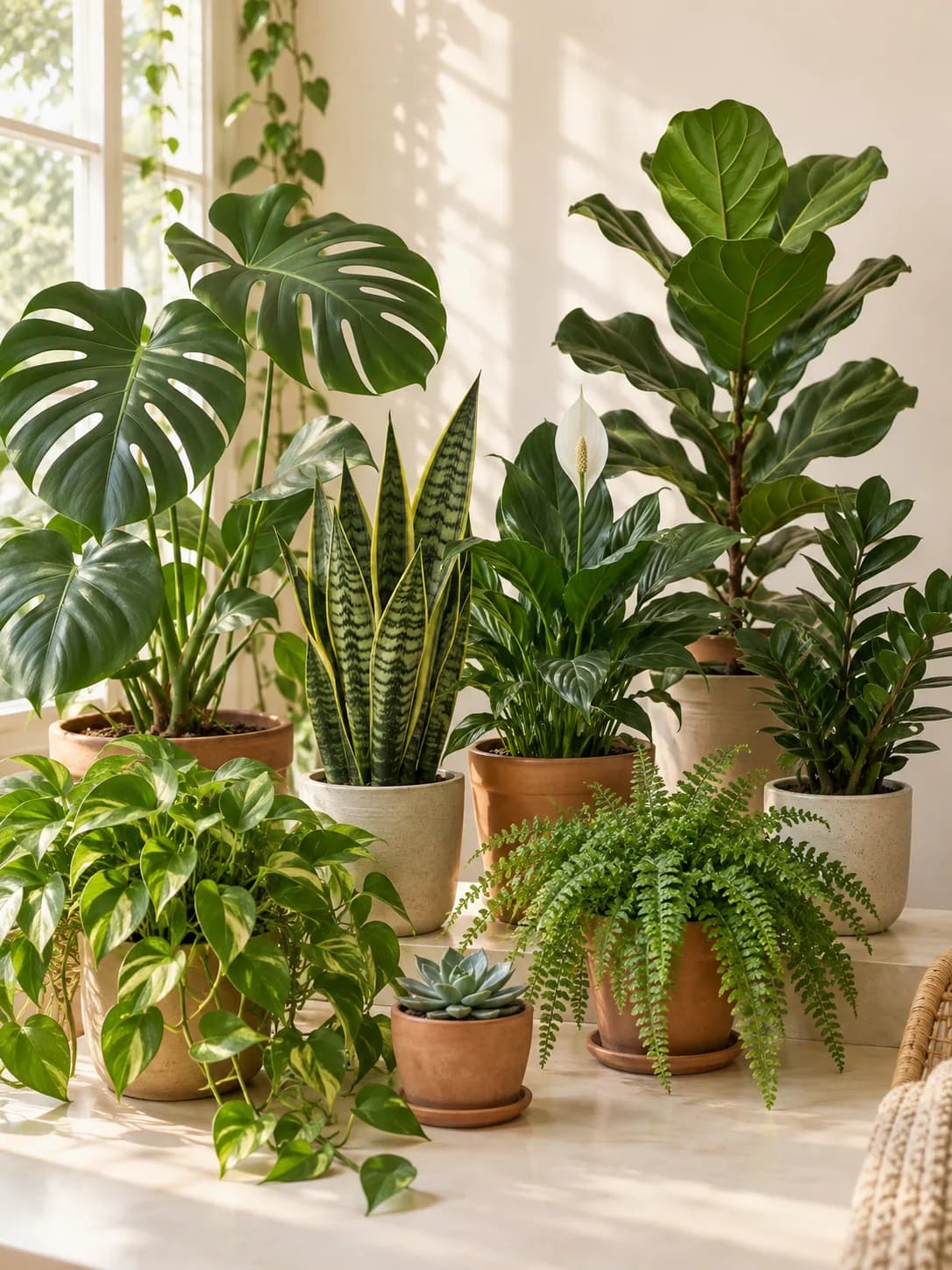
PlantScanner image
Image credit: PlantScanner image generation (illustrative collection) · full image credits
Light
Medium to bright indirect light
Water
Keep the soil lightly moist at all times
Humidity
High humidity is non-negotiable: 60% or more
Temp
65-80 F (18-27 C)
Toxicity
Non-toxic to cats and dogs
Overview
Calatheas are grown for foliage that looks hand-painted: pinstripes, peacock feathers, rattlesnake patterns, and deep purple undersides, depending on the variety. Native to the humid understory of South American rainforests, they raise and lower their leaves with the daily light cycle -- you can sometimes hear a soft rustle at dusk. That beauty comes with demands: steady moisture, high humidity, and purified water. This is a plant for attentive owners.
Detailed Care Guide
Success with calathea comes down to imitating a rainforest floor. Provide medium to bright indirect light -- never direct sun -- and keep the soil consistently damp but not soggy, watering with filtered or rain water at room temperature. Humidity is the real gatekeeper: below about 50%, edges crisp no matter what else you do, so run a humidifier nearby or keep the plant in a bright bathroom. Feed lightly in the growing season. Wipe the leaves gently to remove dust, and trim damaged leaves at the base; new growth unfurls regularly from the center. Expect some cosmetic imperfection -- even well-grown calatheas carry a few marks -- and judge health by steady new growth rather than a flawless canopy. Repot in spring every year or two, dividing the clump at the same time if you want more plants.
Medium to bright indirect light. Direct sun fades the intricate leaf patterns and scorches the foliage. A spot near a north or east window, or filtered light behind a sheer curtain, is ideal.
Keep the soil lightly moist at all times, watering when the top inch begins to dry. Use filtered, distilled, or rain water -- calatheas are famously sensitive to fluoride and chlorine in tap water.
High humidity is non-negotiable: 60% or more. Use a humidifier, group plants together, or keep it in a bright bathroom. Dry air quickly produces crispy edges.
Moisture-retentive but well-draining mix -- two parts potting soil to one part perlite with a handful of coco coir or peat works well.
65-80 F (18-27 C). Sensitive to cold drafts and temperatures below 60 F. Keep away from AC vents and drafty windows.
Feed monthly in spring and summer with a balanced liquid fertilizer at quarter to half strength. Calatheas burn easily from overfeeding.
Common Problems
Identify and fix the most frequent issues with Calathea.
Crispy brown edges
Symptoms
Leaf edges and tips dry out, turn brown, and become brittle.
Cause
Low humidity, tap water minerals (fluoride and chlorine), or inconsistent watering. This is the most common calathea complaint.
Solution
Raise humidity above 60% with a humidifier, switch to filtered or rain water, and keep the soil evenly moist. Trim damaged edges with scissors, following the leaf's natural curve.
Curling leaves
Symptoms
Leaves roll inward into tubes and feel dry to the touch.
Cause
Underwatering, low humidity, or heat stress -- the plant is conserving moisture.
Solution
Water thoroughly with room-temperature filtered water and raise humidity. Leaves typically uncurl within a day or two. Persistent curling in moist soil suggests root damage from mineral buildup -- repot in fresh mix.
Yellowing leaves
Symptoms
Leaves turn yellow, often starting with older, outer foliage.
Cause
Overwatering and soggy soil, or natural aging of the oldest leaves.
Solution
Check that the pot drains and the soil is moist rather than wet. Let the top inch dry before watering again. Remove fully yellow leaves at the base.
Fading leaf pattern
Symptoms
The signature markings wash out and the foliage looks pale.
Cause
Too much direct light bleaching the pattern.
Solution
Move the plant further from the window or behind a sheer curtain. New leaves will emerge with full patterning.
Spider mites
Symptoms
Fine webbing, speckled stippled leaves, and general decline.
Cause
Dry air -- calatheas kept below their humidity comfort zone are prime spider mite targets.
Solution
Shower the foliage, treat with insecticidal soap or neem oil every 5-7 days for three weeks, and raise humidity to prevent reinfestation.
Propagation
Calatheas cannot be propagated from stem or leaf cuttings -- division is the only method. In spring, unpot the plant and gently tease the root ball apart where natural clumps separate, keeping several leaves and healthy roots with each division. Pot the divisions in fresh moist mix, water with filtered water, and keep humidity high while they establish. Expect a sulk of a few weeks before new growth resumes.
Frequently Asked Questions
Why are my calathea leaves curling?
Curling is the plant conserving water -- caused by dry soil, low humidity, or heat. Water thoroughly with filtered water and boost humidity; leaves usually uncurl within 48 hours. If the soil is already moist, suspect root stress from tap water minerals.
Do calatheas really move at night?
Yes. Calatheas and their prayer plant relatives raise their leaves toward vertical at night and lower them by day, a rhythm called nyctinasty driven by a small joint at the base of each leaf. Movement is a sign of a healthy, hydrated plant.
Can I use tap water on my calathea?
It is risky. Calatheas are sensitive to the fluoride, chlorine, and dissolved salts in most tap water, which cause brown edges over time. Filtered, distilled, or rain water gives noticeably better results. At minimum, let tap water sit out overnight.
Are calatheas safe for pets?
Yes. Calatheas are non-toxic to both cats and dogs, making them one of the best dramatic-foliage choices for pet households.
Why is my calathea getting brown edges even though I water it?
Brown edges are almost always about humidity and water quality rather than watering frequency. Air below 50% humidity or mineral-heavy tap water will crisp the edges even in perfectly moist soil. Add a humidifier and switch to filtered water.