Moth Orchid
Phalaenopsis spp.
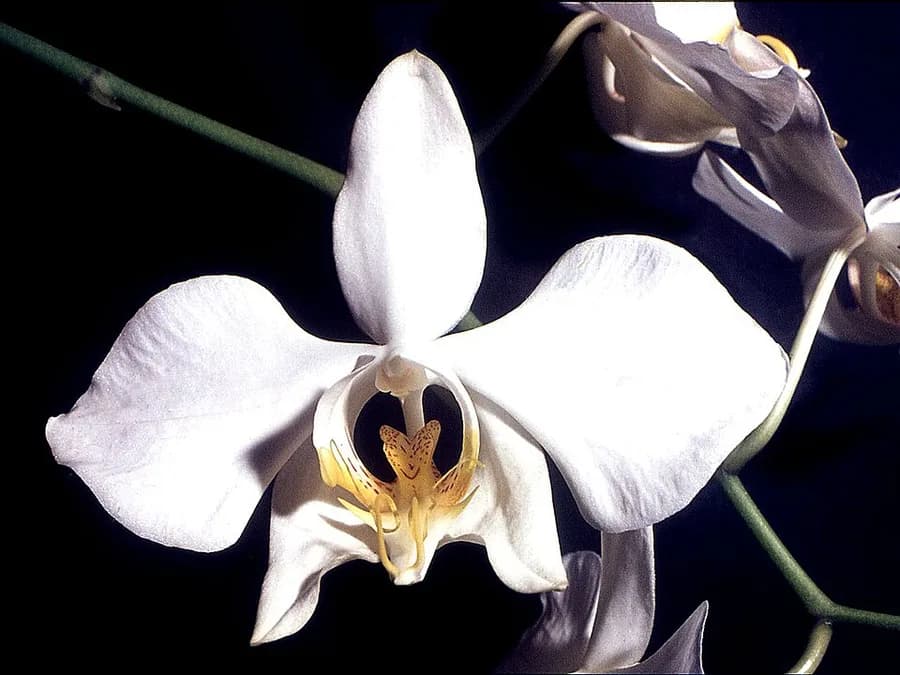
Image credit: Orchi · CC BY-SA 3.0 · full image credits
Light
Bright indirect light -- an east window is ideal
Water
Water about once a week by soaking the bark thoroughly and letting it drain completely
Humidity
50-70% is ideal, but phalaenopsis tolerate average homes better than most orchids
Temp
65-80 F (18-27 C) days
Toxicity
Non-toxic to cats and dogs
Overview
The moth orchid is the world's most popular orchid for good reason: sprays of long-lasting blooms -- two to four months is typical -- on a compact plant that genuinely tolerates household conditions. Native to Southeast Asian treetops, phalaenopsis grow as epiphytes clinging to bark, which explains everything unusual about their care: the clear pot, the chunky bark, the aerial roots, and the fatal consequences of regular potting soil. Most 'dead' supermarket orchids were simply overwatered; treated correctly, the same plant reblooms for decades.
Detailed Care Guide
Rethink watering first: an orchid in bark wants a thorough weekly soak-and-drain, not daily sips, and the silvery-to-green color of its roots is your gauge -- silver means ready to water, green means wait. Give it bright indirect light near an east window, feed weakly with orchid fertilizer, and leave the aerial roots alone; they are normal and functional. After the last flower drops, cut the spike above a lower node (it may branch and rebloom) or at the base for a stronger spike next season. A few weeks of cooler autumn nights around 60 F reliably triggers new spikes. Repot every 1-2 years when the bark breaks down, trimming any hollow or mushy roots -- fresh, airy bark around healthy roots is the single best predictor of reblooming.
Bright indirect light -- an east window is ideal. Leaves should be a healthy medium green; very dark green means too little light, and red-tinged or yellowish leaves mean too much.
Water about once a week by soaking the bark thoroughly and letting it drain completely, less often in winter. Never leave the base standing in water, and avoid getting water in the crown where the leaves meet.
50-70% is ideal, but phalaenopsis tolerate average homes better than most orchids. A pebble tray under the pot helps.
No soil at all -- orchid bark mix or sphagnum moss. Phalaenopsis are epiphytes; their thick roots need air and rot in potting soil.
65-80 F (18-27 C) days. Slightly cooler nights (a 10-15 degree drop for a few weeks in fall) trigger the flower spike.
Feed 'weakly, weekly': a quarter-strength orchid fertilizer with most waterings during growth, skipping a plain-water flush once a month.
Common Problems
Identify and fix the most frequent issues with Moth Orchid.
Wrinkled, limp leaves
Symptoms
Leaves lose their firmness and develop lengthwise wrinkles.
Cause
The roots are failing to supply water -- either from underwatering or, more often, from root rot caused by overwatering or degraded potting media.
Solution
Unpot and inspect: firm silver-green roots mean the plant is simply thirsty (soak it); brown, hollow, mushy roots mean rot. Trim dead roots, repot in fresh orchid bark, and water weekly with full drainage.
No reblooming
Symptoms
Healthy leaves and roots but no new flower spike for a year or more.
Cause
Insufficient light or lack of the cool-night trigger.
Solution
Move to bright indirect light and give the plant cooler nights (around 55-60 F) for 3-4 weeks in fall. A new spike typically appears within a couple of months.
Buds shriveling before opening
Symptoms
Developing buds yellow, dry up, and drop (bud blast).
Cause
Environmental shock -- a move, temperature swings, drafts, dry air, or drying out while in bud.
Solution
Keep conditions stable once a spike appears: same spot, even watering, no drafts. The plant usually completes its next spike without trouble.
Yellowing bottom leaf
Symptoms
The lowest leaf yellows and drops.
Cause
Normal aging -- phalaenopsis maintain a limited number of leaves.
Solution
None needed if only the bottom leaf and the rest are firm. Multiple yellowing leaves warrant a root inspection.
Crown rot
Symptoms
The center of the plant blackens and leaves detach easily.
Cause
Water sitting in the crown, especially in cool conditions.
Solution
Water at the pot edge in the morning and keep the crown dry. Early rot can sometimes be halted with a dab of ground cinnamon after drying the crown, but prevention is the real cure.
Propagation
Phalaenopsis occasionally produce keikis -- baby plants complete with leaves and roots -- on old flower spikes, especially when a node is kept warm and humid. Once a keiki has two or three roots a couple of inches long, cut it from the spike and pot it in fine orchid bark. Division and stem cuttings do not apply to moth orchids, so keikis and patience are the home grower's route.
Frequently Asked Questions
How do I get my orchid to rebloom?
Bright indirect light, healthy roots in fresh bark, weak regular feeding, and 3-4 weeks of cooler nights (55-60 F) in autumn. Most phalaenopsis rebloom once or twice a year under this routine, with each flowering lasting two months or more.
Should I water my orchid with ice cubes?
It is popular marketing but not ideal -- ice-cold water can stress the roots of a tropical plant. A thorough weekly soak with room-temperature water, drained fully, matches how these plants drink in nature and gives better long-term results.
What do I do with orchid air roots?
Leave them. Aerial roots are normal for an epiphyte -- they absorb moisture and light. Do not cut them off or force them all into the pot; only trim roots that are clearly dead (hollow, papery, or mushy).
Do I cut the orchid stem after the flowers fall?
Either cut the spent spike just above the second or third node from the base -- it may branch and rebloom within weeks -- or cut it at the base so the plant puts energy into roots and leaves for a stronger bloom next cycle. Both are valid.
Are orchids safe for cats?
Yes -- phalaenopsis orchids are non-toxic to cats and dogs, making them one of the safest flowering houseplants for pet owners.