Parlor Palm
Chamaedorea elegans
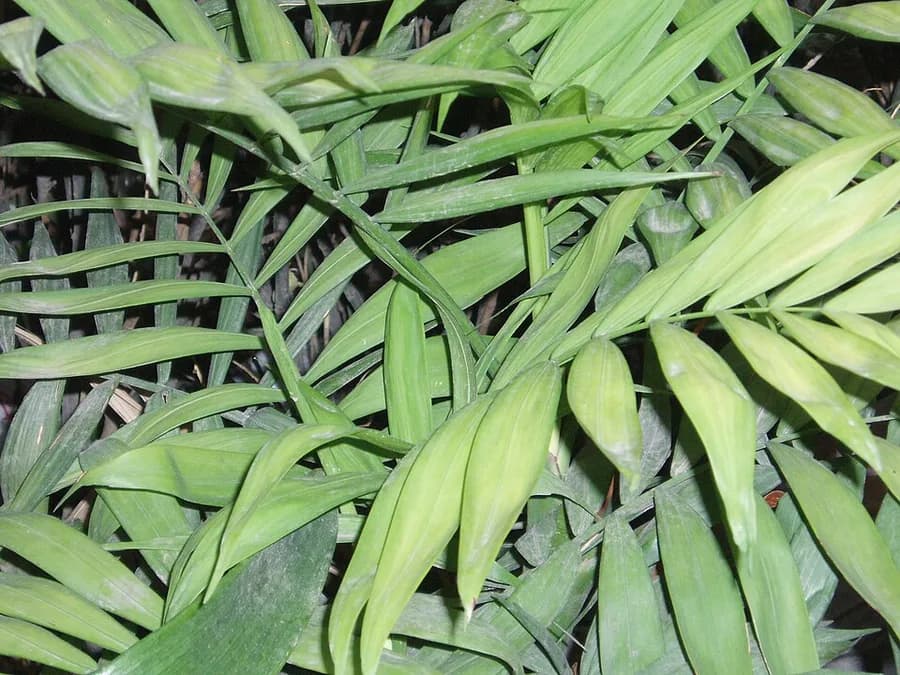
Image credit: Fanghong · CC BY-SA 3.0 · full image credits
Light
Low to medium indirect light -- one of the few palms genuinely happy away from a window
Water
Water when the top 1-2 inches of soil are dry
Humidity
Adapts to average household humidity
Temp
65-80 F (18-27 C)
Toxicity
Non-toxic to cats and dogs
Overview
The parlor palm has been softening indoor corners since the 1800s, when its tolerance of dim Victorian parlors made it a status symbol anyone could keep alive. It remains one of the best low-light plants available: soft, feathery fronds on a slow-growing clump that tops out around 3-4 feet indoors, safe for cats and dogs, and content with ordinary humidity. For a pet-friendly touch of green in an unpromising corner, it is hard to beat.
Detailed Care Guide
Parlor palms ask for very little: a spot with low to medium indirect light, water when the top inch or two of soil dries, and protection from direct sun. Their most common cause of death is kindness -- overwatering and overfeeding -- so err dry and feed sparingly. Growth is naturally slow (a few new fronds a year is normal), and the plant prefers being slightly rootbound; repot only every 2-3 years, handling the fragile roots gently. Trim entire spent fronds at the base rather than cutting individual leaflets, and watch for spider mites in dry winter air -- a monthly shower keeps fronds clean and mite-free. Mature plants may send up sprays of tiny yellow flowers even indoors; they can be left or trimmed.
Low to medium indirect light -- one of the few palms genuinely happy away from a window. Direct sun scorches the delicate fronds.
Water when the top 1-2 inches of soil are dry, roughly every 1-2 weeks. Parlor palms prefer slightly moist soil but forgive an occasional dry spell far better than constant sogginess.
Adapts to average household humidity. Higher humidity keeps frond tips from browning and discourages spider mites.
Standard well-draining potting mix. Palms dislike heavy, waterlogged soil.
65-80 F (18-27 C). Tolerates brief dips to 55 F. Keep away from cold drafts and heat vents.
Feed once a month at half strength during spring and summer only. Parlor palms are very light feeders and burn easily.
Common Problems
Identify and fix the most frequent issues with Parlor Palm.
Brown frond tips
Symptoms
Tips of leaflets dry out and brown.
Cause
Dry air, underwatering, fluoridated tap water, or fertilizer buildup.
Solution
Water consistently with filtered water if possible, raise humidity slightly, and halve your feeding. Trim tips with scissors, leaving a sliver of brown.
Yellowing fronds
Symptoms
Whole fronds turn yellow, often lower ones first.
Cause
Overwatering if widespread; natural aging if occasional.
Solution
Let the soil dry further between waterings and confirm drainage. Remove fully yellow fronds at the base.
Spider mites
Symptoms
Fine webbing and pale speckled fronds, typically in winter.
Cause
Warm, dry indoor air -- palms are favorite mite targets.
Solution
Shower the plant thoroughly, treat with insecticidal soap every 5-7 days for three weeks, and raise humidity to prevent recurrence.
No growth
Symptoms
Months without a new frond.
Cause
Normal slowness, worsened by low light or winter.
Solution
Be patient -- parlor palms are genuinely slow. A slightly brighter spot and a spring feeding nudge things along, but a few fronds a year is a healthy pace.
Propagation
Parlor palms cannot be propagated from cuttings; commercial plants are grown from seed, which is slow and unreliable at home. The practical option is division: most nursery pots contain many seedlings planted together, and a dense clump can be gently split into two or three smaller pots in spring, keeping roots intact as much as possible. Expect divisions to sulk briefly before resuming growth.
Frequently Asked Questions
Is a parlor palm safe for cats?
Yes, the parlor palm is non-toxic to cats and dogs -- one of the best pet-safe plants for low-light spots. Cats may chew the grassy fronds, which harms the look of the plant more than the cat.
How much light does a parlor palm need?
Remarkably little -- it thrives in low to medium indirect light, including north-facing rooms and spots several feet from a window. Just avoid direct sun, which bleaches and burns the fronds.
Why are my parlor palm's tips turning brown?
Usually dry air, inconsistent watering, or too much fertilizer. Keep the soil lightly moist, feed at most monthly in summer at half strength, and use filtered water if your tap water is heavily treated. Trim the tips cosmetically.
How big do parlor palms get?
Indoors, typically 2-4 feet tall over many years -- they grow slowly and stay in scale with side tables and floor corners, which is exactly why decorators love them.
Can I divide my parlor palm?
Yes. Nursery pots usually contain dozens of seedlings, so a full clump can be split into smaller ones in spring. Work gently -- palm roots resent disturbance -- and give divisions a few weeks of stable care to recover.